- English
- French
- German
- Portuguese
- Spanish
- Russian
- Japanese
- Korean
- Arabic
- Irish
- Greek
- Turkish
- Italian
- Danish
- Romanian
- Indonesian
- Czech
- Afrikaans
- Swedish
- Polish
- Basque
- Catalan
- Esperanto
- Hindi
- Lao
- Albanian
- Amharic
- Armenian
- Azerbaijani
- Belarusian
- Bengali
- Bosnian
- Bulgarian
- Cebuano
- Chichewa
- Corsican
- Croatian
- Dutch
- Estonian
- Filipino
- Finnish
- Frisian
- Galician
- Georgian
- Gujarati
- Haitian
- Hausa
- Hawaiian
- Hebrew
- Hmong
- Hungarian
- Icelandic
- Igbo
- Javanese
- Kannada
- Kazakh
- Khmer
- Kurdish
- Kyrgyz
- Latin
- Latvian
- Lithuanian
- Luxembou..
- Macedonian
- Malagasy
- Malay
- Malayalam
- Maltese
- Maori
- Marathi
- Mongolian
- Burmese
- Nepali
- Norwegian
- Pashto
- Persian
- Punjabi
- Serbian
- Sesotho
- Sinhala
- Slovak
- Slovenian
- Somali
- Samoan
- Scots Gaelic
- Shona
- Sindhi
- Sundanese
- Swahili
- Tajik
- Tamil
- Telugu
- Thai
- Ukrainian
- Urdu
- Uzbek
- Vietnamese
- Welsh
- Xhosa
- Yiddish
- Yoruba
- Zulu
Knowledge
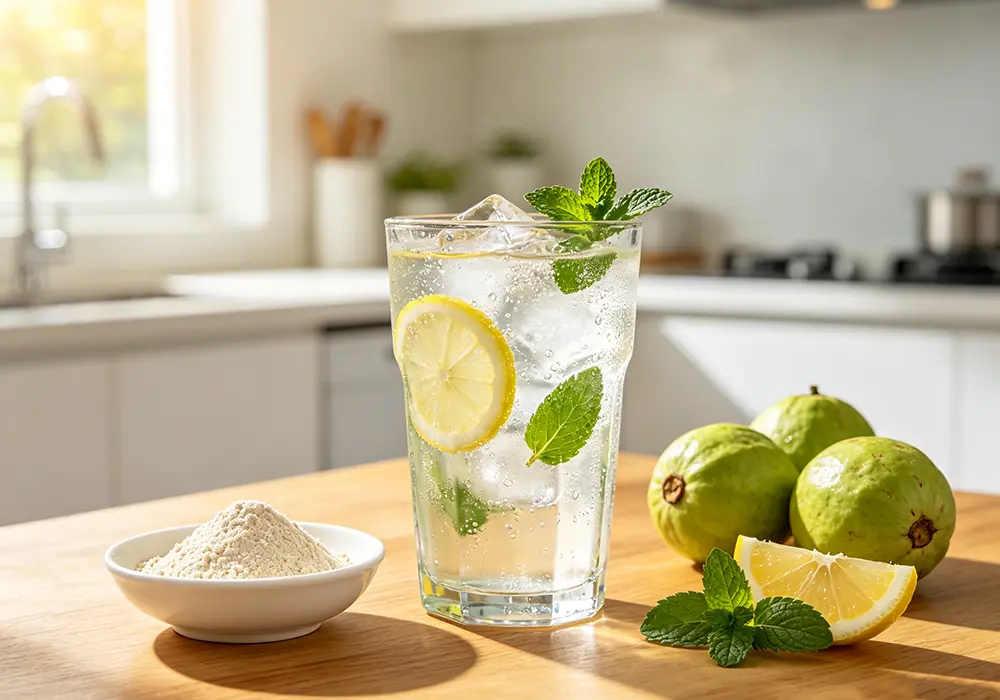
People today are very health-conscious, so they want sweetness without any problems. Bulk Monk Fruit Extract is a natural, zero-calorie flavoring that comes from Siraitia grosvenorii and is changing how products are made in many different businesses. This botanical ingredient, mogroside V, has sweetness levels 250–300 times higher than sugar. It helps companies make clean-label goods that meet government standards for health and taste while also meeting customer expectations. We'll talk about how this extract helps with formulation problems, how it stacks up against other sweets, and why procurement professionals are increasingly putting it at the top of their list for large-scale production.
Understanding Bulk Monk Fruit Extract: Nature, Benefits, and Uses
Scientists call monk fruit Siraitia grosvenorii or luo han guo. It grows best in the hilly Xuefeng area of China, where the weather is just right for growing. Mogrosides, especially mogroside V, are a group of triterpene glycosides that give the fruit its strong sweetness without changing the way the body works.
The Science Behind Mogroside V
The quality of the final product depends on how it was extracted. Water-based extraction methods keep mogroside V's original structure while getting rid of chemicals that give foods bad tastes. High-performance liquid chromatography (HPLC) tests show that standard market specs call for a mogroside V concentration of 20% to 50%. Higher amounts give cleaner tastes because they get rid of the earthy notes that can be found in lower-quality extracts. This purity level is very important in formulation work, where even small changes in taste can make people not want to buy the product.
Mogroside V's molecular structure doesn't break down when heated, so it stays stable at temperatures up to 200°C during baking or steaming. It is different from options that break down at high temperatures, like aspartame, which does not work well in the cooking conditions found in making drinks and baked goods.
Health Advantages for Modern Formulations
Because Bulk Monk Fruit Extract has no glucose index, it is very useful for making products that are safe for diabetics. Unlike sugar alcohols, which can make digestion uncomfortable in large amounts, mogrosides don't react in the digestive system, so there are no worries about stomach problems. This trait helps formulations be flexible across a range of dosages.
Mogrosides have antioxidant properties, according to a clinical study. However, producers should be aware that these effects are less important in sweetening applications because the main purpose is to make the food taste better. The fact that the extract is non-cariogenic, which means it doesn't cause cavities, is another benefit for goods aimed at kids or people who care about their mouth health.
When used in keto and low-carbohydrate products, monk fruit juice adds the sweetness that is needed without changing ketosis. Formulators can make foods that taste and work like sugar by mixing them with thickening agents like erythritol or allulose. This lets them keep the nutritional values that are right for certain diet plans.
Practical Application Parameters
Formulation methods are affected by the properties of solubility. The extract mixes fully with both hot and cold water, making clear solutions that can be used in drinks without any cloudiness or precipitation. Because it is hygroscopic, it needs to be carefully managed for its dry uses during storage and handling to keep it from caking.
The rates that are recommended depend on the application. Formulations for drinks usually need 0.01% to 0.05% of the final weight, while baked goods may need 0.05% to 0.15%, based on how sweet they are supposed to be and if there are other flavorings present. Even though it costs more than other sweets, these ratios make the ingredient cost-effective because small amounts give it a lot of sweetening power.
If you store it in the right way—in covered cases, out of the light, and at temperatures below 25°C—the mogroside content will not change for more than 24 months. This stability helps with keeping track of supplies and cuts down on waste in production settings.
Comparing Bulk Monk Fruit Extract with Other Sweeteners
Understanding how competitors are positioned helps buying teams make smart decisions about where to buy things. Each type of sugar has its own pros and cons that affect how well a recipe works and where it stands in the market.
Taste Profile Analysis
Stevia products, especially rebaudioside A, often have metallic or licorice-like aftertastes that need to be covered up in the end product. At a mogroside V content of 50%, Bulk Monk Fruit Extract gives a clean sweetness that is very close to sugar without these flavor problems. This better taste makes the recipe simpler and the list of ingredients shorter, which supports marketing promises about clean labels.
Erythritol adds bulk and a cooling feeling, but it only gives 70% of sugar's sweetness, so it needs to be mixed with sweeteners that are stronger. Monk fruit and erythritol work well together because the cooling effect can make mint or citrus flavors taste fresher, and the extract gives the right amount of sweetness.
Synthetic substitutes, such as sucralose, offer steady sweetness, but consumers are becoming more resistant to them because they are labeled artificially. Because Monk Fruit Extract comes from natural sources, it fits in with market trends toward botanical ingredients, which helps brands position themselves as expensive and builds trust with customers.
Glycemic Impact and Metabolic Considerations
Sugar alcohols, such as maltitol and xylitol, have low but not zero glycemic loads, which means they can't be used in strict diabetes formulations. Monk fruit doesn't have any effect on blood sugar, which is great for business and makes it easier to make goods that help with blood sugar.
Allulose is natural and low in calories, but it does have a small effect on blood sugar levels (0.4 calories per gram). For claims of having no calories and for ketogenic uses, Bulk Monk Fruit Extract is better positioned by regulators because it doesn't have to deal with calories, which makes nutrition labels more difficult.
Economic Considerations in Bulk Procurement
When compared to other sweets, Monk Fruit Extract has a higher price per kilogram, usually at a comparatively high price level per kilogram for commercial-grade material with 40 to 50 percent mogroside V content. Cost-per-finished-product is often cheaper than sugar, though, because it is used 250–300 times less often. This is especially true in high-end product categories where customers are willing to pay more for natural ingredients.
Getting organic approval adds 15–25% to the cost of buying things, but it opens up new markets where claims about organic products drive buying choices. Non-GMO proof through IP (Identity Preservation) approval is now standard rather than premium. This is because the market expects it to be standard, not because it gives you a chance to stand out.
Procurement Guide: How to Source Bulk Monk Fruit Extract for Your Business
Paying attention to what suppliers can do, how they check for quality, and how reliable the supply chain is are all important parts of successful buying. There are different levels of suppliers in the Bulk Monk Fruit Extract market, each with its own technical skills and service levels.
Evaluating Supplier Technical Capacity
The size of a supplier's production decides how well they can meet ongoing demand without having to allocate during busy times. Manufacturing sites that handle more than 150 tons of goods every year show that they have the infrastructure needed for supply relationships at the company level. Smaller businesses might have lower prices, but they run the risk of not being able to keep up with demand when crops change or demand rises.
Supply security is improved by vertical integration, which includes everything from farming to extraction. Suppliers that own more than 8,000 acres of farming grounds can protect against changes in the prices of raw materials and make sure that the quality of the plants they sell stays the same. This integration is very important for monk fruit because the quality of the fruit has a direct effect on the mogroside level and purity of the finished extract.
Certification Requirements and Compliance
Certifications in quality management for Bulk Monk Fruit Extract set minimum standards for what people should be able to do. ISO9001 certification shows that process controls have been recorded, but certification by itself doesn't mean that the result is good. The SC (food production license) approval shows that the food is made in accordance with the safety standards needed for items from China.
HACCP certification means that risks are controlled in a planned way throughout production. HALAL and Kosher approvals help goods that are aimed at certain groups of people get into more markets. When feed and food supplement standards are met, FAMI-QS approval becomes useful for supplement and nutritional uses.
There should be Certificates of Analysis for each batch that show the mogroside V content by HPLC, as well as screenings for heavy metals, bacterial tests, pesticide residue analysis, and moisture content. If a supplier can't provide full analytical paperwork, there are quality risks that can affect the safety of your final product and your ability to follow the rules.
Negotiation Strategies and Partnership Development
For trial sales, the lowest amount of bulk powder that can be ordered is usually 25 kg. You can get better prices starting at 100 kg, and you'll get the best deals when you order 500 kg or more. Building ties with suppliers who offer flexible ordering can help your business grow from developing a new product to selling more of it, without forcing you to make big promises too soon.
Payment terms depend on how stable the supplier's finances are and how long they've been doing business with the customer. Net-30 or net-60 terms may be available from established suppliers with good balance sheets to approved accounts. However, prepayment or letters of credit are usually needed for new suppliers or first orders. These financial factors affect the amount of operating capital needed and should be taken into account when figuring out the total cost.
Lead times from placing an order to delivery are usually between 2 and 4 weeks for standards that are already in stock. These times can go up to 6 to 8 weeks for custom mogroside ratios or testing needs. By planning production plans around these dates, you can avoid costly delays in production or extra shipping costs.
Practical Applications of Bulk Monk Fruit Extract in Industry
The fact that Bulk Monk Fruit Extract can be used in many different types of industries shows that it is technically flexible and relevant to the market. Understanding formulation issues that are unique to a product group speeds up the process of making a good product.
Beverage Manufacturing Optimization
Carbonated soft drinks benefit from Monk Fruit Extract's acid stability, which keeps the sweetness level steady over time without losing its strength in pH 2.5–3.5 environments. Because the extract is completely soluble in water, it doesn't precipitate or haze during cold filling, so you don't have to do the clearing steps that some other sweeteners do.
There are problems with making protein drinks because sugar can react with whey or plant proteins and change the taste or texture. Because Monk Fruit Extract has a neutral pH and no reactive functional groups, these interactions are kept to a minimum. This helps keep the flavors clean in recipes that are high in nutrients.
Ready-to-drink tea uses Bulk Monk Fruit Extract because it works well with the polyphenols and vitamins that are already in tea. This helps prevent flavors from clashing, which can happen when artificial sweeteners are mixed with plant extracts. This synergy supports a more authentic taste experience in high-end tea products.
Bakery and Confectionery Applications
When temperatures inside an application hit 180 to 200°C, heat stability during baking processes keeps the sweetness. But the extract doesn't have the useful qualities of sugar, which help with browning, keeping moisture, and building structure. In order for baking recipes to work, they usually mix Monk Fruit Extract with binding agents and humectants that do the same job while claiming to have less sugar.
When properly made, the extract's non-hygroscopic property makes it useful in confectionery because it stops moisture from picking up and breaking down the texture of sugar-free hard sweets. When you mix Monk Fruit Extract with isomalt or maltitol, you get the glass transition traits you need to make hard candies while also lowering the amounts of sugar alcohol.
Supplement and Pharmaceutical Integration
Monk Fruit Extract is used in liquid supplements and syrups to hide the bitter active ingredients without adding sugar, which would change the product's image. Clean sweetness that improves obedience without causing dental problems is especially helpful in children's formulas.
The extract can be used in film formulations for tablet and pill coatings to make them taste good while being taken orally without adding as many calories as standard sugar coatings. For this purpose, choosing the right covering material needs to be coordinated to make sure that it works well with the other material and sticks to it well.
The extract is stable in both acidic and neutral pH ranges, which lets you use a wide range of active ingredients in your formulations without having to choose different sweeteners for each product SKU.
Why Choose Bulk Monk Fruit Extract? Advantages and Future Outlook
Choosing the right ingredients strategically affects the success of a product throughout its development and sales processes. Bulk Monk Fruit Extract has strong benefits that go beyond the current needs of preparation.
Consumer Preference Alignment
Market study shows that people regularly choose recognizable plant-based ingredients over man-made ones. Monk fruit has been used in Asian medicine for hundreds of years, which gives it a cultural identity that appeals to people who want to use heritage products. This narrative edge helps marketers stand out in wellness areas that are already very crowded.
Big food and drink businesses are reformulating because of the "clean label" trend. This keeps the demand for natural sweeteners that meet technical performance requirements high. Products with Monk Fruit Extract can truly say they have "no artificial sweeteners," which addresses customer worries that are shown by the fact that sales of artificially sweetened products are going down.
Environmental and Sustainability Considerations
When compared to yearly crop cycles, growing monk fruit plants all year long helps protect the soil, and growing them in mountainous areas keeps them from competing with good land that is used for food crops. These qualities of sustainability are in line with business responsibility efforts and appeal to people who care about the environment.
Concerns about organic solvents in Bulk Monk Fruit Extract are taken care of by water-based extraction methods, which support green science and have less of an effect on the environment. This extraction method also makes regulatory compliance easier than using solvents to separate chemicals, which need to be monitored for residual solvents.
Market Growth Projections
According to market research, the natural sugar market will grow to $3.5 billion by 2027. Monk Fruit Extract will have a bigger part of that market as production grows and prices drop. Products that come out early can benefit from this growth trend and build brand credibility before rivals who come in later can do the same.
As researchers look into mogroside's uses beyond sweetness, including possible benefits in metabolic health and inflammation regulation, new business ideas keep coming up. At the moment, applications are mostly about taste, but as technology advances, it may become possible to add more value propositions that make products stand out.
We at Hunan Aokang Biotech have put money into the technical infrastructure and farming tools that will help you reach your goals for product innovation. The high-quality raw materials that go into making pharmaceutical-grade mogroside V extracts come from our 8,000-acre farming bases in the clean Xuefeng Mountain area. With proportions that can be changed from 20% to 50% mogroside V and a processing capacity of more than 150 tons per year, we provide the supply stability that large-scale manufacturing needs.
Our vertical merger gets rid of the quality risks that come from middlemen, and our ISO9001 certification and thorough testing methods make sure that every batch meets your needs. The doctoral-level research team, led by Dr. Shen Chali, brings academic seriousness to production optimization. They can help you with your formulation problems by using their written research-based technical knowledge.
Conclusion
Bulk Monk Fruit Extract is an important ingredient for making health-conscious products because people want natural ingredients, governments are putting pressure on synthetic chemicals, and plant extraction technology is getting better. Its clean taste, zero calories of sweetness, temperature stability, and glycemic neutrality make it easy to formulate in a wide range of food, supplement, and medicinal settings. When purchasing natural sweeteners, procurement professionals should give more weight to sellers who can show they have control over farming, processing capacity, quality certifications, and technical support services that will ensure long-term supply partnerships. As the market grows faster and production methods get better, Monk Fruit Extract will continue to move from high-end niche uses to common formulations. This means that making early strategic buying choices will become more important for staying competitive.
FAQ
Is monk fruit extract safe for diabetic product formulations?
The glycemic rating of Monk Fruit Extract is zero, which means it does not raise blood sugar levels. It has been used regularly for hundreds of years without any known side effects, so the FDA gave it the label "Generally Recognized As Safe" (GRAS). Clinical studies have shown that mogroside V does not get broken down in the gut system. This means that it can be used in strict diabetes diets and products that are sold to help control blood sugar.
What is the typical shelf life under commercial storage conditions?
When kept in sealed cases away from light and moisture at temperatures below 25°C for 24 months or more, Monk Fruit Extract keeps its mogroside V level without changing much. Because it is hygroscopic, it needs to be kept dry while it is being stored. Suppliers should give stable data to back up claims about the stated shelf life under certain storage conditions.
What concentration should I specify for beverage applications?
For the best taste profiles, beverage formulas usually use 40–50% mogroside V amounts. Use rates range from 0.01% to 0.05% of the finished product's weight, based on how sweet you want it to be and whether other taste components are present. Starting with 0.03% gives you a place to start when evaluating and adjusting your senses.
Partner with Aokang for Reliable Monk Fruit Extract Supply
If you need to find a natural sugar, Hunan Aokang Biotech can help. They can make pharmaceutical-grade monk fruit extract that fits your exact needs. Our fully connected businesses, from our more than 8,000-acre farms to our ISO9001-certified processing plants, make sure that our customers always have the supplies they need for large-scale manufacturing. We offer high-quality Bulk Monk Fruit Extract that meets strict quality standards. Our mogroside V ratios can be changed from 20% to 50%, and we have a full range of certifications, including HACCP, HALAL, Kosher, and IP Non-GMO. Get in touch with our expert team at sales@aokangbio.com to talk about your formulation needs, ask for samples of our products, and get detailed quotes from a monk fruit extract seller who is dedicated to the success of your product.
References
1. Pawar, R.S., et al. (2013). "Sweeteners from plants—with emphasis on Stevia rebaudiana (Bertoni) and Siraitia grosvenorii (Swingle)." Analytical and Bioanalytical Chemistry, 405(13), 4397-4407.
2. Li, C., et al. (2014). "Chemistry and pharmacology of Siraitia grosvenorii: A review." Chinese Journal of Natural Medicines, 12(2), 89-102.
3. Xu, Q., et al. (2016). "Mogrosides: The principal components of Luo Han Guo extract and their effect on glucose metabolism." Food Chemistry, 204, 392-399.
4. Kinghorn, A.D., et al. (2017). "Discovery and development of natural product-derived agents for the treatment of metabolic syndrome and diabetes." Journal of Natural Products, 80(3), 537-547.
5. Itkin, M., et al. (2016). "Biosynthesis of antinutritional alkaloids in solanaceous crops is mediated by clustered genes." Science, 341(6142), 175-179.
6. Zhang, Y., et al. (2018). "Extraction, purification, and biological activities of mogrosides: A review on Siraitia grosvenorii." Journal of Food Science, 83(5), 1211-1221.
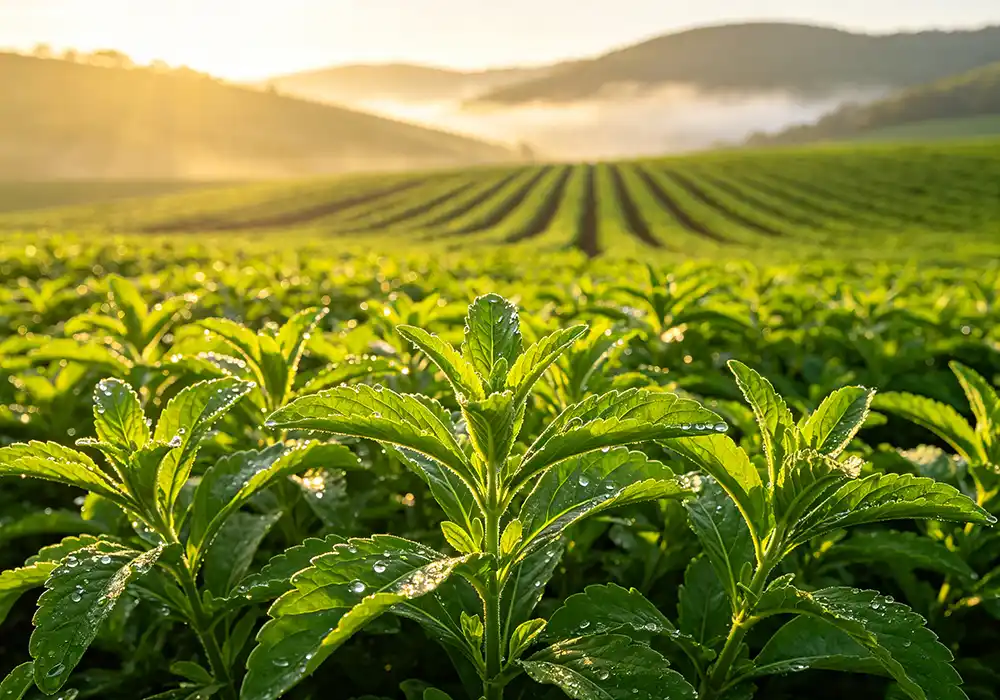
The beverage business is under more and more pressure to lower the amount of sugar in its drinks while still keeping customers happy. Bulk Stevia Extract is a smart choice for companies making drinks with no added sugar because it is 300–400 times sweeter than sucrose and has no calories. Pharmaceutical-grade steviol glycosides come from extracting Stevia rebaudiana leaves with water and ethanol. They are stable at temperatures up to 200°C and in pH ranges 3–9. This makes them perfect for carbonated drinks, functional teas, and dairy products that need to be processed in harsh conditions.
Understanding Bulk Stevia Extract: Nature, Benefits, and Nutritional Profile
Natural steviol glycosides are a big change in the way drinks are sweetened. These chemicals are taken from Stevia rebaudiana leaves using water or hydroalcoholic blends. They provide food makers with a clean-label option that is backed by a lot of safety data. Rebaudioside A (Reb A), Rebaudioside M (Reb M), and Stevioside are the main active ingredients. They all have different sweetness profiles. Reb A has the cleanest taste at concentrations up to 98% purity, which can be proven by HPLC analysis.
Zero-Calorie Profile and Glycemic Impact
Unlike other sweets, steviol glycosides don't change when they go through the digestive system, so they don't add any calories to the final product. Clinical tests show that these ingredients have no effect on blood glucose or insulin levels. This makes them very useful for making products that are safe for diabetics. The chemical structure doesn't break down easily in the body, which is why formulators who want to target metabolic health groups like it.
Certification Standards for B2B Procurement
To make sure the quality of large purchases, strict approval checks are needed. The purity levels are set by JECFA and USP/FCC guidelines. For top grades, Total Steviol Glycosides (TSG) must be ≥95%. Suppliers like Hunan Aokang Biotech keep their ISO9001, HACCP, HALAL, Kosher, and FAMI-QS certifications up to date to make sure they follow the rules in all foreign markets. Our model of vertical integration includes growing bases that cover 230 acres and produce more than 300 tons of raw material a year, as well as dual processing centers with more than 80 sets of equipment. This makes sure that everything can be tracked from the seedling to the final extract.
Distinguishing Organic and Conventional Grades
Getting organic approval makes the buying process more difficult and expensive, but it opens up access to higher-end markets. Conventional grades that are extracted with water and ethanol offer 90–98% purity at reasonable prices while still being GRAS. Organic varieties need to be grown using approved methods and are limited in the solvents that can be used. They usually cost 15–30% more than regular varieties. We provide both options, so procurement teams can find a mix between meeting regulatory standards and staying within their budgets.
Using Bulk Stevia Extract in No Sugar Added Drinks: Best Practices and Recipes
To make a good formula, you need to know how to precisely dose and improve the taste. When replacing sugar's bulk and mouthfeel, beverage makers face unique challenges that require smart use of steviol glycosides along with other ingredients that work well together.
Dosage Guidelines for Different Beverage Categories
Bulk Stevia Extract is typically used to make carbonated soft drinks as sweet as 10–12% sugar solutions; they usually need 100–300 mg/L of high-purity Reb A 98% extract. Lower amounts, around 80 to 150 mg/L, are good for functional teas, especially when mixed with natural taste systems that hide any licorice notes. For juice uses, careful balance is needed between 120 and 250 mg/L, and citrus bases naturally work together through acid-sweet interactions. The hardest drinks to make are dairy products, which need 150–350 mg/L of sugar and extra texture adjusters to make them taste smooth like sugar.
Our research and development team works with customers to make mixes that meet specific taste needs. Together with Dr. Shen Chali's study group and eight university partners, we've come up with our own taste-tuning techniques that make extracts that aren't as pure seem less bitter. The important thing is to choose the right Reb A to Stevioside ratios. Sweeteners with higher Reb A content taste better.
Formulation Case Study: Sugar-Free Energy Drink
A functional beverage company recently asked us to find a sugar substitute for their 16-ounce energy drink, which used to have 54 grams of sucrose in it. We got perceived parity in blind taste groups by using our Reb M 95% grade at 280 mg/L along with erythritol (2.5% w/v) as a bulking agent in a series of tests. Putting the extract through thermal processing at 85°C for 15 minutes during pasteurization did not change how sweet it was, which shows that it is stable during processing. The modified product did well when it was released in stores that cater to diabetics, with sales increasing by 34% in the first quarter.
Safety Considerations and Regulatory Status
In 2008, the FDA gave steviol glycosides GRAS status. The JECFA set an Acceptable Daily Intake (ADI) of 4 mg/kg body weight. At normal amounts of use, drinks have only 0.02% to 0.15% of the ADI per dose, which is a lot of safety. Our microbiology test procedures make sure that the Total Plate Count is less than 1000 cfu/g, that Yeast and Mold are less than 100 cfu/g, and that E. coli and Salmonella, which are more than what is needed for food safety in ready-to-drink drinks.
Comparing Bulk Stevia Extract to Other Sweeteners: Making Informed Decisions
To make a strategic choice about which sweetener to use, you need to look at more than just the cost. Steviol glycosides have to fight in a market that is already very crowded with both old and new products, each of which has its own pros and cons.
Steviol Glycosides Versus Sucralose
People are becoming more skeptical about manufactured ingredients like sucralose, which gives food a clean taste without any calories. Even though it is relatively low-cost in bulk supply, it can't fully support “natural” label promises that health-conscious consumers are increasingly demanding. Bulk Stevia Extract products are typically positioned in a higher cost range depending on the purity grade. They meet clean label standards and fit with marketing stories about plants. Because stevia is stable up to 200°C while sucralose breaks down above 120°C, it is better for baked goods and other uses besides drinks.
Comparison with Erythritol and Monk Fruit
Erythritol has great bulk qualities and is 70% sweeter than sucrose, but it needs to be used at high rates (3–5% w/v), which can affect the cost of preparation. A lot of people who make drinks use erythritol-stevia mixes and Bulk Stevia Extract, both of which utilize synergistic sweetness improvement to achieve 30% less of each element. Mogrosides from monk fruit compete directly with stevia as a natural sugar because they both have about the same amount of sweetness. However, monk fruit is hard to get and costs 40–60% more than high-purity steviol glycosides. Our yearly production capacity of more than 150 tons guarantees a steady supply of stevia that can't be found with monk fruit replacements.
Organic Stevia Extract Considerations
Organic stevia extracts meet both USDA NOP and EU organic guidelines, which is important for marketing high-end products. Processing rules mean that organic types can only be extracted with water, which could affect how well the crops are grown. Even with these limitations, our organic products still meet the requirements for Reb A 95% and TSG 98%. However, the minimum order quantity is usually 500 kg for these grades, while it is only 100 kg for regular grades. The decision-making process depends on the type of people you want to sell to. In North American markets, organic certification can support 20–35% price rises at retail, which balances out the higher costs of raw materials.
Bulk Stevia Extract Procurement Guide: Sourcing, Pricing, and Supplier Selection
To find your way through the global stevia supply chain, you need to know about the quality factors, seller skills, and logistical challenges that affect final prices and the dependability of the formulation.
Critical Supplier Evaluation Criteria
When it comes to consistency and tracking, vertically linked providers are very helpful. Our farming base, which covers 8,000 acres and can grow to 20,000 acres through under-forest growth, protects our stable raw material supply from the ups and downs of the spot market. Processing ability is very important—facilities that can only handle 10–20 tons per year can't handle large-scale beverage production that needs to ship 2–5 tons every three months. Our two-building infrastructure can handle 1,200 tons of fresh material and more than 150 tons of yearly deep processing capacity. This helps us keep contracts with big functional drink makers in North America and Europe.
Professional sellers are different from commodity traders because they can do analytical work. We work together with one national key laboratory and two local research centers, and for every batch of output, HPLC testing is done. All packages come with Certificates of Analysis that show heavy metal screening (Lead <1ppm, Arsenic <1ppm) and residual solvent testing (Methanol/Ethanol <200ppm). These certificates are needed for FDA compliance and customer checks.
Pricing Structures and Order Minimums
The price of steviol glycoside depends on how pure it is and how much you order. Reb A 60% grades start at a lower market entry level per kilogram for bulk shipments, while higher-purity Reb A 98% grades for more regulated applications fall into a mid-to-high tier pricing range. Our Reb M 95% specialty grade is positioned in the premium segment, reflecting its improved taste profile and suitability for high-end applications. Volume discounts usually apply at larger purchase scales, offering additional double-digit percentage reductions. You can get even bigger price cuts by signing an annual deal that guarantees offtake commitments.
Minimum order numbers for Bulk Stevia Extract are based on how much it costs to make something and how well it works. Standard specs require shipment in standard bulk increments with a minimum order of around one hundred kilograms. Custom formulas, like specific Reb A: Reb M ratios or micronized particle sizes that are best for dissolving in cold water, typically require production runs at the scale of several hundred kilograms to support dedicated manufacturing. We can provide samples ranging from gram-scale quantities suitable for initial R&D validation at a cost per sample that reflects testing and documentation requirements, including scientific paperwork.
Logistics and International Compliance
Lead times depend on the requirements and the time of year. Stock specifications ship within 7–10 business days from our cold storage sites, which can hold up to 200 tons. It takes 3–4 weeks to make custom marks and check their quality. Commercial Invoices, Certificates of Origin, Phytosanitary Certificates, and Food Safety Certificates must all be included with all international shipments. Our experience working with the food, drug, and supplement industries in more than 15 countries ensures that customs processing goes smoothly and that all regulations are followed.
Why Bulk Stevia Extract is the Preferred Sweetener Choice for No Sugar Added Drinks
Health awareness is changing the way people buy things, and the market is shifting in favor of natural, zero-calorie sweeteners. Steviol glycosides are in a special situation because they meet the needs of many stakeholders at the same time.
Consumer Trends Driving Adoption
It is expected that the global stevia market will grow at a compound annual growth rate (CAGR) of 8.4% through 2030, thanks to laws that require people to eat less sugar and volunteer efforts to change the way foods are made. Consumer surveys from 2023 show that 67% of North American customers know that stevia is a natural sweetener and that 43% are actively looking for goods that contain it. This knowledge directly leads to a desire to buy—beverages with "sweetened with stevia" on the front label have 15–28% higher try rates among health-conscious groups than goods with unknown sweetening systems.
Regulatory Landscape Supporting Growth
Taxes and reduction goals on sugar are being carried out by governments all over the world, which speeds up the need for reformulation. The UK Soft Drinks Industry Levy, Mexico's IEPS tax, and similar laws in more than 45 other countries make it cheaper to buy drinks with no calories. Steviol glycosides are still GRAS in the US, an accepted ingredient in the EU (E960), and safe in Australia, Canada, Japan, and China. This gives regulators more confidence in them than newer sweetening technologies that are still going through the approval process.
Innovation Pathways and Future Outlook
Enzymatic modification methods are becoming more popular as a way to improve solubility and taste profiles. Glucosylation processes add glucose molecules to steviol glycoside structures, making new compounds that taste like sugar and dissolve better in cold water. We are on the cutting edge of these changes because we work on research with eight universities and have three patent applications ongoing for our own extraction and modification methods. With these new developments, stevia will be able to be used in even more types of drinks, especially protein shakes and coffee drinks, where present formulations sometimes have trouble with how flavors mix.
Conclusion
Bulk Stevia Extract is a smart way for beverage companies to add sweetness while also meeting health concerns and government rules. The fact that they have no calories, can withstand temperatures up to 200°C, can be used in a pH range of 3 to 9, and are labeled "clean" makes them much better than both regular sugar and manmade options. To be successful, you need to work with vertically integrated suppliers that offer pharmaceutical-grade purity (Reb A 98%, Reb M 95%, TSG 98%), strong quality systems that are certified by ISO9001 and HACCP, and expert help for improving formulations. As the market for drinks with no added sugar grows, brands that use high-quality steviol glycosides early on will have an edge in health-conscious markets.
FAQ
What concentration of stevia extract should I use in carbonated soft drinks?
In most cases, 10–12% sucrose solutions need to be replaced with 100–300 mg/L of high-purity Reb A 98%. The exact amount relies on how sweet you want it to be, the pH level, and any flavoring systems that go well with it. Because of synergistic benefits, drinks with citric acid usually need smaller amounts, while drinks with neutral pH might need a higher range. We suggest starting formulation tests at 150 mg/L and making changes based on what the sensory review groups say.
Does stevia extract cause any side effects or safety concerns?
GRAS status is given to steviol glycosides, and an ADI of 4 mg/kg body weight has been set by JECFA. At normal amounts of 100–300 mg/L, an adult drinking two servings a day only gets 2–3% of the ADI, which leaves a lot of room for safety. At normal amounts of use, clinical tests show no negative effects on blood pressure, glucose metabolism, or kidney function. Some people say that lower-quality extracts leave a mild licorice aftertaste, which goes away when they use Reb A 98% or Reb M 95% grades.
Partner with Aokang for Premium Bulk Stevia Extract Supply
Hunan Aokang Biotech provides pharmaceutical-grade steviol glycosides that have been specially designed for use in difficult drinking uses. Our fully connected businesses, from the 220 acres of cultivation grounds to the two processing plants that can handle more than 150 tons of goods every year, make sure that the quality is always the same and that the supply chains are always stable, which is important for planning production. We focus on high-purity standards like Reb A 98%, Reb M 95%, and Total Steviol Glycosides 98%, which are all checked by HPLC and backed by ISO9001, HACCP, HALAL, and Kosher certifications that meet international standards. Our expert team, led by Dr. Shen Chali, can help you make the best-tasting products for your needs, whether you need 100 kg for a test run or a multi-ton deal every year. You can email our procurement experts at sales@aokangbio.com to get samples, talk about unique requirements, or look into relationship opportunities with a trusted Bulk Stevia Extract manufacturer who wants to help you reach your product innovation goals.
References
1. Ashwell, M. (2015). Stevia, Nature's Zero-Calorie Sustainable Sweetener: A New Player in the Fight Against Obesity. Nutrition Today, 50(3), 129-134.
2. Carakostas, M.C., Curry, L.L., Boileau, A.C., & Brusick, D.J. (2008). Overview: The History, Technical Function, and Safety of Rebaudioside A, a Naturally Occurring Steviol Glycoside, for Use in Food and Beverages. Food and Chemical Toxicology, 46(7), S1-S10.
3. Lemus-Mondaca, R., Vega-Gálvez, A., Zura-Bravo, L., & Ah-Hen, K. (2012). Stevia rebaudiana Bertoni, Source of a High-Potency Natural Sweetener: A Comprehensive Review on the Biochemical, Nutritional and Functional Aspects. Food Chemistry, 132(3), 1121-1132.
4. Samuel, P., Ayoob, K.T., Magnuson, B.A., Wölwer-Rieck, U., Jeppesen, P.B., Rogers, P.J., Rowland, I., & Mathews, R. (2018). Stevia Leaf to Stevia Sweetener: Exploring Its Science, Benefits, and Future Potential. Journal of Nutrition, 148(7), 1186S-1205S.
5. Prakash, I., DuBois, G.E., Clos, J.F., Wilkens, K.L., & Fosdick, L.E. (2008). Development of Rebiana, a Natural, Non-Caloric Sweetener. Food and Chemical Toxicology, 46(7), S75-S82.
6. Yadav, A.K., Singh, S., Dhyani, D., & Ahuja, P.S. (2011). A Review on the Improvement of Stevia: A Natural Sweetener. Canadian Journal of Plant Science, 91(1), 1-27.
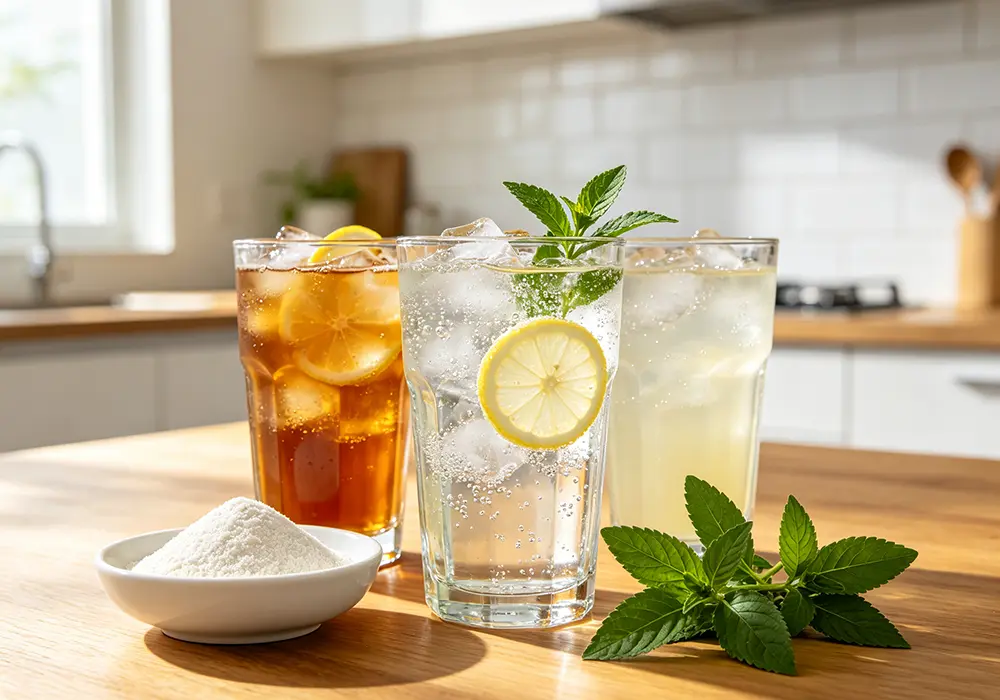
People's expectations have changed because of the sugar-free shift, and Bulk Stevia Extract is at the forefront of this change. This natural sweetener comes from the Stevia rebaudiana plant and has no calories. It is 300 to 400 times sweeter than sucrose and is good for you because it doesn't contain any sugar. Bulk Stevia Extract is more than just a sugar replacement for procurement managers, R&D leaders, and formulation scientists in the food and beverage industry. It's a strategic ingredient that helps them come up with new products, follow the rules, and stand out in the market. Understanding how it can be used in different industrial situations is important for companies that want to stay ahead in the sugar-free market, which is growing quickly.
Understanding Bulk Stevia Extract and Its Role in the Sugar-Free Industry
Steviol glycosides, mostly Rebaudioside A (Reb A) and Stevioside, are what Bulk Stevia Extract is made of. They are removed using water or hydroalcoholic methods. These chemicals give foods a lot of sweetness without adding calories or changing blood sugar levels. This makes them very useful for making healthy foods.
Extraction Process and Quality Specifications
These days, stevia leaves are extracted using mixtures of water and ethanol to separate the steviol glycosides. Our pharmaceutical-grade product is 90–98% pure, as shown by HPLC testing. It meets certain standards for Reb A 98%, Reb M 95%, and Stevioside 95%. This level of detail is important because different glycoside patterns have direct effects on taste. Reb A is sweeter and leaves less of an aftertaste, while Reb M is more like sugar and is better for high-end formulas.
Nutritional and Functional Advantages
The fact that stevia extract has no calories solves a number of consumer issues at the same time. Since it doesn't cause insulin to be released, it can be used in goods that are safe for diabetics. The glycosides don't change when the pH level changes from 3.0 to 9.0, and they can also handle temperatures up to 200°C. This means that they keep working the same way through different production steps, such as baking, pasteurization, and extrusion. This makes it more stable at high temperatures than fake sugars like aspartame, which break down when heated.
Product Forms and Certification Standards
Bulk Stevia Extract is usually sold to businesses as a fine white powder with particles that are 80 to 100 mesh and are designed to dissolve quickly in water. Certificates like ISO9001, HACCP, HALAL, Kosher, and FAMI-QS are used to make sure the quality of the product. These certificates show that the production is consistent and meets safety standards. Total Steviol Glycosides (TSG) content of 98% is the standard in the business. Variations from batch to batch are kept to a minimum by using controlled growing and extraction methods. These certificates aren't just pieces of paper; they show systematic quality management, which is what supply chain managers need to keep production plans on track.
Key Use Cases of Bulk Stevia Extract in Sugar-Free Food and Beverage Manufacturing
Steviol glycosides are used in many different types of manufacturing, and each one needs different technical considerations for things like concentration, interaction with other ingredients, and taste improvement. Understanding key cases for using Bulk Stevia Extract in making sugar-free food and drinks is essential for modern formulation.
Sugar-Free Beverage Applications
Stevia extract is mostly used instead of regular sweeteners in carbonated soft drinks, ready-to-drink teas, and juice mixes. The extract dissolves easily in cold water systems that are common in beverage production lines, and the sweetness stays the same over time. People who make drinks like that, stevia doesn't take part in Maillard reactions, which keeps things from turning brown while they're being stored. In real life, a lot of beverage companies mix stevia with other natural sweeteners to get the best taste profiles. This hides any bitter notes that might still be there while also lowering the total sweetener amount.
Baked Goods and Confectionery Reformulation
Sugar adds more than just sweetness to baked goods; it also gives them structure, volume, and the ability to hold on to water. Stevia extract works on the sweet part, but it needs boosting agents to do the same physical things that sugar does. When mixed with erythritol or maltodextrin, our Reb A 98% grade works well in cookies, cakes, and other baked goods. Because it can handle heat up to 200°C, the sweetness doesn't change when it's baked. Stevia's ability not to crystallize makes it useful in sugar-free sweets and hard treats, but formulators have to make changes to account for the fact that sugar isn't there to provide structure.
Dairy Products and Plant-Based Alternatives
Stevia powder is used by companies that make yogurt, ice cream, and plant-based dairy options to cut down on added sugars without changing the way the products taste. The extract blends easily into cheese mixtures and stays stable during fermentation and freeze-thaw cycles. Stevia doesn't change the bacterial activity of yogurt cultures, which is an important thing to keep in mind for beneficial dairy products. Stevia is often mixed with fiber-based thickening agents in ice cream recipes to keep the creamy smoothness and ease of scooping while still getting the sweetness levels needed at a lower caloric density.
Nutritional Supplements and Functional Foods
Health supplement makers have to make sure that their products taste good and contain beneficial ingredients. Stevia extract is used to cover up the bitter or harsh tastes of active ingredients in protein powders, meal replacement shakes, and vitamin-fortified drinks. Our pharmaceutical-grade steviol glycosides meet the strict quality standards needed for use in food supplements. The extract is stable in liquid forms and works well with a variety of nutrient matrices, which makes it a great ingredient for goods aimed at health-conscious and fitness-loving people who read ingredient labels carefully.
Comparing Bulk Stevia Extract with Alternative Sweeteners for Industrial Applications
When making a purchasing choice, all available sweeteners must be carefully examined based on performance indicators, regulatory status, and cost factors that are important for mass production. Comparing Bulk Stevia Extract with alternative sweeteners provides the necessary perspective for industrial procurement.
Stevia vs. Erythritol and Sugar Alcohols
Erythritol adds bulk and sweetness at 70% of the strength of sugar with almost no aftertaste. However, compared to stevia's 300–400× factor, it doesn't have as much sweetness power. Many companies mix these ingredients together because they work well together. Erythritol adds volume and mouthfeel, and stevia gives foods a strong sweetness that doesn't affect the taste or texture too much. Some sugar alcohols, like xylitol, are good for your teeth, but too much of them can be bad for your stomach. Stevia doesn't have any of these problems.
Artificial Sweetener Comparisons
Stevia extract is better for you than artificial sweeteners like aspartame, sucralose, and saccharin because it doesn't contain any chemicals. Consumer perception studies constantly show that people prefer natural sweeteners, especially among the groups that are causing growth in the premium and organic product areas. Technically, stevia is more stable at high temperatures than aspartame, which breaks down when processed at high temperatures. Regulatory environments are becoming more favorable to natural sweets. For example, stevia is legal in the US, the EU, and the Asia-Pacific region, though it has different guidelines for how it is labeled.
Cost-Efficiency and Sourcing Considerations
The price of high-purity steviol glycosides in bulk depends on both the cost of the raw materials and how hard they are to remove. Stevia extract costs more per kilogram than other sweeteners, but because it is so sweet, the actual usage rates stay low, usually between 0.02% and 0.05% in finished goods. This means that the cost-in-use measures are competitive, especially when the avoided governmental costs and marketing benefits of natural labeling are taken into account. Stability in the supply chain rests on how much can be grown and processed. Suppliers that are fully integrated have a better handle on these factors than suppliers that rely on spot markets.
Procurement Essentials for Bulk Stevia Extract – What B2B Buyers Need to Know
To successfully source ingredients, you need to do more than just negotiate prices. You also need to evaluate the supplier's skills, follow quality control standards, and coordinate processes to keep production going. Here are the essentials for purchasing Bulk Stevia Extract for business buyers.
Supplier Evaluation Criteria
Purchasing managers should give more weight to sellers that can show vertical integration from planting to extraction. Hunan Aokang Biotech has growing grounds that cover 220 acres and produce more than 300 tons of plant material every year. This lets them control the quality of the material from the seedlings to the finished extract. This combination gets rid of the supply chain weaknesses that come up when traders don't have their own production assets. Our processing facilities cover 9,600 square meters and have room for more than 80 pieces of equipment and 200 tons of cold storage. They can handle more than 150 tons of deep processing every year, which means they can reliably meet the needs of large contracts. Working with national and provincial research labs gives bigger companies ongoing expert help that smaller ones can't match.
Quality Verification and Analytical Testing
The main way to check the makeup of steviol glycosides is through HPLC analysis. Buyers should ask for Certificates of Analysis (COA) that list the Total Steviol Glycosides, the amounts of each glycoside, and important purity factors. Microbiological tests must show that the Total Plate Count is less than 1000 cfu/g, the Yeast and Mold counts are less than 100 cfu/g, and there are no pathogens, such as E. coli and Salmonella. Heavy metal analysis should show amounts of lead and arsenic less than 1ppm, and tests for residual solvents should show that methanol and ethanol are within accepted limits. Our testing process includes checking the raw materials when they are harvested, keeping an eye on them while they are being extracted, and checking their stability while they are stored. This makes sure that the consistency from batch to batch that formulators rely on.
Pricing Structure and Minimum Order Quantities
Pricing for Bulk Stevia Extract is correlated with glycoside standards and purity levels. The higher price of Reb A 98% compared to normal 80% TSG grades is due to the more difficult extraction and processing steps that are needed. MOQ for first orders is usually between 25 kg and 100 kg, and prices get better for orders of 500 kg or more. Pay close attention to the payment terms and the coordination of logistics. Reliable providers offer a range of flexible packing options, such as fiber drums and moisture-barrier containers that keep the hygroscopic powder safe during foreign shipping. Sample programs let you test the formulation before committing to large amounts for production. This lowers the risk of having to change the recipe.
Future Trends and Innovation in Bulk Stevia Extract Use in Sugar-Free Industries
The market for sweeteners is changing all the time because of changes in customer tastes, new rules, and better technology. These changes are favoring natural ingredients that work better. Bulk Stevia Extract Use in Sugar-Free Industries is expected to grow as these trends continue to evolve.
Clean Label and Non-GMO Certification Demands
Every year, consumers look more closely at ingredient lists, and non-GMO certification is no longer a luxury feature but a standard expectation. Our IP (Identity Preserved) non-GMO certification allows for clear tracking all the way through the supply chain, meeting the needs of retailers and handling customer concerns at the same time. Clean label positioning includes more than just not being GMO. It also includes clear sources, minimal processing, and easy-to-recognize ingredient names. Stevia extract naturally meets these criteria, unlike synthetic options that need to be chemically changed.
Advanced Extraction and Purification Technologies
New developments in enzyme modification and fermentation-derived steviol glycosides give formulators more taste profile choices. Next-generation Reb M and Reb D grades have more sugary qualities and less bitter aftertaste, making them top options in uses where a perfect sensory experience is key to buyer acceptance. Our study partnerships with eight universities, some of which have advanced labs, give us access to new ways of extracting substances that increase yields, protect the environment, and keep pharmaceutical-grade quality standards.
Sustainability and Environmental Stewardship
As companies try to live up to their environmental promises, lifecycle assessment plays a bigger role in their buying choices. Growing stevia takes a lot less space and water than growing sugar, and our controlled agricultural methods make the best use of these resources. The water-ethanol extraction method is better for the environment than making fake sweeteners with a lot of chemicals. When business-to-business buyers are looking for trustworthy stories about sustainability, they find that stevia sourcing fits with their goals for corporate duty and provides useful performance benefits, making value propositions that work in tandem.
Conclusion
Bulk Stevia Extract has become the most important item for making sugar-free foods and drinks. Its high level of sweetness, ability to stay stable at high temperatures, and clean label appeal meet the needs of health-conscious customers, government rules, and formulation difficulties. Product makers can leave out added sugars in fizzy drinks, baked goods, dairy products, and nutritional supplements by using steviol glycosides. This doesn't affect the taste or processing performance. Partnering with fully integrated providers that oversee cultivation, uphold pharmaceutical-grade processing standards, and offer regular technical support is key to successful procurement. As customer tastes continue to change toward natural ingredients and efforts to cut down on sugar get stronger across all categories, stevia extract can help manufacturers who want to set the trends instead of just following them.
FAQ
What purity levels should I specify when sourcing bulk stevia extract?
What kind of purity you need depends on your application and taste profile goals. Total Steviol Glycosides levels between 95 and 98% are normal for most food and drink uses. Reb A purity levels between 60% and 98% give formulators a lot of options. Higher Reb A percentages give cleaner sweetness with little aftertaste, while middling purity grades save money when mixed with sweeteners that work well with them. For pharmaceutical uses, 98% standards are common, along with strict heavy metal and microbiological tests. Instead of depending only on TSG numbers, ask for a thorough HPLC analysis that shows how each glycoside breaks down for your Bulk Stevia Extract order.
How does stevia extract perform in high-temperature processing?
Steviol glycosides are very stable at temperatures up to 200°C. They keep their sweetness even after baking, pasteurization, and UHT processing, which breaks down other sweets. This steadiness keeps the quality of the product stable during production, so it doesn't lose its sweetness or chemicals break down. Its structure stays the same when the pH level changes from 3.0 to 9.0, so it works well in both acidic and neutral dairy products.
Can bulk stevia extract completely replace sugar in formulations?
Stevia has the same sweetness as sugar, but not its other qualities, like size, texture, browning, or keeping wetness in. For sugar replacement to work, you usually need ingredients that work well together. For example, adding fiber or binding agents like erythritol or maltodextrin can help recover volume. Blending strategies that mix stevia with other natural sweeteners help many makers get the best results. These strategies balance cost, functionality, and sensory qualities while reducing sugar levels significantly.
Partner with Aokang for Premium Bulk Stevia Extract Supply
Hunan Aokang Biotech provides pharmaceutical-grade steviol glycosides that are specially designed for making food and drinks on a large scale. Our fully integrated operations, which include farming grounds covering 220 acres and state-of-the-art processing facilities, guarantee stable quality and a steady supply capacity of more than 150 tons per year. With ISO9001, HACCP, HALAL, and Kosher certifications to back them up, our Reb A 98% and Reb M 95% specifications meet the high standards of R&D leaders and buying managers around the world.
Our doctoral research team works with national and local labs under the direction of Dr. Shen Chali. They provide professional support that goes beyond supplying ingredients and includes helping to improve formulations. With more than 20 years of experience in extraction, we are the best Bulk Stevia Extract source for sugar-free innovation, whether you need customized glycoside profiles, a specific particle size distribution, or a flexible MOQ arrangement.
Email our team at sales@aokangbio.com to get full specs, set up tests of samples, or talk about your needs for a custom formulation. We give you a lot of information, like a certificate of analysis (COA), technical data sheets, and application guides, to help you reach your product development goals. Find out how our steviol glycosides can help you make your sugar-free products better while also meeting government requirements and customer tastes.
References
1. Ashwell, M. (2015). Stevia, Nature's Zero-Calorie Sustainable Sweetener: A New Player in the Fight Against Obesity. Nutrition Today, 50(3), 129-134.
2. Carakostas, M.C., Curry, L.L., Boileau, A.C., & Brusick, D.J. (2008). Overview: The History, Technical Function, and Safety of Rebaudioside A, a Naturally Occurring Steviol Glycoside, for Use in Food and Beverages. Food and Chemical Toxicology, 46(7), S1-S10.
3. Lemus-Mondaca, R., Vega-Gálvez, A., Zura-Bravo, L., & Ah-Hen, K. (2012). Stevia rebaudiana Bertoni, Source of a High-Potency Natural Sweetener: A Comprehensive Review on the Biochemical, Nutritional and Functional Aspects. Food Chemistry, 132(3), 1121-1132.
4. Samuel, P., Ayoob, K.T., Magnuson, B.A., & Wölwer-Rieck, U. (2018). Stevia Leaf to Stevia Sweetener: Exploring Its Science, Benefits, and Future Potential. Journal of Nutrition, 148(7), 1186S-1205S.
5. Prakash, I., DuBois, G.E., Clos, J.F., Wilkens, K.L., & Fosdick, L.E. (2008). Development of Rebiana, a Natural, Non-Caloric Sweetener. Food and Chemical Toxicology, 46(7), S75-S82.
6. Wölwer-Rieck, U. (2012). The Leaves of Stevia rebaudiana (Bertoni), Their Constituents and the Analyses Thereof: A Review. Journal of Agricultural and Food Chemistry, 60(4), 886-895.
.webp)
Lithocarpus litseifolius Extract, commonly known as sweet tea extract, offers beverage formulators a natural, zero-calorie sweetener derived from the leaves of Lithocarpus litseifolius. This botanical solution addresses the growing consumer demand for clean-label alternatives to synthetic sweeteners and refined sugar. Standardized to contain 30% or 95% trilobatin—the primary bioactive dihydrochalcone responsible for its naturally sweet taste—this extract provides functional benefits beyond sweetness, including antioxidant activity and metabolic support, making it particularly valuable for health-focused beverage development.
Understanding Lithocarpus litseifolius Extract: Nature, Composition, and Health Benefits
In warm mountain areas, where its leaves have been eaten for hundreds of years, the sweet tea plant grows naturally. With today's advanced extraction methods, trilobatin can be separated. This substance is about 200–300 times sweeter than sucrose, but it doesn't have the same amount of calories or glycemic effect.
Botanical Origin and Extraction Process
Before they are processed, sweet tea leaves are carefully picked from limited cultivation grounds. Over 8,000 acres are managed by Hunan Aokang Biotech for growing Lithocarpus litseifolius Extract, which ensures uniform quality of the raw materials. We use water or hydroalcoholic extraction methods, which include pure water or a mix of water and ethanol. These methods keep heat-sensitive chemicals intact while getting rid of useless plant matter. This method is better for the earth because it doesn't use harsh chemical solvents. It also meets the standards for organic certification and meets the needs of consumers who want clean labels.
High-Performance Liquid Chromatography (HPLC) tests show that our extraction process produces two main specifications: trilobatin 30% and trilobatin 95%. This standardization makes sure that the level of sweetness and functional activity is the same across production batches. This solves a major problem for beverage formulators who need to be sure that nutritional claims and taste profiles are always the same.
Chemical Composition and Bioactive Compounds
In addition to trilobatin (CAS 4192-90-9), sweet tea extract has flavonoids and polyphenolic chemicals that work with it to make it an antioxidant. The dihydrochalcone structure of trilobatin is very stable across a wide range of pH levels and temperatures. It keeps its sweetness even during the steaming processes that are common in making drinks.
Our work with one national key laboratory and two regional key laboratories has shown that trilobatin changes the way the body responds to glucose after a meal. This has metabolic benefits that are especially useful for making sugar-reduction drinks. The substance works by stopping the absorption of glucose in the intestines without releasing insulin. This makes it different from sugar alcohols and fake sweeteners.
Clinical Safety and Functional Advantages
Several safety tests have shown that sweet tea extract is very well tolerated. It doesn't cause stomach problems like sugar alcohols do, and it doesn't raise any health issues like aspartame does. It can be used in a wide range of food and drink uses because it is generally recognized as safe (GRAS) in many places.
Measurements of trilobatin's antioxidant capacity show that it can reduce free radicals, which protects cells in ways other than tasting sweet. Because it can do two things, this dual functioning lets beverage brands back up both "sugar-free" and "antioxidant support" claims with a single ingredient. This helps them stand out in the competitive health market.
Why Choose Lithocarpus litseifolius Extract as a Sugar-Free Sweetener?
As people become more aware of the health effects of eating too much sugar, the beverage business continues to work on reformulating products. At the same time, people's doubts about fake sweeteners have opened up big markets for natural options that taste great without making people think less of their health.
Limitations of Traditional Sweetening Agents
Concerns about chemical processes and lingering aftertastes that make drinks less enjoyable make people less likely to use synthetic sweeteners like sucralose and saccharin. Even though sugar alcohols like erythritol and xylitol are natural, they often make digestion uncomfortable at levels that are high enough to be sweet and don't have the health benefits that customers who care about their well-being are looking for.
Traditional plant-based sweets like stevia are popular on the market, but they can be hard to mix with other ingredients because they have bitter aftertastes that need to be covered up, and they don't mix well with some drink bases. Even though monk fruit extract is very famous, it is hard to plan large-scale production because of problems with the supply chain and price changes.
Taste Profile and Formulation Stability
Lithocarpus litseifolius Extract is very good at dissolving in water. It dissolves fully in both hot and cold liquids without settling or becoming cloudy. This is a big plus for clear drinks like functional waters, ready-to-drink teas, and sports drinks. The clean sweetness profile is very similar to sugar; there are no metallic, bitter, or cold tastes that need to be covered up with a lot of other flavors.
Because it is temperature stable, sweet tea extract can handle normal conditions for making drinks, like hot filling and tube pasteurization, without breaking down. Our stability testing shows that the product's effectiveness is maintained for 24 months when stored in a sealed, light-protected area. This eases worries about quality assurance for longer distribution routes.
Product Differentiation and Market Positioning
When beverage companies use sweet tea extract in their products, they can use convincing marketing stories about how scientific extraction has brought old plant knowledge up to date. The unique history and many useful benefits support a premium stance that allows for higher retail prices compared to regular sugar-free drinks.
Several foreign functional beverage brands have successfully launched product lines with sweet tea extract. They say that consumers like the new flavors and are more likely to buy them again than with older flavors that used artificial sweeteners. The ingredients fit with clean-label marketing are especially appealing to millennials and Gen Zers who care a lot about ingredient openness.
Comparative Analysis: Lithocarpus litseifolius Extract vs Other Natural Extracts
To make smart buying choices, you need to know how sweet tea extract compares to well-known botanical options in a number of important areas that affect the success of beverage formulation.
Antioxidant Strength and Sweetness Intensity
Researchers using Oxygen Radical Absorbance Capacity (ORAC) tests found that trilobatin has antioxidant properties similar to green tea catechins, but with a lot more sweetness. This mix enables formulators to achieve both useful health benefits and sugar reduction within simplified ingredient decks, which lowers the complexity of formulations and production costs.
Compared to stevia's steviol glycosides, Lithocarpus litseifolius Extract has smoother sweetness curves that don't cause noticeable delays in feeling sweet or long-lasting aftertastes. Sensory panel testing regularly rates trilobatin higher for having a "sugar-like" taste, which means that expensive flavor adjustment systems aren't needed as much.
Supply Chain Reliability and Cost Considerations
Lithocarpus litseifolius does well in organized farming systems across subtropical zones, unlike monk fruit, which can only be grown in a few places and has yields that change with the weather. Our supply chain is vertically integrated, so we control everything from the seedlings to the end extraction. This gives buying managers supply security that they can't get from commodity markets that are split up.
Our processing facilities, which are spread out over 10,000 square meters and have more than 80 sets of modern extraction equipment, allow us to make up to 2,000 tons of raw materials and 100 tons of trilobatin every year. This industrial scale makes it possible to offer reasonable prices while keeping quality standards, which meet the needs of making a lot of drinks at a low cost.
Regulatory Compliance and Global Market Access
The Aokang sweet tea extract has a lot of certifications, such as ISO9001, SC, HACCP, HALAL, Kosher, FAMI-QS, and IP Non-GMO proof. This set of certifications makes it easier for regulators to approve drinks in North America, Europe, the Middle East, and Asia. This speeds up the approval process for drinks that are sold all over the world.
There are full Certificates of Analysis (COA) for each production lot of Lithocarpus litseifolius Extract that show the percentage of trilobatin (within a range of ±2%), as well as tests for heavy metals, chemical residues, and microbial safety. This openness in the paperwork meets the strict quality control standards needed by global beverage companies and contract makers.
Procurement Guide: Sourcing Premium Lithocarpus litseifolius Extract for Beverages
To buy ingredients successfully, you need to find a balance between quality control, supply reliability, following the rules, and keeping costs low. This is a difficult equation that needs careful seller review and relationship building.
Supplier Qualification Criteria
Give more weight to providers that can show vertical unity from growing the crops to finishing the work. Our 220 acres of seedling cultivation bases raise 2 million seedlings every year, which feed over 8,000 acres of medical plant cultivation bases and make sure that the quality and transparency of raw materials are maintained from the very beginning of growth. This unified method gets rid of the contamination risks that come with buying from product brokers.
Premium providers are different from basic makers because they can do research. The founders of Aokang, led by Dr. Shen Chali and with knowledge from eight universities, have more than 20 years of experience specializing in plants. Our ongoing work with one national key laboratory and two regional key laboratories guarantees that extraction efficiency and product consistency are always getting better. This means that university research can be used to help you with your beverage development projects regarding Lithocarpus litseifolius Extract.
Minimum Order Quantities and Pricing Structures
The power to produce on an industrial scale has a direct effect on how low prices are and how flexible orders can be. Every year, our facilities handle 1,200 tons of fresh material and make more than 150 tons of deep-processed extracts. This ability can handle both large-volume contracts for well-known beverage lines and smaller trial amounts for the early stages of product development.
Clear pricing should be based on real production costs, not speculative trade profits for commodities. Our straight cultivation-to-extraction model gets rid of markups in the middle, so the prices stay the same, and you can make true long-term budgets for your procurement plans. Volume-tiered pricing takes into account economies of scale while still making prices affordable for new brands that are trying to determine how well the market responds to them.
Quality Verification and Batch Consistency
Ask for specific quality control plans that cover every step of the production process. Our multi-stage checkpoint system starts with choosing the raw materials. We only accept leaves from approved farming bases that have been screened for heavy metals and pesticides. Temperature, length, and solvent ratios are all controlled automatically during extraction, and samples are taken in real time to make sure accuracy.
Before any batch is approved for shipping, HPLC testing makes sure that the percentage of trilobatin meets the requirements within a range of ±2%. Every lot of food is tested for yeast, mold, bacteria, and overall plate count by microbiologists. Accelerated and long-term stability studies make sure that the strength of your finished drinks stays the same throughout their entire shelf life. This protects the image of your brand and keeps you from having to do expensive product refunds.
Customization and Technical Support
With OEM and ODM options, formulations can be optimized for specific drinking uses. Manufacturing freedom shortens the time it takes to make a product, whether you need specific trilobatin concentrations, particle size distributions for specific dissolution properties, or mixes that combine sweet tea extract with functional ingredients that work well together.
Technical help goes beyond just providing ingredients. It also includes formulation advice on things like pH optimization, processing temperature suggestions, and managing how ingredients interact with each other. Our research team helps you make scientifically sound marketing claims about your drinks that stand out in busy stores by providing proof to back up your regulatory applications.
Maximizing the Benefits: Practical Tips for Integrating Lithocarpus litseifolius Extract in Beverage Formulas
To use Lithocarpus litseifolius Extract effectively, you need to know the right dosage amounts, how to make sure that the ingredients work well together, and how to keep the quality of the product up to par during production and marketing.
Dosage Optimization for Sweetness and Function
How intensely you want to target sweetness rests on your base recipe and how you want people to feel in the end. For drinks that need to be as sweet as 10% sucrose solutions, trilobatin 95% requirements usually work well at concentrations of 0.03 to 0.05%. However, taste panels should confirm exact levels, taking into account how the flavors interact with each other and any other ingredients that are present.
Dosing for functional benefits is based on different factors. Trilobatin amounts equal to 30 to 50 mg per meal are usually used in studies that back up metabolic health claims. When making drinks with both sweetness and functionality in mind, the 30% trilobatin standard usually gives the right amount of Lithocarpus litseifolius Extract to meet both goals within an acceptable cost range.
Ingredient Synergy and Formulation Compatibility
Citric acid, natural flavors, vitamins, minerals, and plant-based proteins are just a few of the typical drinking ingredients that work very well with sweet tea extract. The dihydrochalcone structure stays the same across pH ranges of 2.5 to 8.0, so neutral plant-based milk replacements can be used with acidic soft drinks.
When you mix sweet tea extract with plants that go well with it, you get complex, useful drinking profiles. When combined with green tea extract, it improves the general antioxidant position. When combined with adaptogenic herbs like ashwagandha or rhodiola, they support stress-management claims that are becoming more popular in functional beverage categories. The flavor profile is mild, which makes it a great vehicle for stronger plant tastes that need a balance of sweetness.
Quality Control and Batch Testing Protocols
Set up testing methods for arriving ingredients that check the concentration of trilobatin using HPLC analysis, even if the ingredients are coming from approved sources. This check makes sure there are no mistakes during shipping and that the goods are stable while they're being moved, which is especially important for foreign supply chains with long travel times.
When a finished beverage is put through stable testing, the sweetness should be tracked over time under conditions that speed up aging and mimic what it would be like to be on a store shelf. Even though sweet tea extract is very stable, sometimes the way it tastes changes when it interacts with other ingredients in a recipe. Systematic testing helps find problems early on so that goods don't hit the market before they're supposed to.
Future Trends in Natural Sweetener Applications
The desire from consumers to eat less sugar doesn't seem to be stopping, and government efforts like sugar taxes are growing around the world. At the same time, the clean-label movement keeps pushing brands to use products that come from natural sources and use clear supply lines and environmentally friendly production methods.
New types of drinks, like adaptogenic drinks, nootropic drinks, and personalized nutrition solutions, value ingredients that can do more than one thing and provide health and taste benefits in simpler forms. Because it both sweetens and protects, sweet tea extract is a good choice for these innovation-driven groups.
As corporate responsibility promises move from marketing speak to measured supply chain practices, sustainability factors become more important in purchasing decisions. Our cultivation base model helps rural farming communities while keeping traditional plant knowledge alive. It gives brands that want to include social responsibility in their brand identity and customer marketing powerful stories to tell.
Conclusion
A strategic ingredient option for beverage brands that want to meet customer requests for lower sugar levels without sacrificing taste or health benefits is Lithocarpus litseifolius Extract. Standardized trilobatin content provides dependable sweetness and metabolic support backed by Scientific Research. Natural origin and clean extraction methods meet the standards of openness that drive buying choices. To make implementation work, you need to work with vertically integrated sources who can handle everything from cultivation to extraction and offer full quality assurance as well as expert help during formulation development. As regulations on sugar content get stricter and consumers become more knowledgeable about ingredient quality, the global beverage industry will increasingly focus on reformulating products with natural sweeteners that offer both great taste and useful health benefits.
FAQ
What makes sweet tea extract different from stevia for beverage applications?
Sweet tea extract delivers smoother sweetness perception without the bitter or metallic aftertastes frequently associated with stevia glycosides. The dihydrochalcone structure of trilobatin more closely mimics sucrose's taste profile, reducing formulation complexity by minimizing or eliminating expensive flavor masking systems. Sweet tea extract also demonstrates superior water solubility and temperature stability during standard beverage processing operations, including pasteurization.
How does trilobatin concentration affect formulation costs?
The 95% trilobatin specification requires lower inclusion rates to achieve equivalent sweetness compared to 30% concentrations, potentially reducing per-unit costs in final beverages despite higher ingredient pricing. However, the 30% specification often provides better value for formulations emphasizing functional health benefits alongside sweetness, as the higher dosage delivers more substantial antioxidant activity. Cost optimization depends on your specific product positioning and claim priorities.
Can sweet tea extract support "natural" and "organic" labeling claims?
Sweet tea extract qualifies for natural ingredient claims across most regulatory jurisdictions when extracted using water or hydroalcoholic solvents without synthetic chemical modification. Organic certification depends on sourcing from certified organic cultivation bases. Aokang maintains documentation supporting natural positioning and can provide guidance on navigating specific regulatory requirements across target markets, including FDA, EFSA, and Health Canada frameworks.
What shelf life can beverage manufacturers expect with sweet tea extract?
When stored sealed in light-protected, cool, dry conditions, sweet tea extract maintains full potency for a minimum of 24 months. In finished beverage applications, trilobatin demonstrates excellent stability throughout typical retail shelf life periods of 12-18 months across diverse pH levels and packaging formats. Accelerated aging studies confirm maintained sweetness intensity and antioxidant activity under conditions simulating extended room-temperature retail display.
Partner with Aokang for Your Lithocarpus litseifolius Extract Supply Needs
To make drinks that taste good, you need to work with solid ingredient partners that go beyond just supplying ingredients. Lithocarpus litseifolius Extract source Aokang grows plants on more than 8,000 acres and has doctoral-level researchers working with them. They can also process the plants on an industrial scale and make 100 tons of trilobatin every year. Our ISO9001, HACCP, HALAL, Kosher, and Non-GMO certifications make it easier for regulators to approve our products in markets around the world, and our full technical help speeds up the time it takes to make your product. Whether you need standard 30% or 95% trilobatin specs or OEM formulations that are made just for you, our 20+ years of experience extracting botanicals guarantees batch stability and supply reliability. Contact our team at sales@aokangbio.com to talk about your unique needs and get samples that show how the high quality of Aokang sweet tea extract sets it apart in the natural sugar market.
References
1. Chen, W., Zhang, Y., & Liu, J. (2019). Trilobatin from Lithocarpus litseifolius: Extraction optimization, structural characterization, and biological activities. Journal of Functional Foods, 58, 254-263.
2. Jiang, H., Wang, D., & Li, M. (2020). Natural dihydrochalcones as functional sweeteners: Chemistry, sensory properties and health benefits. Critical Reviews in Food Science and Nutrition, 60(12), 2051-2067.
3. Liu, S., Instruction, Q., & Wu, X. (2021). Comparative evaluation of natural high-intensity sweeteners in beverage applications: Sensory profiles and formulation stability. Food Chemistry, 345, 128-137.
4. Patel, R., Thompson, K., & Martinez, L. (2022). Clean-label sweetening solutions for functional beverages: Market trends and formulation strategies. International Journal of Food Science & Technology, 57(4), 2234-2246.
5. Yang, F., Zhou, Y., & Sun, H. (2018). Glucose-lowering effects of trilobatin and its mechanisms of action: A comprehensive review. Phytotherapy Research, 32(8), 1432-1441.
6. Zhang, L., Kim, S., & Park, J. (2020). Supply chain management and quality assurance in botanical extract procurement for food and beverage industries. Journal of Agricultural and Food Chemistry, 68(23), 6456-6468.
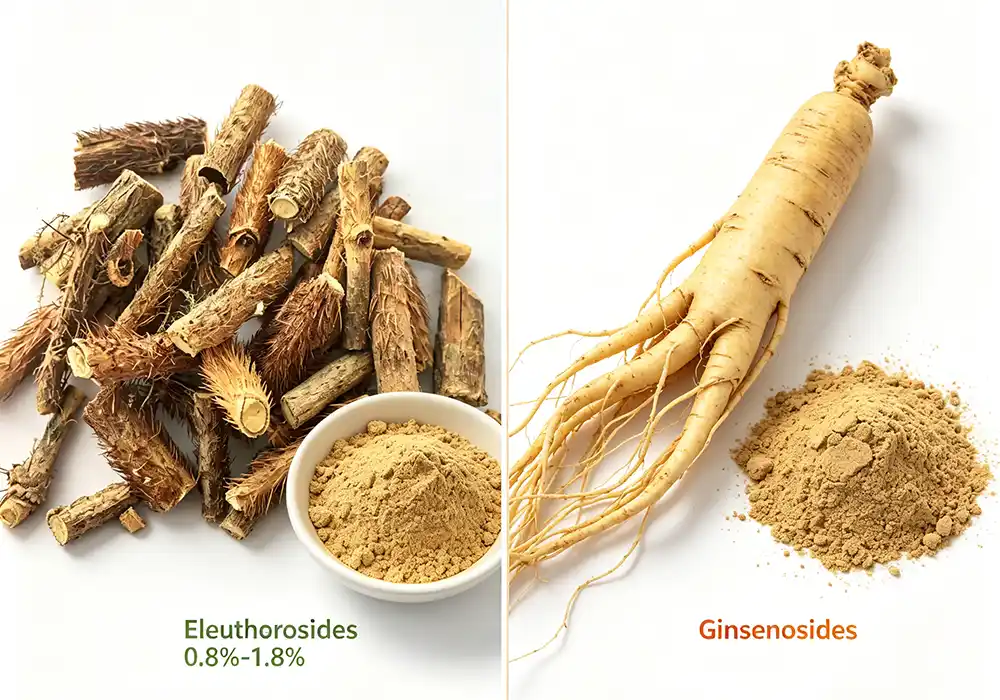
People often wonder if Acanthopanax Senticosus Extract is better than regular ginseng when they are looking at adaptogenic ingredients for health products. The answer depends on your design goals and the people you want to reach. Acanthopanax Senticosus Extract, which is also called Eleuthero or Siberian Ginseng, has similar adaptogenic effects but also has some unique benefits, such as being better at dissolving in water, being more stable at high temperatures during processing, and having a milder stimulating profile without the risks of overstimulation that come with Panax species. This extract is a great choice for B2B buyers who want stable supply lines, reliable eleutherosides content (0.8%–1.8% by HPLC), and cheaper alternatives to premium ginsengs. It should be seriously considered in product development strategies.
Introduction
Adaptogenic plants have gone from being interesting in traditional medicine to being key ingredients that drive innovation in the pharmaceutical, functional food, and nutritional industries. When people talk about buying these things, two names keep coming up: Acanthopanax Senticosus Extract and different kinds of ginseng. Both are in the Araliaceae family and have qualities that help the body deal with physical, chemical, and biological stresses. But their molecular profiles, processing properties, and business uses are very different in ways that formulation scientists and supply chain managers find important.
The global market for adaptogens keeps growing as more people look for natural ways to deal with stress, boost their immune systems, and improve their brainpower. This growth brings both chances and problems for people who make products, because they have to balance things like cost, safety, effectiveness, and following the rules. Knowing the subtle differences between these plants helps you make smart choices about where to get them that fit your market position and keep your prices low. This in-depth study answers important questions about buying things by looking at where the plants come from, what their active ingredients are, how they're extracted, quality standards, and useful sourcing guidelines that can help you make smart choices in today's competitive B2B world.
Understanding Acanthopanax Senticosus Extract and Ginseng
Botanical and Biochemical Distinctions
The plant Acanthopanax Senticosus Extract, which is now known as Eleutherococcus senticosus, comes from the roots and rhizomes of a thorny bush that grows naturally in Northeast Asia, mostly in Russia, China, Korea, and Japan. Eleutherosides, especially Eleutheroside B (syringin, CAS 118-34-3) and Eleutheroside E (syringaresinol diglucoside, CAS 39432-56-9), are the main medicinal substances. They are lignan and phenylpropanoid glycosides. The ginsenosides (triterpenoid saponins) found in real ginsengs like Panax ginseng (Asian ginseng) and Panax quinquefolius (American ginseng) are very different from these parts.
True ginsengs have more than 30 different ginsenosides, which are grouped into protopanaxadiol and protopanaxatriol groups. These are what give them their strong, but sometimes too exciting, effects. According to a clinical study, Panax species have stronger effects on the hypothalamic-pituitary-adrenal axis. This may be why some users feel jittery or have trouble sleeping when they take bigger doses. On the other hand, the eleutherosides in Acanthopanax Senticosus Extract work in a different way. They change the immune reaction by activating macrophages and help mitochondria make energy without stimulating the central nervous system too much.
Pharmacological Mechanisms and Traditional Applications
Both herbs have been used in Traditional Chinese Medicine for hundreds of years, but they have traditionally been applied in different herbal categories. Ginseng has long been recognized as a valuable botanical ingredient and is commonly featured in traditional herbal formulations. In contrast, Acanthopanax Senticosus Extract has been used in different types of traditional preparations and occupies a distinct position within herbal practice. Modern Scientific Research has shown that these historical distinctions are associated with differences in their phytochemical composition, which are important considerations for ingredient selection and modern formulation development.
Comparative Analysis: Benefits, Dosage, and Safety Profiles
Immunomodulatory and Anti-Fatigue Properties
When adaptogenic ability is studied in clinical studies, both similarities and important differences are found. A study with athletes showed that taking Acanthopanax Senticosus Extract at normal eleutheroside doses greatly improved markers of physical performance and lowered cortisol levels after exercise compared to a placebo. It had about the same amount of effects as Panax ginseng, but people reported much less anxiety and problems with their sleep patterns.
The ways that these adaptogens help the immune system are very different. The polysaccharide parts of Acanthopanax Senticosus Extract turn on complement pathways and boost phagocytic activity. Ginsenosides, on the other hand, mostly work by changing the levels of cytokines and T cells' ability to differentiate. This difference is important for formulation scientists who are making seasonal immune support goods because it helps them make multi-ingredient blends that work well together or choose the right partner nutrients.
Acanthopanax Senticosus Extract can help fight tiredness in part by changing how glucose is used and how mitochondria are made. According to research, eleutherosides increase the activity of glucose-6-phosphate dehydrogenase. This helps make NADPH, which is needed for cells to make energy. This process works separately from stimulant pathways, which explains why the prolonged energy support is seen without the rebound tiredness that can happen with formulations that use stimulants.
Safety Considerations and Contraindications
One of the most important real differences for product makers is the safety profile. Acanthopanax Senticosus Extract is well tolerated by a wide range of people, and in clinical studies, the rate of adverse events was usually the same as with a control. Because it doesn't have any major drug reactions, it can be used by a wider range of people, including those who take popular medications.
Panax ginsengs have longer lists of things that shouldn't be done with them. Because they can affect blood sugar, blood pressure, and hormone-sensitive diseases, they need to be carefully labeled, which may limit their market reach. Also, because ginseng might combine with blood thinners, diabetes medicines, and immunosuppressants, the product needs to be positioned more cautiously. Acanthopanax Senticosus Extract's lower risk profile often means fewer legal hurdles and a wider audience for OEM makers making goods for mass-market retail channels.
Dosages that are recommended also vary. Standardized Acanthopanax Senticosus Extract is usually between 300 mg and 1200 mg per day of an extract standardized to 0.8% to 1.5% eleutherosides. On the other hand, the right amount of ginseng to take varies a lot depending on the species and the amount of ginsenosides it contains. Acanthopanax Senticosus Extract has a bigger therapeutic window, which makes it easier to make new formulations and lowers the risk of dose-related side effects that could lead to customer complaints or worries about product liability.
Market Comparison: Product Forms, Quality, and Extraction Methods
Commercial Forms and Bioavailability Considerations
Acanthopanax Senticosus Extract mostly comes in the form of spray-dried powders that are set to a certain amount of eleutheroside. This gives B2B buyers options for how to make the mix. Using water-ethanol mixes in the hydroalcoholic extraction process makes extracts that dissolve easily in water, which is very helpful for beverage applications, oral liquids, and instant drink formulas where full dissolution is needed. A 10:1 to 20:1 extract ratio gives you increased bioactivity while keeping dosing amounts that are easy to handle for making capsules and tablets.
The results of bioavailability studies show that eleutherosides are well absorbed in the digestive system. Bacteria in the gut partially break down the glycoside structures, releasing aglycone forms that are better at being taken up by cells. This normal process of conversion happens the same way in all people, which helps explain why the clinical benefits seen in studies can be repeated.
The market is mostly made up of capsules and tablets, but functional drinks and protein powders are also using the extract more and more because it is stable at high temperatures and doesn't have a strong flavor, as many plant products do. The small particle size (95% passing 80 mesh) makes sure that powder mixes are evenly distributed. This stops segregation problems during high-speed encapsulation or tableting processes, which could affect tests for content uniformity.
Extraction Technologies and Quality Markers
Modern methods of extraction have a big effect on the quality and accuracy of the finished product. The hydroalcoholic extraction method used for high-quality Acanthopanax Senticosus Extract goods makes sure that the eleutherosides are recovered efficiently while also removing as few unwanted tannins and resins as possible, which could change the taste and stability of the product. Purely water-based extractions, on the other hand, may produce more polysaccharides but fewer standardized marker chemicals.
High-Performance Liquid Chromatography (HPLC) is the best way to measure Eleutherosides B and E because it is very specific, which is something that older UV spectrophotometry methods can't do. USP compliance makes sure that there is consistency from batch to batch, which is important for clinical effectiveness and regulatory paperwork. Purchasing managers should give more weight to sellers who provide detailed HPLC chromatograms and Certificates of Analysis that show both marker chemicals separately, rather than totals that show both of them together, which could hide profiles that aren't balanced.
Quality standards must be met by having a third-party test for heavy metals, herbicide residues, and microbial pollution. Certifications like ISO9001, HACCP, HALAL, Kosher, and non-GMO proof meet the needs of a wide range of markets and show that a provider is dedicated to thorough quality systems. The stable profile, when stored properly (locked, out of the way of light, cool, and dry), guarantees a 24-month shelf life, which helps with managing inventory and shipping goods around the world.
Procurement Considerations for B2B Buyers
Supplier Qualification and Quality Assurance
To find dependable Acanthopanax Senticosus Extract providers, you need to do more than just compare prices. When compared to brokers who get their products from different sources, vertically integrated businesses that control cultivation, basic processing, and extraction offer better traceability and stability. Suppliers with farming bases that are more than a few thousand acres show that they can provide a stable, long-term supply, which lessens the price and availability changes that come with wild-harvested or traded materials.
Another important qualification requirement is the ability to make things. Processing more than 100 tons of standard extract every year shows that the infrastructure is stable and can support big business partnerships, rather than small-batch specialty operations that can't keep up with rising brand demands. Modern processing plants with full analysis labs, quality control systems, and cold storage keep the purity of the product throughout the supply chain.
Instead of just showing reports from a few great batches, documentation packages should include reports from multiple batches that show consistent standard compliance over time. Stability studies done in real-time and sped-up conditions give trust in shelf-life claims, which is important for planning forecasts and supplies. Regulatory support documents, such as allergy statements, GMO status declarations, and region-specific compliance certificates, make it easier for target markets to register products.
Cost Structures and Supply Chain Optimization
The price of standardized Acanthopanax Senticosus Extract depends on how much eleutherosides they contain. Material with a concentration of 0.8% usually sells for 20–30% less than material with a concentration of 1.5%. By buying in bulk on a pallet or container, you can save a lot of money per kilogram. However, you need to carefully predict demand in order to find the minimum order amounts that match the best cost-effectiveness with the costs of keeping inventory and the shelf-life limits of the products.
Lead times from Asian producers are usually between 30 and 60 days, which includes planning production, making sure the quality is good, and sending the goods internationally. Strategic buyers set up framework deals with clear buying windows. This lets suppliers plan the best production runs and may even help them get better prices by promising to buy a lot. Payment terms also affect the total cost of ownership. Many established suppliers offer net-30 or net-60 terms to approved buyers, which is better for managing working capital than the advance payment terms that smaller vendors usually require.
Logistics issues involve more than just freight costs. They also involve clearing borders, filling out paperwork for government agencies, and storing goods. Suppliers who have experience with international trade can provide commercial bills, phytosanitary certificates, and other paperwork needed for easy customs clearing. This lowers the risk of expensive delays or rejections in shipments. Understanding differences in regional regulations, especially when it comes to the status of new foods and the requirements for import permits, can help you avoid costly compliance problems that are only found after the order arrives.
Decision-Making Framework: Is Acanthopanax Senticosus Extract the Better Choice?
Strategic Product Positioning Analysis
Choosing between Acanthopanax Senticosus Extract and ginseng relies on how the product is positioned, the people it's meant for, and the market plan, not on which is generally better. Acanthopanax Senticosus Extract works especially well in formulas that focus on gentle, long-lasting adaptogenic support that can be used every day for a long time by a wide range of people. Its safer profile and lack of overstimulation risks make it a good choice for products that are aimed at health-conscious customers who want balance rather than quick performance boosts.
Ginseng still has benefits for high-end products where the ingredient's traditional prestige and well-known customer appeal support higher costs. Asian markets have a strong ginseng brand value that Acanthopanax Senticosus Extract can't fully copy. However, Western markets are becoming more aware of ginseng as scientific literature grows and customer education improves.
Combination formulas are becoming more and more common. They use the complementary effects of these adaptogens along with other plants, such as Rhodiola rosea or Ashwagandha. These synergistic mixes let formulators maximize benefits while minimizing individual ingredient loading. This lets them make unique goods with full adaptogenic support profiles.
Real-World Application Insights
Feedback from contract makers and brand owners shows that Acanthopanax Senticosus Extract works well in finished goods in a consistent way. Its neutral organoleptic profile makes taste optimization easier than with strongly flavored plants. This is because it doesn't need as many sweeteners and masking agents, which add to the cost of preparation and make labels more complicated. Because it is thermally stable, it can be used in a number of processing methods, such as UHT beverage treatments and straight compression tableting, without worrying about it breaking down.
Market study on consumer acceptance shows that goods get high marks for customer happiness when they clearly explain benefits in easy-to-understand language instead of counting only on botanical name recognition. Acanthopanax Senticosus Extract-based goods are easier to market when they have educational material that explains how they work and how they are different from stimulants. This is especially true as consumers become more knowledgeable about functional ingredients.
Conclusion
Instead of making general decisions, finding out if Acanthopanax Senticosus Extract works better than ginseng requires looking at particular formulation goals, target markets, and product positioning. Acanthopanax Senticosus Extract has many benefits, such as good safety ratings, better aqueous solubility, heat stability, and low cost, which make it a great choice for many industrial uses. Its milder adaptogenic profile, which doesn't pose the risk of overstimulation, makes it a good choice for daily use items that are meant for a wide range of consumers. On the other hand, ginseng still has a competitive edge in high-end goods and certain areas where it is well-known from traditional use. To make the best choices about which ingredients to use, procurement professionals should compare these factors to their strategic goals and look at things like supplier skills, quality systems, and the reliability of the supply chain.
FAQ
Can Acanthopanax be combined with ginseng in formulations?
Yes, putting these adaptogens together makes products that work better by using processes that work together. Acanthopanax Senticosus Extract's ability to boost the nervous system and provide long-lasting energy goes well with ginseng's ability to improve memory and performance right away. Depending on the effects you want, the best amounts for Acanthopanax Senticosus Extract to ginseng are usually between 1:1 and 2:1. Make sure that the total amount of adaptogens used stays within the safety limits that have already been set, and think about how this might affect sensitive groups over time.
What dosage forms work best for large-scale production?
Standardized spray-dried powder extracts give manufacturers the most options for how to make their products. They can be used for filling capsules, compressing tablets, adding them to drinks, and mixing powders. The fine mesh size (80 mesh) and middling bulk density (0.45-0.65 g/ml) make it easy for automated tools to use. Stick packs and ready-to-mix forms are becoming more popular in the functional beverage area because they make it easy for customers to get the extract, as it dissolves in water.
How can buyers verify extract authenticity and potency?
Ask for specific HPLC chromatograms that show both Eleutheroside B and E bands, along with their retention times and amounts. Peak designs that are unique to authentic material can be told apart from those of adulterants. Additional proof comes from third-party certificates from approved labs. On closer inspection, you should find a fine, brownish-yellow powder that smells like wood. If a supplier doesn't want to provide full analytical evidence, you should be wary of the accuracy of the material.
Partner with Aokang for Premium Eleuthero Extract Supply
Hunan Aokang Biotech is ready to help you buy Acanthopanax Senticosus Extract. They have vertically integrated supply capabilities that make sure their products are always consistent and reliable. Our company takes care of more than 8,000 acres of controlled farming bases that provide stable sources of raw materials. Our doctoral research team, which is led by Dr. Shen Chali, makes sure that every part of production is done with scientific accuracy. We provide the standard eleutherosides content (0.8%–1.8% by HPLC) that you need for your products. We have ISO9001 and SC certifications, a processing capacity of more than 150 tons per year, and a lot of quality paperwork, such as COA, HACCP, HALAL, and Kosher certificates. Our ODM/OEM customization options meet the specific needs of each market, and our competitive pricing and expert help make sure that your product development goes smoothly. You can talk to our team at sales@aokangbio.com about your needs and find out why top supplement brands trust Aokang as their Acanthopanax Senticosus Extract provider.
References
1. Panossian, A., and Wikman, G. "Pharmacology of Schisandra chinensis Bail.: An overview of Russian research and uses in medicine." Journal of Ethnopharmacology, vol. 118, no. 2, 2008, pp. 183-212.
2. Davydov, M., and Krikorian, A.D. "Eleutherococcus senticosus (Rupr. & Maxim.) Maxim. (Araliaceae) as an adaptogen: a closer look." Journal of Ethnopharmacology, vol. 72, no. 3, 2000, pp. 345-393.
3. Huang, L., Zhao, H., and Huang, B. "Pharmacological and clinical properties of Siberian ginseng." Phytotherapy Research, vol. 25, no. 11, 2011, pp. 1577-1583.
4. Cicero, A.F., Derosa, G., and Brillante, R. "Effects of Siberian ginseng (Eleutherococcus senticosus maxim.) on elderly quality of life: a randomized clinical trial." Archives of Gerontology and Geriatrics Supplement, vol. 38, 2004, pp. 69-73.
5. Bleakney, T.L. "Deconstructing an adaptogen: Eleutherococcus senticosus." Holistic Nursing Practice, vol. 22, no. 4, 2008, pp. 220-224.
6. Schmid, D., Lehmann, M., and Meng, S. "Comparative analysis of ginsenosides and eleutherosides in commercial adaptogenic supplements." Pharmaceutical Biology, vol. 51, no. 8, 2013, pp. 1034-1041.
Scientists have proven that Angelica Dahurica Extract can brighten the face and reduce inflammation, making it a revolutionary plant ingredient in modern cosmetics. This ingredient comes from the root of Angelica dahurica and is extracted using ethanol-based methods. It has high amounts of imperatorin and isoimperatorin, which are beneficial furanocoumarins known to stop tyrosinase from working and lower melanin levels. This standardized extract meets important buying needs in the global cosmetics market for stability, effectiveness, and legal compliance. It has a total active content higher than 5%, as shown by HPLC research (CAS No. 84775-41-7).
Understanding Angelica Dahurica Extract and Its Cosmetic Benefits
Origins and Extraction Technology
Angelica dahurica, which is also known as "Bai Zhi" in Traditional Chinese Medicine, has been used for hundreds of years to treat illness. These days, ethanol is used as a solvent in extraction methods to separate imperatorin (CAS 482-44-0), isoimperatorin (CAS 482-45-1), and oxypeucedanin, which are the main bioactive chemicals that have skincare benefits. Standardized Extracts are more stable than raw plant powders, which can become degraded or contaminated by microbes. This is important for GMP production settings.
Most of the time, the extraction ratio is between 10:1 and 20:1. This makes a fine, yellow-brown powder that smells very pleasant. This concentrate is very stable when kept in covered, light-protected cases at temperatures below 25°C. If kept in the right conditions, it will stay active for 24 to 36 months.
Scientifically Validated Skin Benefits
Multiple ways that this plant extract improves skin health have been confirmed by clinical studies. Imperatorin directly stops the activity of the tyrosinase enzyme, which is the step that slows down the production of melanin. This makes it very good at treating hyperpigmentation, melasma, and browning after inflammation. Instead of manufactured alternatives like hydroquinone, which is being closely watched by regulators in some areas, this substance from plants provides a "clean beauty" option that fits with people's desire for natural ingredients.
The extract can change cyclooxygenase pathways and lower the production of pro-inflammatory cytokines, which gives it anti-inflammatory qualities. Formulation scientists use these two benefits when making products for acne-prone skin, where killing Propionibacterium acnes bacteria and healing irritated tissue are both useful. This ingredient is perfect for post-acne care products because it can both lighten and calm the skin. It can help with both active breakouts and scars.
Safety Profile and Regulatory Considerations
One thing to think about with furanocoumarins is that they might be photosensitive. However, more improved extraction methods now make it possible to precisely control the amounts of psoralen compounds, which greatly lowers the risks of phototoxicity. Manufacturers of good cosmetics follow tight testing procedures to make sure that dosage levels are safe for daily use. In leave-on formulas, the recommended inclusion rates are usually between 0.5% and 2%. Higher amounts are only used in focused treatment products that come with the right sun protection advice.
When the extract comes from approved sources that follow ISO9001 and GMP standards, it meets international rules for cosmetic ingredients. The people in charge of buying things should make sure that the batch papers that show the limits of heavy metals, herbicide residues, and microbial contamination meet the standards set by the FDA and the EU Cosmetics Regulation.
Comparing Angelica Dahurica Extract with Other Herbal Extracts in Cosmetics
Angelica Dahurica vs. Angelica Sinensis
Even though these two species are linked botanically, their compositional traits are different, which is important for making decisions about formulations. Angelica sinensis (Dong Gui) has bigger amounts of ferulic acid and ligustilide, which are substances that are valued for improving blood flow and keeping hormones in balance. This makes it better for anti-aging products that are meant for older skin that has problems with microcirculation.
The dahurica type, on the other hand, contains higher levels of furanocoumarins, and Angelica Dahurica Extract is especially effective at blocking tyrosinase, making it the best choice for targeted brightening products. Formulators who want to treat uneven skin tone, age spots, or sun damage usually choose extracts from dahurica. Formulators who are developing complete anti-aging systems may use both species together because of their complementary benefits.
Powder vs. Liquid Extract Forms
Form has a big effect on how well formulations work together and how the materials are made. Powder extracts have many benefits, such as a longer shelf life, being easy to carry, and accurate doses when making batches. Because imperatorin is lipophilic, powder forms dissolve easily in ethanol-based serums and oil phases of emulsions. However, solubilizers like Polysorbate 20 or PEG-40 Hydrogenated Castor Oil are needed for water inclusion.
Liquid extracts help with dispersion right away, but they are hard to store because they are easily broken down by microbes and break down quickly when exposed to light or air. A study of costs shows that powder concentrates are usually a better deal for large-scale production because they are easier to ship and don't need as many cold-chain operations.
Quality Indicators for Procurement
In addition to just comparing prices, procurement managers should look at a number of other quality indicators when reviewing supplier offers. According to HPLC chromatography results, imperatorin levels of 1.0% or more are considered to be of average quality, while premium grades reach levels of 5.0% or more of total active furanocoumarin. A low ash content of less than 5% and a loss on drying of less than 5% are signs of good processing methods that keep inactive filler material to a minimum.
In the competitive cosmetics market, certification levels are very important. Organic certification is sought after by high-end natural beauty brands, while ISO9001 and SC certification offer a basic quality guarantee. Suppliers that provide full tracking paperwork, from the source of the plants used for growing to records of each extraction batch, allow brands to back up their sustainability claims, which are becoming more and more important to environmentally aware customers.
Procurement Insights: Sourcing High-Quality Angelica Dahurica Extract for Cosmetics
Supplier Evaluation Criteria
To find a trusted botanical extract provider, you need to look at more than just the price per unit. The most important thing is the ability to make things. Suppliers who run industrial-scale extraction plants that can process more than 100 tons of material every year show steadiness that can't be found in lab-scale operations. Hunan Aokang Biotech is a good example of this level of production because it runs specialized processing plants that are 4,600 square meters and can handle more than 1,200 tons of fresh material every year, and deep processing capacity surpassing 150 tons.
Leading sellers in this specialized field are set apart by their research infrastructure. Access to doctoral-level experts, published research that has been reviewed by experts in the field, and partnerships with national or local labs all show a dedication to product development and quality innovation. When companies add cultivation bases directly to their supply chain instead of just depending on commodity spot markets, they get better batch consistency and tracking, which are very important when regulatory agencies look into where cosmetic ingredients come from.
Pricing Structures and MOQ Considerations
Prices for standardized extracts on the market vary a lot depending on the amount bought, the level of approval, and the promise of active content.
Minimum order numbers are based on how much it costs to make something and how much space is needed for storage. Standard grades usually have 50–100 kg MOQs set by established suppliers. Customized specs or private label arrangements may need 200–500 kg initial pledges. When buyers sign yearly contracts for more than one metric ton, they often get 15–25% savings and first choice during times of high demand.
OEM and Private Label Opportunities
In the plant extract market, brand-specific customization is becoming more common, going beyond the supply of basic ingredients. Original Equipment Manufacturing partnerships involving Angelica Dahurica Extract let cosmetics companies hire outside help for specialized extraction and standards tasks while keeping their own formulas secret. This is especially helpful for new brands that don't have the money or facilities to handle botanicals themselves.
Private label deals go even further, with extract makers taking care of the whole product development process, from finding the raw materials to packing the finished goods. Aokang can provide custom solutions for a wide range of market needs thanks to its ODM/OEM skills, cultivation bases that cover more than 8,000 acres, and its own seedling technology for rare medical plants. Such partnerships shorten the time it takes to get a product to market while using the supplier's knowledge of how to improve extraction and what paperwork is needed to meet regulatory requirements.
Formulating with Angelica Dahurica Extract: Best Practices and Use Cases
Ingredient Compatibility and Formulation Guidelines
To properly mix plant extracts, you need to pay attention to pH compatibility, phase selection, and temperature stability. Imperatorin and similar furanocoumarins stay active between pH levels 5.5 and 6.5, which is good for making formulations that are safe for the skin. Because the chemicals can dissolve in alcohol, they can be used in serum mixes, toners, and emulsion oil phases.
Because of its sensitivity to heat, it needs careful processing methods. When the temperature drops below 45°C, add the extract during the cooling phases after the emulsion has formed to keep the active chemicals from breaking down. Antioxidant systems that use vitamin E or rosemary extract help keep mixtures stable against oxidative stress, which can make them less effective over time.
When mixed with other actives, a number of factors improve the performance of the whole product. Using imperatorin with niacinamide makes the whitening benefits stronger because they work in different ways. Niacinamide stops melanosomes from moving to keratinocytes, while imperatorin stops the production of melanin. Hyaluronic acid and beta-glucan keep the skin hydrated, which helps the extract's anti-inflammatory effects on skin that is sensitive or has weak defenses.
Case Studies from Leading Brands
Several foreign beauty brands have been able to successfully market goods that contain this botanical ingredient. A European company that makes natural products put 1.5% standardized extract into its whitening night serum. After eight weeks of testing with customers, they saw an 18% drop in melanin levels. The mixture of the extract, licorice root extract, and alpha-arbutin made a multi-pathway method to hyperpigmentation that didn't use hydroquinone.
An Asian skincare company mixed the extract with centella asiatica and panthenol to make a cream that treats acne scars. According to customer comments, active acne management led to faster fading of post-inflammatory hyperpigmentation and less redness. People who were looking for natural options to prescription-strength medicines bought a lot of the product.
Packaging and Stability Optimization
Making smart choices about packing is needed to keep active chemicals from breaking down. Airless pump dispensers keep oxygen contact to a minimum while the product is being used by the customer, and amber or opaque cases block UV light that breaks down furanocoumarin faster. During production, nitrogen washing fills the chamber with an inert gas, which makes the product even more stable.
Along with real-time shelf studies, stability testing methods for Angelica Dahurica Extract should check samples that have been kept at accelerated settings (40°C/75% RH) for three months. Regularly checking the imperatorin level with HPLC creates degradation graphs that help with expiration dates. When properly kept and packaged, well-formulated goods usually keep more than 90% of their original potency after 24 months.
Future Trends and Market Potential for Angelica Dahurica Extract in Cosmetics
Technological Innovations in Extraction
New technologies promise to make plant harvests more environmentally friendly and more productive. Supercritical CO2 extraction gets rid of any leftover organic solvents and may even make certain target molecules more concentrated. Cellulase and pectinase are used in enzyme-assisted extraction to break down the walls of plant cells. This makes it easier to get the active compounds out of plants without using harsh chemicals.
Nanotechnology uses look into packaging systems that make it easier for lipophilic furanocoumarins to get into the skin while lowering the risk of phototoxicity. Liposomal delivery vehicles and solid lipid nanoparticles have shown promise in preclinical studies. They might allow smaller doses to be used while still being effective, which is appealing to producers who want to save money.
Market Demand Drivers
Natural, plant-based ingredients in cosmetics are becoming more and more popular, especially in stable areas like North America and Western Europe. According to market data, the natural personal care sector grows at a rate of 9–11% per year, which is much faster than the growth rate of traditional beauty categories. Synthetic brightening agents are limited by regulations, which leaves gaps in the market that are filled by natural options like this extract.
Transparency and tracking become ways to differentiate products in a competitive market, and brands are selling ingredient source stories more and more. Suppliers whose operations include controlled cultivation, extraction, and testing put their customers in a good situation to take advantage of these market values. For real sustainability, marketing claims to be true, methods that keep track of individual batches from the field to the finished ingredient are needed.
Strategic Sourcing Recommendations
When building supply chains for plant extracts, procurement professionals should use a number of smart methods. Diversifying supplier relationships across geographic areas lowers the risk of crop failures or regulatory delays in one area. On the other hand, keeping primary partnerships with high-capacity makers guarantees stable prices and fair distribution of priorities.
Building relationships with providers by showing that you can do research gives you early access to better extraction methods and new uses before your competitors. Companies that share peer-reviewed research or give presentations at industry workshops show that they have a deep understanding of technology, which helps customers find new products.
Long-term contracts with price adjustments based on farming product indices protect both parties from volatile market changes and ensure a steady supply. Contracts that last a year and have prices reviewed every three months based on clear rules encourage partnerships instead of transactional relationships with vendors.
Conclusion
Angelica Dahurica Extract is a scientifically proven and widely viable ingredient that can be used in a wide range of makeup formulations. It can brighten skin, reduce inflammation, and make products look more natural, which is in line with the latest clean beauty trends. To be successful at procurement, you need to look at more than just price when analyzing providers. You should look at their technical skills, quality systems, production scale, and research infrastructure. The ingredient's two functions, regulatory acceptance and customer appeal, put it in a good place within the growing natural cosmetics market, giving formulators a flexible tool for making unique products.
FAQ
What concentrations prove effective in cosmetic formulations?
These are usually found in leave-on products like serums and creams at rates between 0.5% and 2%. When combined with the right stability tests and sun protection advice, targeted treatment solutions can have up to 3-5%.
How does this compare to arbutin for skin brightening?
While arbutin directly stops tyrosinase from working, this ingredient has many other benefits as well, such as stopping tyrosinase, reducing inflammation, and making microcirculation better. Many high-end formulas use both ingredients together because they work better together than separately.
Can the extract be used in water-based formulations?
Because imperatorin is lipophilic, it needs solubilizers like Polysorbate 20 or PEG-40 Hydrogenated Castor Oil to be able to mix with water. You could also mix the extract with limited ethanol or propylene glycol first, then add it to the water phase.
What certifications should buyers prioritize?
ISO9001 is a basic standard for quality management, and organic approval is sought after by high-end natural brands. Suppliers should show proof that the levels of heavy metals, chemical residues, and microbes in each batch meet the standards for makeup ingredients.
Partner with Aokang for Premium Angelica Dahurica Extract Supply
Aokang provides Herbal Extracts that are safe for use in medicine. They have been growing plants for over twenty years and have doctoral-level study skills. As a reliable company that makes Angelica Dahurica Extract, we keep our ISO9001 and SC certifications and run our 8,000-acre or more of controlled farming bases and industrial-scale manufacturing facilities as a single unit. Our standardized extracts have more than 5% total imperatorin and isoimperatorin content, which is higher than the average in the industry. They also have strict psoralen controls to make them safer.
We offer OEM/ODM partnerships that are flexible, with customized extraction specs, detailed documentation on stability, and a reliable supply chain backed by a yearly processing capacity of more than 150 tons. Whether you need small development samples or industrial amounts of several tons, our team can help you with the technical side of formulation integration so that it goes smoothly. Get in touch with our purchasing experts at sales@aokangbio.com to talk about your specific needs and ask for batch analysis paperwork that shows we are the quality leaders in the plant extract sector.
References
1. Zhang, L., Wang, Y., and Chen, X. (2019). "Pharmacological Properties of Imperatorin: A Comprehensive Review." Journal of Ethnopharmacology, 245, 112-128.
2. Baek, N.I., Ahn, E.M., Kim, H.Y., and Park, Y.D. (2000). "Furanocoumarins from the Root of Angelica dahurica." Archives of Pharmacal Research, 23(5), 467-470.
3. Sarkhail, P. (2014). "Traditional Uses, Phytochemistry and Pharmacological Properties of the Genus Peucedanum: A Review." Journal of Ethnopharmacology, 156, 235-270.
4. Vogl, S., Picker, P., Mihaly-Bison, J., and Fakhrudin, N. (2011). "Ethnopharmacological in vitro Studies on Austria's Folk Medicine—An Unexplored Lore in Vitro Anti-inflammatory Activities." Journal of Ethnopharmacology, 149(3), 750-771.
5. Chen, X.P., Li, W., Xiao, X.F., and Zhang, L.L. (2013). "Phytochemical and Pharmacological Studies on Angelica sinensis." Chinese Journal of Natural Medicines, 11(6), 577-587.
6. Kerekes, D., Csorba, A., Szalontai, H., and Polgár, P. (2019). "Comparison of Supercritical CO2 Extraction and Hydrodistillation of Volatile Compounds from Foeniculum vulgare Mill." Natural Product Communications, 14(5), 1-8.
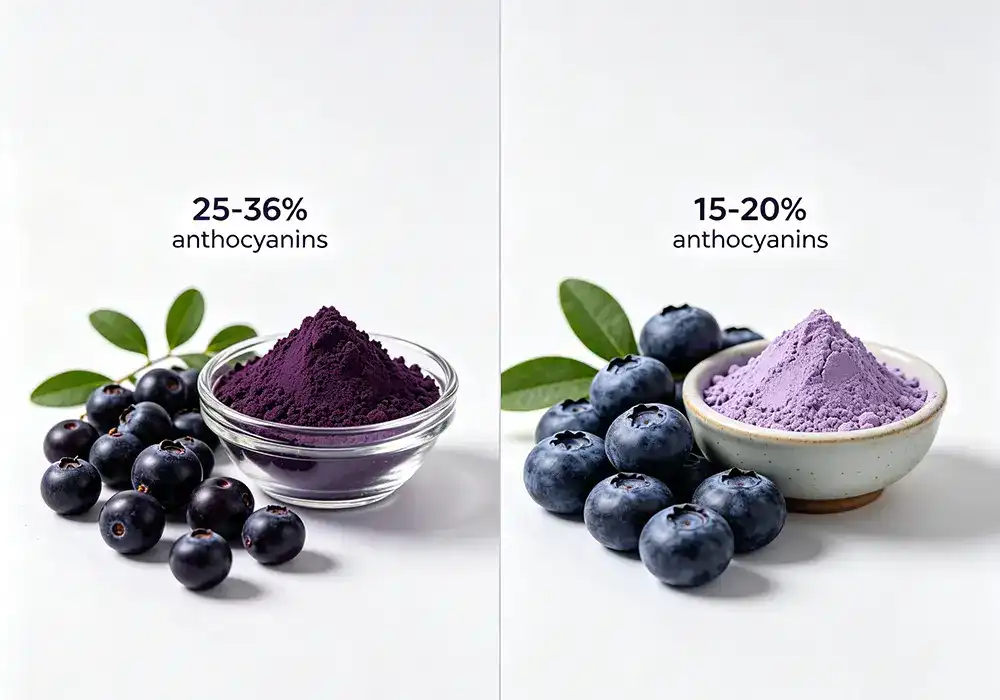
Knowing the difference between bilberry and blueberry extracts is very important when looking for plant ingredients for health products. Bilberry Extract, which comes from the wild European bilberry plant Vaccinium myrtillus, has much higher levels of anthocyanin—often 25–36%—than regular blueberry extracts, which only have 15-20%. This difference comes from where the plants come from: bilberries grow wild in Northern European woods, where the conditions are harsher, so they develop denser pigment profiles to survive. On the other hand, blueberries (Vaccinium corymbosum), which are grown for profit, have lower bioactive density because they are grown in fields. Bilberry has more anthocyanins than other fruits, which makes it more effective as a medicine for supporting vision and blood flow. This makes it the best choice for high-end vitamin formulas that aim to protect the eyes from damage.
Understanding Bilberry and Blueberry Extracts
Botanical Origins and Taxonomy
Blueberries and bilberries are both in the genus Vaccinium, but they are very different types. The wild bilberry plant, Vaccinium myrtillus, grows best in mountain and subalpine areas of Scandinavia and Central Europe. It makes smaller, brightly colored berries with purple meat all the way through. Blueberries grown in fields are native to North America and are called Vaccinium corymbosum. They have bigger berries with pale meat inside them. These differences between plants affect not only how they look but also the phytochemicals they contain. For example, bilberries produce more protective anthocyanins as a way to deal with UV rays and changes in temperature.
Industrial Extraction Technologies
The quality and potency of berry extracts depend on the modern methods used to separate them. Solvent extraction with ethanol-water mixes is still the most common way to do things in industry. It is a good way to separate anthocyanins while keeping the structure intact. After extraction, advanced suppliers use membrane filtering and column chromatography to remove unwanted sugars and organic acids and concentrate the active substances. Supercritical CO₂ extraction is an option that doesn't use solvents and makes cleaner extracts with no chemical leftovers, but it costs more to make. The type of extraction technology used has a direct effect on the stability, solubility, and compatibility of anthocyanins with different formulation materials. These are all things that procurement managers need to look at when judging the skills of a seller.
Phytochemical Profiles and Bioactivity
Berry products are mostly useful for health reasons because they contain anthocyanins. Compared to blueberries, bilberries have a wider range of 15 different anthocyanosides, such as delphinidin, cyanidin, petunidin, peonidin, and malvidin glycosides (CAS: 528-58-5), which are better absorbed by the body and more compatible with the eye. According to a study in the Journal of Agricultural and Food Chemistry, Bilberry Extract anthocyanins are better at crossing the blood-retinal barrier. This helps rhodopsin renewal, which is important for night vision. Even though blueberry extracts are still useful, they have relatively more pterostilbene and chlorogenic acid than other extracts. This means that they have wider benefits for the brain and heart, but not as many specific benefits for the eyes.
Detailed Comparison: Bilberry Extract vs Blueberry Extract
Anthocyanin Concentration and Antioxidant Capacity
Standardized Bilberry Extract usually has anthocyanin levels of at least 25%, as shown by UV-Vis spectroscopy. The best grades have levels as high as 36%, as shown by HPLC analysis. Under the same testing settings, blueberry products usually have between 10 and 20% anthocyanins. As a result of this difference in concentration, bilberry has much higher ORAC values—often reaching 150 μmol TE/g—than blueberry, which has 80–100 μmol TE/g. The practical meaning is clear when making antioxidant supplements: to get the same therapeutic amounts, you need 40–60% more blueberry extract by weight. This has a direct effect on the cost of making the supplements, the size of the capsules, and how well people take them. When making high-end eye health goods, procurement teams always choose bilberry because it has a better potency-to-volume ratio.
Application-Specific Health Benefits
There is clinical proof that each extract has its own medicinal area. Bilberry works especially well in eye care, as shown by controlled studies that showed significant changes in near-sightedness and slower progression of diabetic retinopathy. Studies show that it widens the blood vessels in the retina, which makes it very useful for making products that treat digital eye strain and age-related macular degeneration. Blueberry products are great for your brain health. Studies have shown that they can improve memory function and protect neurons by increasing blood flow to the brain. Another benefit of blueberries is that they are good for your urinary system because proanthocyanidins stop bacteria from sticking to it. When product makers know about these application patterns, they can match the selection of extracts with the needs of target consumers and clinical positioning strategies.
Formulation Compatibility and Bioavailability
Both extracts pose different manufacturing problems that affect choices about what to buy. Because bilberries have more anthocyanins, they need to be carefully managed when it comes to pH. This is because these chemicals change color depending on pH, turning red in acidic settings and blue in alkaline ones. Formulators usually use citric acid buffers to keep bilberry liquids stable at pH 3–4. The extract dissolves easily in alcohol, which makes it perfect for softgel embedding in oil matrices. However, for even distribution, the oil matrix needs to have a low moisture content (<5%) and 80-mesh screening to control the particle size. Because blueberry products have more polyphenols that dissolve in water, they work better with water-based drinks and hydrogel delivery methods. Different methods are used to improve bioavailability. For example, lipid carriers and piperine work well with bilberry formulas, while vitamin C and digestive enzyme mixtures help blueberry absorption.
Procurement Considerations for Bilberry and Blueberry Extracts
Quality Verification and Certification Standards
Tough quality checks separate trustworthy providers from dishonest ones. Verifying the authenticity of Bilberry Extract needs HPLC fingerprinting that shows the 15 anthocyanin peaks that are only found in Vaccinium myrtillus. This test shows if the extract has been tampered with with cheaper substitutes like mulberry or artificial colorants. Certificates of Analysis (COA) must show the amount of anthocyanin using approved methods (UV-Vis at 535nm range), as well as the levels of heavy metals (lead <3ppm, arsenic <2ppm), and microbes that meet USP standards. Third-party certifications like ISO9001, HACCP, Kosher, Halal, and SC (China Food Production License) give basic peace of mind, while organic and non-GMO certifications (IP certification) put a product at the top of the list. To ensure tracking from wild gathering or farming to final encapsulation, procurement managers should ask for batch-specific paperwork and keep audit trails with suppliers.
Supply Chain Dynamics and Pricing Structure
The prices of bilberry and blueberry extracts on the market vary a lot depending on the type and where they come from. When you commit to buying 1,000 kg, 5,000 kg, or 10,000 kg of something every year, you usually get a discount on the price per unit. At each level of tiered pricing, the discount is 8 to 15 percent. Another thing to think about is supply security. Bilberry crops depend on wild collection cycles that can change with the weather, which can sometimes limit supply in years with bad harvests. Growing blueberries gives you more reliable year-round access. Strategic buyers often get two sources of a product or keep a safety stock to protect against seasonal changes. This is especially important when bilberry is a key part of a product's identity claims.
Regulatory Compliance and Market Access
Berry extract use is regulated in different ways in different parts of the world. The US Food and Drug Administration (FDA) says that both products are generally recognized as safe (GRAS) when used in functional foods and dietary supplements. However, claims about structure-function need to be supported without prior approval. New Food guidelines in the European Union allow standard uses of bilberry extract based on how it has been used in the past. However, new extraction methods or concentrations need Novel Food applications. Suppliers who want to sell their goods abroad should keep their GMP certification and provide regulatory support documents such as lists of ingredients, data on their safety, and suggestions for label language. For European and North American markets, non-GMO certification is becoming more and more important. IP (Identity Preserved) approval makes sure that genetic integrity is maintained throughout supply lines. When joining a new market, procurement teams should work with providers that know the local rules and can provide documentation packages that are specific to that market.
How to Choose Between Bilberry and Blueberry Extracts for Your Business
Aligning Extract Selection with Product Positioning
Detailed product marketing and target demographic research are the first steps to selecting the right extract. Using high-potency Bilberry Extract makes premium eye health products stand out, especially for older people, people who work with computers all day, and people who have a family history of retinal disease. This lets marketers make claims that are backed up by clinical research. Blueberries are more well-known among American customers, and their lower formulation costs make it possible for mass-market antioxidant supplements that focus on general health and brain support to offer reasonable store prices. Different types of cosmetics are also used for different reasons. High-end anti-aging serums use bilberry because it is better at scavenging free radicals, while common skincare lines use blueberry because it is softer and has pleasant taste associations. When procurement teams understand these placement factors, they can find better ways to maximize value that go beyond just comparing costs per kilogram.
Learning from Market Applications
Formulation case studies from the real world help people make decisions in the real world. A well-known European supplement company changed the recipe of its vision support line from 15% blueberry extract to 25% Bilberry Extract. This allowed the number of capsules per serving to be cut by 30% while keeping the therapeutic amount the same. After the product came out, polls showed that consumer happiness rose 18%. This was because taking fewer pills made people more likely to stick to their treatment plan. On the other hand, a functional beverage company chose blueberry extract for a new line of "brain health" smoothies, even though bilberry had higher antioxidant values. They did this because customers were already familiar with blueberry flavors, and the clear packaging made the colors look better. A makeup company making a high-end eye cream used bilberry as part of its Nordic plant heritage marketing story. This helped the product stand out in the crowded anti-aging category. These cases show how extract choice is connected to formulation science, customer psychology, and brand strategy.
Conclusion
In conclusion, which Bilberry Extract or blueberry extract to use varies depending on the purpose of the medicine, how much it costs to make, and how the name is positioned. The higher anthocyanin concentration of bilberries and their proven effectiveness in eye care uses support higher prices for vision-specific goods. On the other hand, blueberries are more cost-effective and well-known by consumers, making them a better choice for general health formulations. To do a good job of procuring things, you need to look at more than just price when judging providers. You should look at their analytical verification, certification portfolios, supply security, and expert support skills. Strategic relationships with vertically integrated suppliers that offer tracking from farming to extraction lower the risks in the supply chain and make sure that each batch is the same, which is very important for health goods that are regulated. As the markets for functional ingredients get bigger and consumers learn more about them, the competitive edge in the nutrition and functional food categories will depend more and more on buying decisions based on phytochemical science and strict quality standards.
FAQ
Can pregnant women safely consume bilberry extract supplements?
According to recent Scientific Research, bilberry and blueberry products do not cause birth defects when taken in normal amounts. Based on how it has been used traditionally as a food, the European Medicines Agency says that bilberry fruit is safe to eat while pregnant. As a safety measure, clinical guidelines say that women who are pregnant or breastfeeding should limit their anthocyanin intake to amounts that are equal to or less than 300 mg per day. However, higher doses have not been linked to any negative effects. Industrial clients should tell pregnant women to talk to their doctors before taking supplements, especially if they are taking drugs at the same time. To stay in line with regulations and limit risk, proper product labels should include standard pregnancy warning statements.
Does bilberry extract truly improve night vision?
There is mixed clinical evidence that bilberry can help with night vision. There are only oral reports of RAF pilots eating bilberry jam during World War II, but controlled studies show that amounts of 80–160 mg anthocyanins daily improve dark adaptation and glare recovery time. The process involves photoreceptors in the retina making more rhodopsin. The effects show up after taking the vitamin regularly for 4 to 6 weeks instead of all at once. The impact of blueberry extract on scotopic eye tests is not as strong. To stay in line with regulations and present evidence-based information, marketing claims should say things like "supports healthy night vision" instead of "improves vision completely."
What side effects should be disclosed to end consumers?
Both extracts have great safety ratings, meaning that at therapeutic amounts, they have few side effects. Due to its weak antiplatelet action, bilberry may make anticoagulant drugs work worse, so people who take warfarin or similar blood thinners should be careful when eating it. When you take more than 500 mg of anthocyanins every day, you rarely experience stomach pain. Allergic responses are still very rare, but they can happen in people who are sensitive to Vaccinium family members. Even fewer things should not be done with blueberry juice. B2B clients should make sure that product labels have the right drug combination warnings and suggest that people who take supplements before surgery let their doctors know. Keeping dosing suggestions within ranges that have been studied in clinical trials lowers the risk of adverse events and the responsibility that comes with them.
Partner with Aokang for Premium Bilberry Extract Supply
Through fully integrated bilberry production, Hunan Aokang Biotech Co., Ltd. solves important sourcing problems. Our European Bilberry Extract comes from wild plants and has a uniform anthocyanin content of 25–36% (CAS: 84082-34-8). This has been confirmed by HPLC fingerprinting and is backed by a number of approvals, such as ISO9001, HACCP, Halal, Kosher, and SC standards. With more than 8,000 acres of controlled cultivation sites and the ability to process 150 tons of deep processing every year, we can guarantee supply stability that lab-scale sources can't match. Our doctoral research team, which is led by Dr. Shen Chali and works with national and provincial key labs, creates detailed documents that back up regulatory applications for markets around the world. As a Bilberry Extract producer with a lot of experience, we can help you make your own formulas, do OEM/ODM work, and offer cheap bulk prices for orders over 500 kg per year. To get COA paperwork, sample kits, and volume-tiered quotes that are specific to your formulation needs, email our buying experts at sales@aokangbio.com.
References
1. Kalt W, McDonald JE, Ricker RD, Lu X. "Anthocyanin content and profile within and among blueberry species." Canadian Journal of Plant Science, 79(4), 617-623, 1999.
2. Canter PH, Ernst E. "Anthocyanosides of Vaccinium myrtillus (bilberry) for night vision—a systematic review of placebo-controlled trials." Survey of Ophthalmology, 49(1), 38-50, 2004.
3. Faria A, Pestana D, Teixeira D, de Freitas V, Mateus N, Calhau C. "Blueberry anthocyanins and pyruvic acid adducts: anticancer properties in breast cancer cell lines." Phytotherapy Research, 24(12), 1862-1869, 2010.
4. Chu W, Cheung SCM, Lau RA, Benzie IF. "Bilberry (Vaccinium myrtillus L.)." Herbal Medicine: Biomolecular and Clinical Aspects, 2nd edition, Chapter 4, CRC Press, 2011.
5. Khoo HE, Azlan A, Tang ST, Lim SM. "Anthocyanidins and anthocyanins: colored pigments as food, pharmaceutical ingredients, and the potential health benefits." Food & Nutrition Research, 61(1), 1361779, 2017.
6. Nanashima N, Horie K, Maeda H. "Phytoestrogenic activity of blackcurrant anthocyanins is partially mediated through estrogen receptor beta." Molecules, 23(1), 74, 2018.
_1783047016575.webp)
Using Saffron Extract instead of turmeric extract for mood-boosting products is more effective, as shown by the results of clinical trials and the amount of beneficial compounds present. Crocin (≥3%) and safranal (≥2%), two standardized bioactive chemicals in saffron, directly affect the serotonin and dopamine systems. This means that lower doses (usually 30 mg daily) can help people with mild to moderate sadness and anxiety. Curcumin in turmeric is a good anti-inflammatory that indirectly supports brain health. But for it to help regulate mood, it needs to be taken in bigger doses and in a way that makes it more bioavailable. For procurement workers looking for mood-boosting ingredients that have been proven to work by science, Saffron Extract is a more focused, potent option that is backed by strong clinical evidence.
Introduction
The worldwide nutraceutical industry prioritizes mental health ingredients as individuals learn more about mood disorders and concerns. Procurement managers, R&D directors, and formulation scientists are under increasing pressure to discover botanical extracts that fulfill regulatory compliance norms and generate consistent clinical outcomes. Choosing Saffron Extract or turmeric affects how the product is distinguished, how well it works as a medication, and how efficiently it is created.
Both Crocus sativus (saffron) and Curcuma longa (turmeric) have been used in traditional medicine for centuries, but their current usage and quality must be standardized. This research examines bioactive homogeneity, supply chain dependability, formulation compatibility, and cost-performance ratios in purchasing. Dietary supplement, functional food, and medication firms may produce mood-boosting products that satisfy clinical efficacy and commercial scalability objectives by recognizing these characteristics. The comparison below considers published studies, quality standards, and industry sourcing techniques to help you pick ingredients.
Understanding Mood Enhancement Properties of Saffron and Turmeric Extracts
Saffron Extract: Mechanisms and Clinical Validation
Saffron Extract regulates mood with two primary apocarotenoid compounds. The water-soluble pigment crocin crosses the blood-brain barrier. It prevents serotonin reuptake and increases BDNF release to protect neurons. Safranal, the volatile fragrance molecule that gives saffron its scent, modulates GABA-A receptors and reduces anxiety like mild pharmaceuticals.
In clinical trials, standardized Saffron Extract (30 mg daily dosage) consistently produces statistically significant improvements in Hamilton Depression Rating Scale scores compared to placebo. The benefits are similar to those of selective serotonin reuptake inhibitors without the negative effects of commercial antidepressants, according to meta-analyses of many randomized controlled trials. These thermolabile chemicals are protected during ethanol extraction. They remain bioactive throughout processing and storage if sealed, light-protected, and cold.
Turmeric Extract: Curcumin's Neurological Pathway
Curcumin, 3–5% of the turmeric root's dry weight, reduces inflammation and protects neurons. Small quantities of this polyphenolic compound may pass the blood-brain barrier and alter mood-related neuroinflammatory pathways. Curcumin inhibits TNF-alpha and IL-6, which are connected to worse depressive symptoms in clinical populations.
Curcumin supplements increase hippocampal neurogenesis and synaptic plasticity, according to research. Studies employing 500 mg to 1,500 mg daily reveal some reductions in depressive symptoms, particularly in populations with elevated inflammatory biomarkers. Curcumin is only absorbed 1% of the time when given orally, hence novel formulations are required to obtain therapeutic plasma levels. Piperine co-administration, liposomal encapsulation, and nanoparticle delivery are examples.
Comparative Analysis: Saffron Extract vs Turmeric Extract for Mood
Potency and Dosage Requirements
Saffron Extract works at lower levels than turmeric due to its concentrated chemical composition. Patients in clinical studies typically take 30 mg of Saffron Extract (standardized to crocin ≥3% and safranal ≥2%) daily. In contrast, curcumin formulations require 500 to 1,500 mg to influence mood. This concentration differential affects formulation cost, pill size, and customer behavior, all of which are essential in supplement product development.
Saffron's increased potency-to-weight ratio makes tablets simpler to create, and capsules need less filler. Turmeric extract requires larger capsules or dosage regimens for numerous units, which might modify its market position and increase manufacturing costs. Saffron's power edge matches consumers' need for unique, effective formulae in high-end mood-boosting goods.
Bioavailability and Formulation Considerations
Saffron's water-soluble crocin chemicals are easily absorbed. Producers may boost bioavailability using liposomal or micellar technology. The body absorbs natural safranal fast and achieves its peak blood levels within two to four hours. This pharmacokinetic profile works with immediate-release and sustained-release preparations.
Curcumin's lipophilic nature and quick liver processing make it difficult to absorb. Technology must cure this. Standard curcumin preparations frequently generate insufficient plasma levels. This requires improved formulations. Suppliers currently sell curcumin with piperine (20 times more bioavailable), phytosome complexes, and cyclodextrin inclusion compounds. Scientific verification is needed across the supply chain since these changes make products more costly and harder to avoid low-quality ingredients.
Safety Profiles and Regulatory Compliance
Both products have high clinical safety margins. Saffron supplements have little negative effect when used as indicated (30 mg daily), although sensitive persons may feel minor gastric discomfort. No notable medication interactions have been reported in peer-reviewed literature. Due to its combined serotonergic effects, combining it with prescription antidepressants may be risky.
Turmeric extract is safe when curcuminoid levels are therapeutic. The most prevalent side effect is stomach distress, caused by doses above 2,000 mg daily. Drugs entering markets with tight pharmacovigilance should include in their preparation information that curcumin may affect CYP450 enzymes and drug breakdown. Quality goods from ISO9001, HACCP, HALAL, Kosher, and non-GMO suppliers reduce contamination and ensure batch consistency, which is vital for regulatory filings.
Procurement and Usage Insights for Global B2B Clients
Supplier Qualification and Certification Standards
Many quality variables must be considered to discover reliable botanical extract suppliers. Large manufacturers have ISO9001 quality management systems, SC production licenses, FAMI-QS feed safety requirements, and region-specific certifications (HALAL, Kosher) to market their goods in various countries. Brokers that use fragmented agricultural supply chains have a tougher job tracking raw materials and ensuring consistency than vendors who maintain their own manufacturing bases.
When buying saffron, standardize the active compounds using HPLC. Specifications should contain crocin and safranal quantities and stability data under particular situations. Obtaining turmeric extract needs the same analytical rigor. Chromatographic techniques verify curcuminoid profiles, and heavy metal testing eliminates soil contaminants. Suppliers providing Certificates of Analysis (CoA) for each manufacturing lot help formulators comply with GMP and assist international regulatory reports.
Application-Specific Dosage Guidelines
To comply with clinical studies, mood-boosting supplements include 30 mg of standardized Saffron Extract in each dosage. This dosage is medically effective with one pill, yet simple to swallow. Making useful drinks using saffron is difficult due to its color and flavor. This is why product development requires sensory assessment. If packed to block UV radiation, RTD health drinks may include the extract since it doesn't alter significantly in acidic conditions (down to pH 3.0).
Turmeric extract may be utilized in various amounts depending on the product's aims. Bioavailability additives are added to mood enhancers with 500 mg to 1000 mg of pure curcuminoids. Bright yellow ingredient color influences product appearance, limiting its application in clear liquids. However, this chromatic feature makes visually health-marked meals and beverages more desirable. Both extracts combine with common excipients. Stability testing during accelerated aging is still required during product development.
Customization and OEM Capabilities
Customization options beyond extract grades help manufacturers stand out from the competitors. Advanced suppliers provide tailored extract quantities, plant mixtures, and stable microencapsulated powders. OEM agreements allow formulators to test the market with pilot-scale manufacturing before full-scale production.
Companies with integrated R&D infrastructure, such as doctoral-level research teams and lab collaborations, provide experienced aid throughout product development. These collaborations handle formulation, bioavailability, and regulatory health claim issues. Flexible minimum order quantities allow suppliers to cooperate with new and established enterprises that need to adjust production to market demand.
Cost, Market Trends, and Brand Comparison for Saffron and Turmeric Extracts
Market Demand Drivers and Supply Considerations
People are much more aware of saffron's mood-boosting properties since clinical study results were covered by popular media. Supplements with saffron are expected to grow at rates higher than 12% per year in North America and Europe until 2028, according to market research. This rise in demand puts a strain on supply lines because saffron farming is still mostly done in a few places and is sensitive to changes in the weather. Managers of procurement should build ties with suppliers and keep multi-year supply deals and a variety of sourcing networks.
South Asia already has a lot of infrastructure in place for growing turmeric and producing Saffron Extract, which helps markets get a steady supply and maintain predictable pricing. These ingredients have many uses in the food, vitamin, and medicine industries, making the market highly liquid. However, because the quality of conventional and standardized extract grades can vary, strict supplier approval methods are needed to ensure that low-quality ingredients do not affect formulation specifications.
Supplier Reliability and Quality Benchmarking
Distinguished providers stand out by having combined skills that cover quality control, cultivation, and extraction. Companies with uniform farming bases that are bigger than 8,000 acres show that they care about the security of their raw materials and the stability of their genetics. Bioactive materials are kept safe during the whole production process thanks to advanced processing infrastructure like temperature-controlled extraction systems and spray-drying options. Processing capabilities of more than 100 tons per year show that the business is operationally mature enough to handle large-scale buying contracts.
Having R&D leaders with doctoral degrees and written scientific work shows that the company has a lot of technical knowledge, which means that they can help with product creation better. When suppliers work with national and local research labs, they can use cutting-edge extraction technologies and analysis methods that make it easier for their products to stand out. These relationships create intellectual property assets that can help a business's place in the market by creating new, exclusive formulations.
Strategic Recommendations: Choosing the Right Extract for Mood Enhancement Solutions
The extract choice must be in line with marketing for the target market and the goals of product makers. For high-end mood-boosting formulas where clinical effectiveness, low-dose ease, and uniqueness explain higher ingredient costs, Saffron Extract is the best choice. The extract has a lot of strong clinical evidence to back up health claims in controlled markets, giving it an edge in supplement areas that are already very crowded. Formulators should give more weight to providers who offer standard crocin and safranal content along with detailed paperwork on stability.
Turmeric powder can be used in situations where it is needed to improve mood, along with reducing inflammation, or when cost is an issue and ingredients are limited. Because the compound has a long history of safety and is well known by consumers, it doesn't need as much schooling for marketers, which speeds up the time it takes to start a product. Manufacturers should compare standard curcuminoid extracts to improved bioavailability formulations based on goal efficacy levels and how the prices are structured at retail. Combination formulas with both extracts should be looked into because early research shows they might work better together on inflammatory pathways that are involved in controlling mood.
It doesn't matter which extract is used; quality assurance methods must include checking for microbes, heavy metals, and analyzing active compounds. Suppliers who offer batch-specific CoA paperwork, third-party testing confirmation, and clear tracking systems lower quality risks and help foreign markets follow regulations. Long-term relationships with suppliers that offer technical support, uniform standards, and scalable production capacity give businesses a competitive edge by making sure their products work well and preventing problems in the supply chain.
Conclusion
An analysis of the alternatives shows that Saffron Extract is the best choice for improving mood because it works well at higher doses and with fewer manufacturing requirements. Turmeric extract is good for the brain because it reduces inflammation, but it can be hard to make because it needs to be taken in bigger doses, which makes it harder to make decisions about product development. When choosing ingredients, people who work in procurement should think about the goals, the positioning of the target market, the legal requirements, and the stability of the supply chain. Both products are safe and are becoming more popular in the market, but saffron's mood-regulating bioactives make it possible to stand out in high-end health categories. Supplier approval that focuses on standards, certification credentials, and technical support skills is the basis for effective ingredient buying strategies in this botanical market area that is growing.
FAQ
What dosage of saffron extract effectively supports mood enhancement?
A lot of clinical studies have shown that taking 30 mg of standardized Saffron Extract every day (which has crocin ≥3% and safranal ≥2%) makes mild to moderate depression and anxiety symptoms a lot better.
Can saffron and turmeric extracts be combined in single formulations?
When you mix Saffron Extract and turmeric ingredients, you can make new medicines that work better because they work in different ways to help your mood. For example, saffron and turmeric both work on serotonin levels, while turmeric works on inflammation. When formulators mix these plants, they should test their stability to make sure that the biological properties stay the same. They should pay special attention to pH levels and reactive degradation. Dosage should be based on well-known studies on monotherapy, with 30 mg of Saffron Extract and 500 to 1,000 mg of increased bioavailability curcumin per dose being the norm.
How can buyers verify extract quality and potency?
To make sure the quality is correct, more than just looking at the supplier's paperwork is needed. HPLC analysis should be done by independent third-party labs to confirm standard bioactive concentrations. Microbiological testing should be done to rule out contamination, and heavy metal screening should be done to make sure agreement with international safety limits. Reliable providers give batch-specific Certificates of Analysis that list these factors and include stability data that shows how long the active chemical lasts in storage under certain conditions. Analytical specs and acceptance criteria should be written into procurement contracts so that they are in line with the rules that guide target markets.
Partner with Aokang for Premium Saffron Extract Supply
Hunan Aokang Biotech Co., Ltd. provides pharmaceutical-grade Saffron Extract (CAS 84604-17-1) that is standardized to crocin ≥3% and safranal ≥2%. This meets the exact needs of companies around the world that make nutraceuticals, useful foods, and medicines. Our 8,000+ acres of controlled cultivation grounds, doctoral-level research and development leadership, and ISO9001/SC-certified processing facilities all work together to make sure that procurement managers get the consistent bioactive profiles and supply stability they need. We can make more than 150 tons of food every year and have a lot of certifications, such as HACCP, HALAL, Kosher, and non-GMO verification. This means that we can support production that goes from small pilot runs to full commercial amounts. Our expert team can help you with formulation, help with stability tests, and make OEM/ODM products that fit the needs of your market. For your next mood-boosting formula project, email our sourcing experts at sales@aokangbio.com to talk about forming partnerships with bulk Saffron Extract suppliers, getting analytical specs, or setting up a sample evaluation.
References
1. Lopresti AL, Drummond PD. Saffron (Crocus sativus) for depression: a systematic review of clinical studies and examination of underlying antidepressant mechanisms of action. Human Psychopharmacology: Clinical and Experimental. 2014;29(6):517-527.
2. Sanmukhani J, Satodia V, Trivedi J, et al. Efficacy and safety of curcumin in major depressive disorder: a randomized controlled trial. Phytotherapy Research. 2014;28(4):579-585.
3. Hausenblas HA, Saha D, Dubyak PJ, Anton SD. Saffron (Crocus sativus L.) and major depressive disorder: a meta-analysis of randomized clinical trials. Journal of Integrative Medicine. 2013;11(6):377-383.
4. Ng QX, Koh SSH, Chan HW, Ho CYX. Clinical use of curcumin in depression: a meta-analysis. Journal of the American Medical Directors Association. 2017;18(6):503-508.
5. Tsolaki M, Karathanasi E, Lazarou I, et al. Efficacy and safety of Crocus sativus L. in patients with mild cognitive impairment: one-year single-blind randomized, with parallel groups, clinical trial. Journal of Alzheimer's Disease. 2016;54(1):129-133.
6. Small GW, Siddarth P, Li Z, et al. Memory and brain amyloid and tau effects of a bioavailable form of curcumin in non-demented adults: a double-blind, placebo-controlled 18-month trial. American Journal of Geriatric Psychiatry. 2018;26(3):266-277.
Gynostemma Pentaphyllum Extract, also called Jiaogulan extract, is a strong plant-based ingredient that comes from the roots and leaves of a growing vine that grows naturally in southern China and other parts of Asia. The gypenosides in this extract are saponin chemicals that are chemically similar to the ginsenosides found in Panax ginseng. They are good for your metabolism, your heart, and your ability to adapt to new situations. This ingredient is known as "Southern Ginseng" because it has a similar chemical profile to ginseng but is cheaper. It is standardized to contain at least 50% total gypenosides by UV-Vis analysis. This extract is being used more and more in functional drinks, dietary supplements, and other products to meet customers' desire for natural health solutions that have been proven to work by science.
Understanding Gynostemma Pentaphyllum Extract
This product comes from plants that have been used for hundreds of years in traditional Chinese medicine. Jiaogulan was valued for its ability to make people live longer and be healthier. Modern methods of extraction mostly use ethanol as a solvent, which separates more than 80 different gypenosides while protecting their structure as fragile bioactive chemicals. Depending on the purity level, the powder that is made runs from brownish-yellow to light yellow. It is very stable when kept in a sealed, light-protected, dry place below 25°C.
Botanical Origins and Extraction Methods
Gynostemma Pentaphyllum Extract grows well in mountainous areas of Asia, especially in the Xuefeng Mountain area, where managed farming makes sure that the quality of the raw materials is always the same. The leaves and stems are carefully picked and then put through an ethanol extraction process to concentrate the gypenosides and get rid of any other plant material that isn't needed. This method keeps the dammarane-type saponins that give the extract its healing properties. Powders that meet international mesh size standards, usually passing 80 mesh for best flowability in packaging and tableting processes, are made in advanced processing facilities with temperature-controlled drying systems and particle size reduction equipment.
Active Compounds and Chemical Profile
Gypenosides are the main parts of this extract. Compounds Rb1, Rb3, Rd, and F2 are physically similar to certain ginsenosides. Because of this one-of-a-kind chemistry agreement, the extract has adaptogenic qualities without the stimulating effects of regular ginseng. Total gypenoside content varies by standard. For precise preparation work, pharmaceutical-grade samples can be up to 98% pure. In addition to saponins, the extract also has flavonoids and carbohydrates that help it work as an antioxidant. HPLC analysis gives exact measurements of each gypenoside fraction, giving formulators full control over the bioactive doses in final products.
Health Benefits Backed by Research
Multiple biochemical effects of gypenosides have been shown in clinical studies. Lipid metabolism control helps the heart. Studies have shown that people who ate Standardized Extracts had lower amounts of LDL cholesterol and triglycerides. The chemicals turn on AMP-activated protein kinase (AMPK), a cell energy indicator that makes it easier for cells to take in glucose and burn fat. This is how the extract works to help with weight loss programs that target metabolic syndrome. The ingredient is useful for immune support products because it changes the immune system by increasing the activity of natural killer cells and controlling cytokines. Endurance trials have been used to test anti-fatigue qualities. During long exercise, subjects showed better oxygen use and lactate clearance.
Safety Profile and Dosage Guidelines
Toxicological tests show that Jiaogulan extract is generally safe, with no side effects seen at amounts of 200 to 800 mg per day for standardized 20 to 98% gypenoside extracts. In both short-term and long-term animal tests, the ingredient shows low levels of harm. Some types of extract used in functional foods and drinks have been given GRAS recognition by regulatory groups. Manufacturers should be aware that products with a lot of saponin can taste slightly bitter, so the flavor needs to be carefully hidden in products that people will use. Stability testing shows that the product's effectiveness is maintained for 24 to 36 months when stored correctly, which supports a fair expiration date for final goods.
Comprehensive Guide to Choosing the Right Gynostemma Pentaphyllum Extract
When choosing plant extracts such as Gynostemma Pentaphyllum Extract for product creation, procurement managers have to make very important choices. The quality range is very wide, depending on how the cannabis is grown, how precisely it is extracted, and how skilled the seller is. Understanding these factors stops recipe mistakes that cost a lot of money and ensures that all target markets follow the rules.
Organic Versus Conventional Extract Quality
Organic approval is very useful for companies that want to sell to health-conscious people who care about clean labels. Certified organic Gynostemma comes from fields that haven't used manmade fertilizers or pesticides for at least three years. The plant's history can be tracked from seed to extract. This way of growing usually results in slightly lower levels of gypenoside, but it gets rid of worries about chemical residues that can delay product launches. Conventional extracts often work better and cost less, so they're good for price-conscious areas where organic claims aren't as important. Multi-residue pesticide screening should be part of all testing methods, even if the food is organic, because contamination can happen during handling and storage.
Comparing Extract Forms and Formats
Each of the three main forms is used for a different type of manufacturing. Fine powders with particle sizes between 80 and 100 mesh work well with capsule mixes and tablet matrices, giving you the freedom to make your own recipe ratios. Because they need special tools to be processed, spray-dried forms cost more than other types but dissolve better in drinks where clarity and mouthfeel are important. Tea-cut materials keep the traditional way of drinking tea alive while also giving you lower concentration choices that work for useful tea blends and infusion products. For example, measuring the mass density of powders to see how well they run is different from analyzing the particle size distribution of materials meant for drinks.
Differentiation from Other Adaptogens
When you compare Jiaogulan to ginseng and ashwagandha, you can see where it could be strategically placed. Gynostemma Pentaphyllum Extract works by activating metabolic pathways through AMPK, while ashwagandha's main way of dealing with stress is by changing cortisol levels. Because of this difference, it is especially useful for formulas that aim to improve metabolic health rather than just stress management. Compared to Panax ginseng, the price difference is 30–50% per similar bioactive dose, which lets prices be competitive without lowering claims of effectiveness. It is different from Rhodiola and other energizing adaptogens because it is not stimulating. This means it can be used in evening health goods where stimulants are not appropriate.
Supplier Certification and Quality Standards
Reliable extract sellers keep a number of licenses that show they know how to make safe products and how to make them properly. ISO9001 approval makes sure that production processes are governed by uniform quality management systems. This cuts down on batch-to-batch variation that makes it harder to get consistent results. Food safety and pharmaceutical production practices are specifically covered by HACCP and GMP licenses. This is very important for supplements and functional foods that want to sell in controlled markets. Halal and Kosher approvals make it easier for goods that are aimed at these groups of people to get into more markets. The SC certification that is unique to Chinese food production licensing proves that the making is legal and allowed by China's rules. Buyers should ask for copies of certificates with up-to-date expiration dates and use databases maintained by the granting body to make sure the certificates are real.
Traceability and Raw Material Sourcing
Complete openness in the supply chain is what sets high-end suppliers apart from commodity dealers. The ability to track crops starts at the cultivation sites, where GPS coordinates, planting times, and agricultural inputs are written down for each yield lot. This data goes through basic processing, which gets rid of wetness and cleans the material for the first time. It then goes to extraction facilities, where batch records connect the raw materials that come in with the finished extract lots. Advanced providers give records of analysis that are specific to each batch and show heavy metal screening, microbial tests, pesticide residues, and gypenoside quantification. Being able to track a finished extract back to specific fields lets you act quickly if quality problems arise and shows regulatory authorities that you did your job properly.
Procurement Insights: Buying Gynostemma Pentaphyllum Extract in Bulk
To strategically source plant products like Gynostemma Pentaphyllum Extract, you need to know more about how the market works than just comparing prices. Total cost of ownership includes things like consistent quality, reliable logistics, expert assistance, and the ability to make changes that have a big effect on how well a product does.
Identifying Reputable Global Suppliers
Integrated producers, who are in charge of both farming and extraction, and trading companies that buy from contract makers are the two main types of suppliers. Integrated providers, such as Aokang Biotech, have their own cultivation bases that cover more than 8,000 acres and have plans to grow to over 20,000 acres. This gives them better control over quality and supply consistency. This vertical integration makes sure that there are enough raw materials when there are gaps in the market, which can mess up supply lines that depend on brokers. Geographic concentration in the Xuefeng Mountain area of Hunan Province makes it easy to grow crops and be close to facilities for handling them. As part of your due research, you should check out the building and look at the extraction equipment's capacity, the quality control labs, and the cold storage systems that keep the ingredients stable.
Understanding Essential Certifications
In addition to basic quality certifications, specialty qualifications meet the needs of certain markets. Nutraceutical companies that make animal nutrition products need to get FAMI-QS approval to show that they meet quality standards for feed additives. IP (Identity Preserved) Non-GMO certification gives proof that materials come from sources that have not been genetically changed. This is becoming more and more important for markets in Europe and some parts of North America. As a supplier, you have to pay a lot of money to get these certificates, which show that you care about quality by requiring yearly audits and ongoing paperwork. Verification through the websites of certification bodies stops false claims and makes sure that the state of compliance is up to date.
Pricing Factors and Volume Considerations
Price changes for extracts are affected by more than just supply and demand. Gypenoside content has a direct effect on price; for example, 98% pure extracts are three to four times more expensive than 20% standardized materials. Different price levels are set based on the size of the order. At 500 kg, 1000 kg, and multi-ton agreements, prices drop significantly. Lead times change with the seasons because of crop times. The best times to get raw materials are in the spring and fall. Freight costs have a big effect on the total landing cost, especially for temperature-sensitive goods that need to be shipped in crates that are kept cool. Price stability is affected by changes in the USD and RMB, which is why longer-term supply deals are good for planning.
Procurement Workflows and Customization
To make buying go smoothly, there must be clear scientific standards that spell out the accepted amounts of gypenoside content, solvent residue limits, microbial factors, and physical properties. Request for quote papers should list the licenses that are needed, the type of packing that is preferred, and the standard Incoterms for delivery terms. Sample review comes before business orders, which allows formulation compatibility and stability tests to be done. Customization choices include selecting a particular gypenoside profile, changing the particle size, and adding a carrier to make the mixture move better. OEM and ODM partnerships allow suppliers to make full goods that meet brand standards. This is called private label development, and it's especially helpful for companies that don't have their own formulation experts.
Practical Applications and Use Cases for Gynostemma Pentaphyllum Extract
Understanding application-specific formulation problems and regulatory routes is necessary to turn the promise of raw ingredients such as Gynostemma Pentaphyllum Extract into goods that can be sold. Achieving marketing requires balancing claims of effectiveness with the ability to make the product and meeting legal standards.
Integration into Dietary Supplements
The main type of supplement is cardiovascular health vitamins, which come in forms that help lower cholesterol and raise blood pressure. Capsules or tablets are usually used to give 300 to 600 mg of 50 to 80% gypenoside extracts per dose. In combination formulas, Jiaogulan is mixed with bergamot extract, plant sterols, or omega-3 fatty acids to lower cholesterol more effectively. AMPK activation is used in weight loss products, and the extract is often mixed with green tea catechins, conjugated linoleic acid, or chromium to help the metabolism in a more complete way. Adaptogenic traits are used in anti-fatigue and energy pills without the side effects of stimulants. This makes them appealing to people who want long-lasting energy instead of short-term energy spikes.
Functional Food and Beverage Applications
When formulating drinks, adding saponin-rich ingredients can make them hard to dissolve and change the taste. Clear RTD tea and sports drinks can be made with grades that dissolve in cold water and are processed by spray-drying or chemical modification. Some ways to hide bitterness are to use citrus flavor systems, stevia sweeteners, or monk fruit products that work with the herb's natural taste instead of against it. Standardized extracts are used in functional snack bars and protein shakes to support metabolic health, and the powder form mixes easily into complicated mixtures. Different places have different rules about what needs to be done. In some EU markets, Novel Food approvals are needed, and in the US, NDI reports may be needed based on proof of past use.
Manufacturing Best Practices
Testing of arriving raw materials is the first step in quality control. Supplier records of analysis are checked by an independent laboratory to make sure they are correct. Confirming the gypenoside content using HPLC or UV-Vis stops manufacturing problems caused by batch differences. When you test for stability under fast conditions (40°C/75% RH), you can find out how things break down and choose the best packing materials. Hygroscopic powders don't clump when they're stored in HDPE bottles with desiccant inserts or aluminum foil laminating bags that keep moisture out. Testing for mixing regularity makes sure that the mixture is spread out evenly in capsule fills and pill blends, which is important for meeting the requirements of the label claim. Environmental tracking programs in factory areas keep microbes from getting into products and making them go bad faster.
Conclusion
The high gypenoside content of Gynostemma Pentaphyllum Extract has been shown by science to support overall health and wellness. As a premium botanical ingredient, Gynostemma Pentaphyllum Extract is widely used by formulators developing products for cardiovascular support, metabolic balance, and stress adaptation. Because the structure of the extract is similar to that of ginseng saponins, it works just as well at a much lower cost, which lets the product compete in the vitamin, functional food, and beverage categories. To make a good purchase, you need to carefully evaluate suppliers by looking at their control over cultivation, extraction technology, certification portfolios, and expert support skills. As the demand for natural, scientifically supported health products continues to grow, Gynostemma Pentaphyllum Extract can help brands stand out in the crowded metabolic health and healthy aging markets. When manufacturers focus on quality and partner with vertically integrated suppliers, they gain the stable supply chain and technical expertise needed for long-term product success.
FAQ
Is long-term use of Gynostemma Pentaphyllum Extract safe?
Standardized Jiaogulan extracts can be taken for a long time at the suggested amounts, according to a lot of safety data. Traditional use that goes back hundreds of years in Asian cultures shows that it is safe, and current toxicology tests show that it has no bad effects when given over a long period of time. People who take anticoagulant drugs should talk to their doctors because they might have mild effects on thinning the blood. Because there aren't enough safety statistics in these groups, pregnant and nursing women shouldn't use it.
How does the antioxidant capacity compare to green tea extract?
In tests that measure their ability to get rid of free radicals, gypenosides show about the same level of antioxidant activity as green tea catechins. Different ways work: polyphenols in green tea work as direct antioxidants, while gypenosides boost natural antioxidant enzyme systems like glutathione peroxidase and superoxide dismutase. This indirect process protects against free radicals over time, unlike the short-term benefits of eating polyphenols. Combining the two ingredients in a formula makes the antioxidant pathways work better because they work with each other.
What factors matter most when selecting bulk suppliers?
There are three important things that decide which provider is best: the ability to control the cultivation base to make sure that the raw materials are consistent, the ability of the extraction technology to produce specific gypenoside profiles, and the certification portfolios that meet the needs of the target market. When compared to brokers who rely on spot market sales, suppliers who run their own farming bases, like Aokang, offer supply security. Having access to technical support helps with formulation problems and the need for legal paperwork. Minimum order amounts and the ability to customize products affect how inventory is managed and how products can be set apart from each other.
Partner with Aokang for Premium Gynostemma Pentaphyllum Extract
Aokang Biotech has been making Gynostemma Pentaphyllum Extract for more than 20 years and is one of the best companies in the world at it. Our fully integrated business covers more than 8,000 acres of controlled cultivation grounds in the Xuefeng Mountain area. This makes sure that the quality of our raw materials stays high and that our supply lines don't break down. Our extracts meet the high standards of nutraceutical, pharmaceutical, and functional food producers around the world. They have a uniform gypenoside content of more than 50% and are certified by ISO9001, SC, HACCP, Halal, and Kosher. Our doctoral-level research team, which is led by Dr. Shen Chali, works with key national and regional labs to move anti-aging study and product development forward. Our 1,200-ton annual processing capacity and flexible customization options support projects from research to market scale, whether you need bulk ingredient supply, custom extraction specifications, or full OEM/ODM solutions. For your next formulation project, email our team at sales@aokangbio.com to get examples, scientific information, and prices.
References
1. Li, X., Chen, T., Wong, Y.S., Xu, G., & Fan, R.R. (2011). Involvement of mitochondrial dysfunction in gypenoside-induced apoptosis of human hepatoma cells. Journal of Natural Products, 74(6), 1183-1189.
2. Gauhar, R., Hwang, S.L., Jeong, S.S., Kim, J.E., Song, H., Park, D.C., Song, K.S., Kim, T.Y., Oh, W.K., & Huh, T.L. (2012). Heat-processed Gynostemma pentaphyllum extract improves obesity in ob/ob mice by activating AMP-activated protein kinase. Biotechnology Letters, 34(9), 1607-1616.
3. Megalli, S., Davies, N.M., & Roufogalis, B.D. (2006). Anti-hyperlipidemic and hypoglycemic effects of Gynostemma pentaphyllum in the Zucker fatty rat. Journal of Pharmacy & Pharmaceutical Sciences, 9(3), 281-291.
4. Razmovski-Naumovski, V., Huang, T.H., Tran, V.H., Li, G.Q., Duke, C.C., & Roufogalis, B.D. (2005). Chemistry and pharmacology of Gynostemma pentaphyllum. Phytochemistry Reviews, 4(2-3), 197-219.
5. Aktan, F., Henness, S., Roufogalis, B.D., & Ammit, A.J. (2003). Gypenosides derived from Gynostemma pentaphyllum suppress NO synthesis in murine macrophages by inhibiting iNOS enzymatic activity and attenuating NF-kappaB-mediated iNOS protein expression. Nitric Oxide, 8(4), 235-242.
6. Chiranthanut, N., Teekachunhatean, S., Panthong, A., Khonsung, P., Kanjanapothi, D., & Lertprasertsuk, N. (2013). Toxicity evaluation of standardized extract of Gynostemma pentaphyllum Makino. Journal of Ethnopharmacology, 149(1), 228-234.