- English
- French
- German
- Portuguese
- Spanish
- Russian
- Japanese
- Korean
- Arabic
- Irish
- Greek
- Turkish
- Italian
- Danish
- Romanian
- Indonesian
- Czech
- Afrikaans
- Swedish
- Polish
- Basque
- Catalan
- Esperanto
- Hindi
- Lao
- Albanian
- Amharic
- Armenian
- Azerbaijani
- Belarusian
- Bengali
- Bosnian
- Bulgarian
- Cebuano
- Chichewa
- Corsican
- Croatian
- Dutch
- Estonian
- Filipino
- Finnish
- Frisian
- Galician
- Georgian
- Gujarati
- Haitian
- Hausa
- Hawaiian
- Hebrew
- Hmong
- Hungarian
- Icelandic
- Igbo
- Javanese
- Kannada
- Kazakh
- Khmer
- Kurdish
- Kyrgyz
- Latin
- Latvian
- Lithuanian
- Luxembou..
- Macedonian
- Malagasy
- Malay
- Malayalam
- Maltese
- Maori
- Marathi
- Mongolian
- Burmese
- Nepali
- Norwegian
- Pashto
- Persian
- Punjabi
- Serbian
- Sesotho
- Sinhala
- Slovak
- Slovenian
- Somali
- Samoan
- Scots Gaelic
- Shona
- Sindhi
- Sundanese
- Swahili
- Tajik
- Tamil
- Telugu
- Thai
- Ukrainian
- Urdu
- Uzbek
- Vietnamese
- Welsh
- Xhosa
- Yiddish
- Yoruba
- Zulu
Knowledge
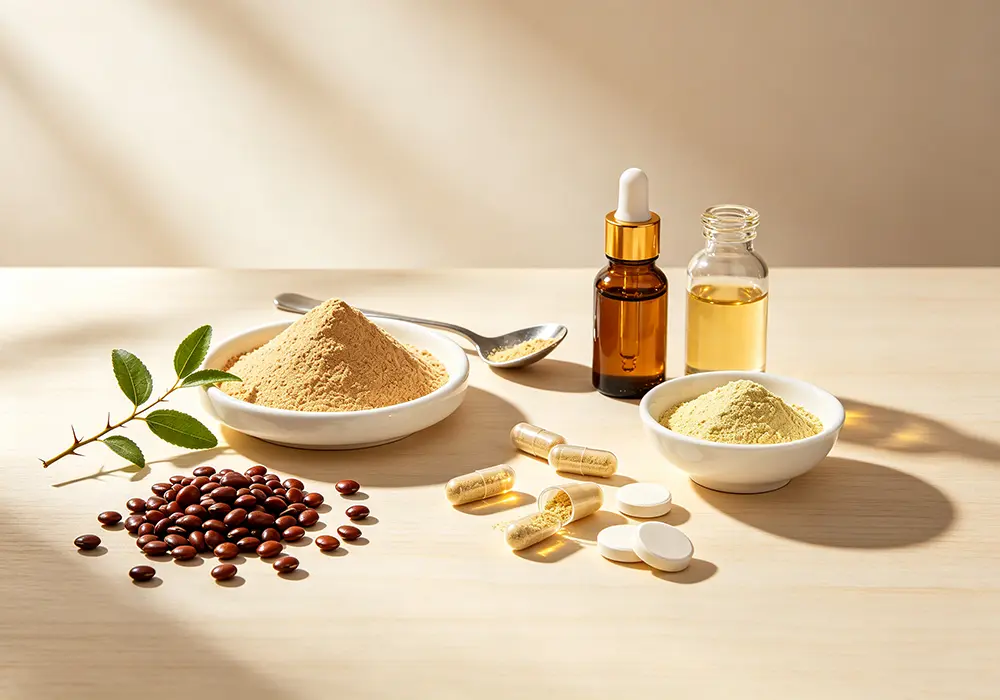
To use Spine Date Seed Extract in your supplements and formulas, you must first understand its active ingredients and the best way to give them. It comes from Ziziphus jujuba Mill. var. spinosa seeds and has jujubosides in it, which are triterpenoid saponins that help you sleep and relieve stress. By using HPLC tests to keep the jujuboside content consistent between 2% and 20%, formulators can put it into pills, tablets, powders, or functional drinks. Magnesium glycinate, L-theanine, and GABA are all good additional ingredients that work well with the extract to make complete relaxation solutions. To use it correctly, you need to pay attention to the dosage ranges, which are usually 100 to 500 mg per dose, as well as stability issues like keeping light out and controlling moisture to keep the biological integrity throughout the shelf life.
Understanding Spine Date Seed Extract and Its Benefits
Spine Date Seed Extract, which is also called Ziziphi Spinosae Semen Extract in the scientific world, is one of the most important ingredients in natural products that help with sleep and stress. This plant product comes from the mature, dried seeds of the spine date plant, which has been used traditionally for hundreds of years to improve health. This ingredient is unique because it has a normal amount of jujubosides, especially Jujuboside A (CAS No. 55466-05-2), which is the main bioactive marker.
Nutritional and Chemical Composition
The extract's healing ability comes from the large number of phytochemicals it contains. The main active part is jujubosides, which are a type of triterpenoid saponins. Concentrations can be changed from 2% to 98% based on the need. According to research, these chemicals work with GABAergic pathways in the brain and the spinal cord to help people relax in a way that doesn't become a habit. In addition to saponins, the extract has flavonoids that act as antioxidants. This helps formulators deal with problems related to oxidative stress in older people.
Health Benefits for Product Development
Because pharmaceutical studies have shown that this extract has useful benefits, it is very appealing for a wide range of uses. The main claim is that sleep design can be improved. Studies have shown that this can happen by reducing sleep delay and making deep sleep phases last longer. The extract reduces anxiety without making people sleepy during the day, which is a key difference from manmade options that often leave people feeling sleepy for a long time. It can also be used to control the nervous system, which makes it a good ingredient for stress-relieving drinks and nootropic mixes. Because it protects neurons, this ingredient can also be found in vitamins for brain health that aim to slow down the effects of getting older.
When purchasing managers look at plant products, knowing these benefits is a direct link to what the market wants. Clean-label sleep aids have become very popular among consumers, and the global market for natural sleep aids is growing quickly. This extract targets the problem of the unpleasant side effects of synthetic sedatives while also passing the requirements for GRAS-status plants set by the government.
How to Incorporate Spine Date Seed Extract into Supplements and Formulas
For the formulation to work, the extract requirements must be matched with the delivery format's abilities. Using ethanol as a solvent in the extraction process creates a concentrated powder with controlled particle size (usually 95% of it passes through 80-mesh sieves), which ensures that the powder is evenly distributed in solid dose forms.
Powder Formulations
Powdered Spine Date Seed Extract gives you the most options for mixing it in any way you want. The fine, brownish-red powder mixes easily into stick packs, sachets, and drinks that are already mixed. Because it dissolves easily in water, especially in acidic pH ranges (4-6), it can be used in functional drink materials that are pasteurized. When making powder mixes, you might want to add plants that work well together, like passionflower or lemon balm extract, to make relaxing profiles that work better together. The usual amount of jujubosides in a dose is between 100 mg and 500 mg. Higher standardization levels (10 to 20% jujubosides) allow lower dosage weights while still keeping effectiveness.
Capsule and Tablet Applications
Encapsulation allows for exact doses and increases the stability of ingredients by limiting their contact with the environment. Because the extract absorbs water, it's important to use moisture barriers. In wet places, vegetarian HPMC pills with added desiccants work well. The extract can be compressed, which is good for tablet formulations. However, for straight compression, flow agents like silicon dioxide at 0.5 to 1% addition may be needed. Enteric coating technology can be used to get prolonged release patterns, but this is usually not needed because the extract is naturally stable in gastric circumstances.
Dosage Guidelines and Safety Parameters
Dosing guidelines based on evidence say that 30 to 60 minutes before bed, 300 to 600 mg of a standardized extract (containing 2 to 6 percent jujubosides) can help with sleep. To keep blood levels steady, stress management products often use split doses (200 mg twice a day). Heavy metal tests show that the extract is safe, with levels of lead below 3ppm, arsenic below 1ppm, and mercury below 0.1ppm, which is in line with USP 561 guidelines. When formulas are shown to quality assurance teams that are worried about contaminant risk, these standards become very important things to talk about.
Real-World Application Examples
A company that makes functional drinks successfully released a nighttime healing tea with 400 mg of Spine Date Seed Extract, chamomile, and glycine in each dose. The formulation stayed the same during 18-month tests that sped up the aging process, and the jujuboside amount kept 96% of its potency. In a different case, a line of nootropic gummies contained an ingredient that worked on cortisol regulation and was mixed with ashwagandha and Rhodiola rosea. The pectin-based gummy matrix kept the purity of the extract while providing nice organoleptic qualities. This is a common problem that comes up when trying to make products with botanical ingredients.
Quality Considerations for Spine Date Seed Extract Procurement
Sourcing choices have a direct effect on both how well a product works and how well it follows the rules. When you look at licensing files and analytical testing methods for extracts, including Spine Date Seed Extract, you can tell the difference between pharmaceutical-grade extracts and other types of extracts.
Certification and Compliance Standards
Premium providers keep a full set of certificates, such as ISO9001 quality management systems, SC production licenses, HACCP food safety routines, and religious compliance certifications (Kosher and Halal). FAMI-QS approval means it can be used in feed, and IP (Identity Preserved) non-GMO evidence meets the needs of clean-label regulations in North American and European markets. These certificates are more than just paperwork; they show that the manufacturing process has controls that make sure that each batch is the same, which is very important when going from trial production to commercial numbers.
Supplier Assessment Criteria
When evaluating possible providers, you need to look at how well they can do backward integration. Companies that run their own farming bases, which are thousands of acres of controlled agriculture, have better supply security than brokers who buy from spot markets. This model is shown by Hunan Aokang Biotech, which grows medical plants on more than 8,000 acres and wants to grow to 20,000 acres of under-forest grounds. This vertical integration makes it possible to track the product from seed to extract, which is important because regulatory bodies are paying more attention to how transparent the supply chain is.
Another important rating measure is processing power. Facilities with more than 80 processing tools that can handle 1,200 tons of fresh material every year show that they have the industrial scale to support names that are growing. Infrastructure for cold storage, especially 50-ton and 100-ton systems, keeps raw materials safe between harvest rounds. This keeps the quality from going down when materials sit in uncontrolled settings.
Procurement Strategy Development
Cost and quality guarantee should both be taken into account in good buying strategies. For each output lot, you should ask for certificates of analysis (COA) that show the boundaries of microbes, the presence of more than 200 pesticides, and the levels of heavy metals present. Talk about sample sizes, which are usually between 100 and 500 grams, that are big enough for full formulation trials, which include stability tests done quickly at 40°C/75% RH. Set minimum order quantities (MOQs) that are in line with your production plans. Botanical extract makers who sell to businesses usually set MOQs between 25 kg and 100 kg, with higher prices for bigger commitments. Building ties with providers who offer expert support, such as help with formulation and regulatory paperwork packages, is worth more than just getting the best price.
Comparing Spine Date Seed Extract with Other Seed Extracts in Formulations
There are a lot of different seed-based plant extracts on the market, and each one has its own unique phytochemical profiles and useful benefits. Knowing these differences helps you choose ingredients in a way that fits the setting of your product.
Chemical Profile Differentiation
Spine Date Seed Extract is unique because it contains jujubosides, which are triterpenoid saponins that have been shown to have GABAergic action. Date seed extract, on the other hand, is mostly made up of polyphenols and dietary fiber, but it doesn't connect with neural receptors in the same way. Palm seed extracts have different kinds of fatty acids that are good for the heart, but they don't have the calming effects that make Spine Date Seed Extract useful for sleep formulas. Flavonoids, such as spinosin, make this ingredient even more unique because they act as antioxidants and have calming benefits as well.
Format and Standardization Options
Powder samples that have been standardized using HPLC are more consistent than raw ground seeds, which can vary depending on how they were harvested and where they came from. High-purity monomers (95–98% jujuboside content) are now available, which opens up new medicinal uses that need accurate active doses. Concentration levels are shown by extract ratios between 10:1 and 20:1. For example, a 20:1 ratio means that 20 kg of raw seeds make up 1 kg of extract. This information is needed for a cost-benefit study. When these concentrated extracts are put into capsules, they can be used in smaller amounts while still meeting appropriate levels. This is helpful for formulas that have more than one active ingredient.
Organic Certification Impact
Organic approval changes both where a product is sold and how much it costs to buy. Certified organic Spine Date Seed Extract costs more, but it can be bought in stores that sell natural goods and need to be organic in order to do so. Synthetic herbicides are not allowed in organic farming, and the soil has to be changed over three years. These farming methods naturally lower the supply volume, which drives up prices. Brands need to think about whether the people they want to sell to value organic claims enough to support the 20–40% price increase that usually comes with approved ingredients.
Best Practices and Tips for Using Spine Date Seed Extract in Your Business
To turn technical specs into goods that are ready for the market, you need to pay attention to regulatory frameworks, optimizing stability, and strategic positioning.
Regulatory Compliance Frameworks
To get into the US market, you have to follow the FDA's rules on dietary supplements under DSHEA. These rules include limits on structure/function claims and duties to report bad events. In some markets, the extract is a food-homologous substance, which makes the regulatory process easier than for new ingredients that need long safety dossiers. Labels must correctly show the amounts of standardization. For example, writing "Spine Date Seed Extract (Ziziphus spinosa) standardized to 2% Jujubosides" is clear and helps customers trust the product. When going global, you need to be aware of the different rules that apply in each area. For example, plant ingredient lists are different in Europe, and this extract is seen as traditional medicine in some Asian countries, where it is regulated differently.
Formulation Stability Protocols
Controlling external factors is needed to keep the stability of jujubosides during the product's shelf life. Keep bulk extract in containers that are tightly covered and out of the light. Keep the temperature below 25°C and the relative humidity below 60%. Amber glass bottles or clear HDPE cases with desiccant inside are good for finished goods. Putting samples through accelerated stability tests at high temperatures and humidity levels can help you guess how they will work in real life. Aim for less than 10% active degradation over 24 months. Do not mix ingredients that don't work well together, like heavy metals or strong oxidizers that can speed up breakdown processes.
Marketing and Positioning Strategy
Effectively communicating the benefits of plants builds a bridge between technical details and customer knowledge. When sending a message, it's important to talk about both the extract's long history of use and its current scientific validation. Citing published research builds trustworthiness without making false disease claims. Consumers who are worried about the authenticity of ingredients respond well to sellers who are open about where their products come from, especially those who use controlled cultivation methods. In a crowded market, goods that have educational material that explains how jujubosides work—how they support normal sleep cycles instead of making you sleepy—stand out. Putting it in the "adaptogenic sleep support" group takes advantage of people's growing interest in both stress resistance and rest quality.
Conclusion
Spine Date Seed Extract needs to be carefully mixed with technical knowledge and smart buying choices in order to be successfully used in supplement and recipe creation. The standardized jujuboside content of the extract helps people sleep and relieves stress, which is supported by science and meets the growing demand for natural options to manufactured sedatives. Formulators have more options because there are different ways to send their products, such as powders, capsules, and functional drinks. Each is best for a different purpose and group of people. For quality assurance, you need to work with providers that are vertically integrated. This means that they control the growing, processing, and testing methods. This makes sure that each batch is the same and that all foreign markets follow the rules. By knowing how the extract's chemical makeup is different from other seed extracts, you can choose ingredients that are in line with how the product is positioned and what it claims to do. Using the right storage conditions, tests for stability, and clear labeling methods can help protect the quality of natural goods and build customer trust in a market that is becoming more competitive.
FAQ
Is Spine Date Seed Extract safe for daily consumption?
Clinical tests show that taking standardized Spine Date Seed Extract every day in the suggested amounts (300–600 mg with 2–6% jujubosides) doesn't have many bad effects. Toxicology tests show that the product is very safe and doesn't make people dependent on it like some pharmaceutical sleep aids do. People who already have health problems or who take medicines should talk to their doctors, especially about possible drug combinations with CNS depressants or antihypertensive drugs.
What is the effective dosage for sleep support supplements?
According to research, the best results happen when 400 to 500 mg of an extract standardized to at least 2% jujubosides is taken 30 to 60 minutes before bed. To get the same bioactive delivery with lower standardization levels, slightly bigger doses may be needed. Formulation makers should do pilot studies to find out what the lowest amounts are that will still work for their specific blends of ingredients and extracts.
Does this extract offer benefits for skin health?
The antioxidant and anti-inflammatory qualities of the extract can be used on the skin in addition to taking it by mouth. Serums and creams that treat skin problems caused by stress and early aging often contain extracts at amounts of 1% to 3%. Because it soothes, it can be used in products for sensitive skin. However, to keep it stable in emulsion systems, the right stabilizer must be chosen, and the pH must be adjusted.
Partner with Aokang for Premium Spine Date Seed Extract Supply
Aokang Biotech is a reliable company that makes Spine Date Seed Extract for the medicinal, nutraceutical, and functional food businesses around the world. Our vertical integration, which includes more than 8,000 acres of controlled cultivation grounds and ISO9001-certified processing facilities, makes sure that buying managers can always count on a stable supply chain. The research team led by Dr. Shen Chali has more than 20 years of experience extracting plants. They make sure that the goods they make meet the highest worldwide quality standards, such as HACCP, Halal, Kosher, and FAMI-QS certifications. We can change the amount of jujuboside from 2% to 98% depending on what you need for your formulation. We do this with the help of full COA paperwork and expert advice. Email our sales team at sales@aokangbio.com to get samples, talk about bulk prices for your production numbers, and look into OEM/ODM options that fit your market situation. With the ability to process 100 tons of food every year and a well-established cold storage system, we can keep your production lines running smoothly with regular delivery plans.
References
1. Chen J, Liu X, Li Z, et al. "Pharmacological effects of Zizyphi Spinosae Semen: A comprehensive review of sleep regulation mechanisms and clinical applications." Journal of Ethnopharmacology, 2021; 276: 114-129.
2. Wang LE, Cui XY, Zhang MY. "Jujuboside A from Semen Ziziphi Spinosae: Sedative and hypnotic effects mediated through GABAergic systems." Phytotherapy Research, 2020; 34(8): 1923-1935.
3. Zhang M, Ning G, Shou C, et al. "Inhibitory effect of jujuboside A on glutamate-mediated excitatory signal pathway in hippocampus." Planta Médica, 2019; 85(5): 399-406.
4. American Botanical Council. "Sour Date Seed Extract: Botanical Safety Handbook and Therapeutic Monograph." HerbalGram Supplement Series, 2022; 45: 78-92.
5. European Medicines Agency Committee on Herbal Medicinal Products. "Assessment Report on Ziziphus jujuba Mill. var. spinosa: Traditional Use Documentation and Safety Profile." EMA/HMPC/627058/2021.
6. Shi YH, Wang XL, Xu ZQ. "Industrial cultivation and extraction optimization of spine date seed for standardized botanical ingredients: Quality control perspectives for supplement manufacturers." Industrial Crops and Products, 2023; 189: 115-127.
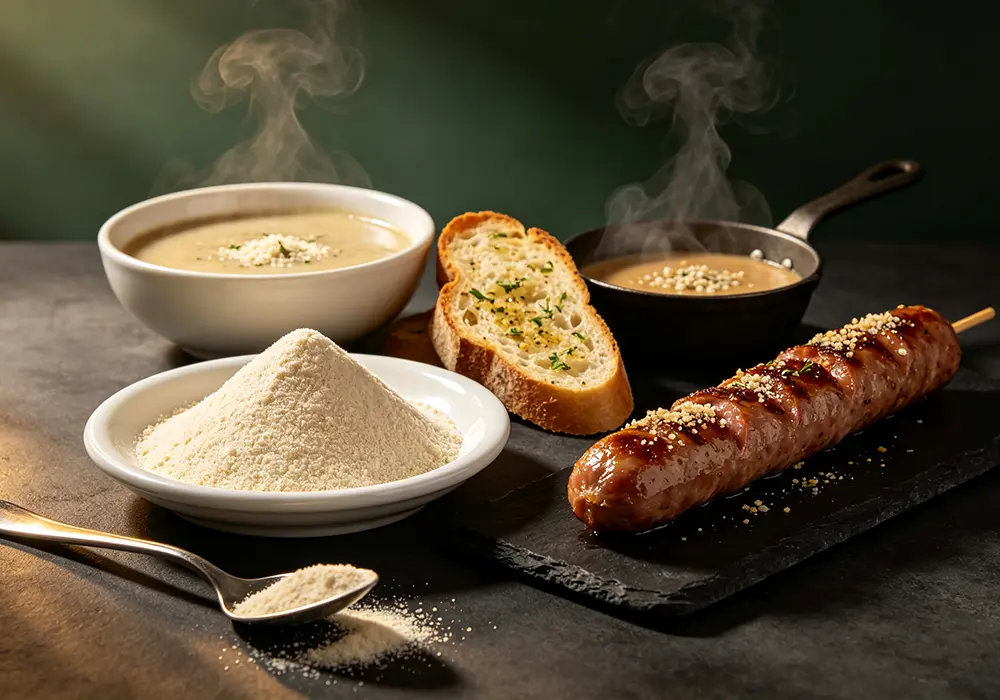
Due to its concentrated bioactive substances and numerous uses, Garlic Powder is used in many different businesses. It is a main ingredient in food supplements that aim to improve heart health, boost the immune system, and keep blood pressure in check. The uniform Allicin content (which can be changed from 1% to 98%) ensures that the supplements always work well as medicine. In addition to nutraceuticals, this dried ingredient is used in functional foods, cosmetics to fight germs and age spots, and pharmaceuticals that need to kill microbes and lower fat levels. It stays stable in controlled store conditions and meets international standards, so buying managers who need reliable, scalable botanical products can't do without it.
Understanding Garlic Powder and Its Core Benefits
What Differentiates Garlic Powder from Related Garlic Products?
Garlic Powder comes from carefully drying out Allium sativum bulbs and then grinding them into regular particles that are usually between 80 and 100 mesh so that they mix well in other ingredients. Garlic salt has sodium chloride and anti-caking agents in it. Pure Garlic Powder, on the other hand, only has organosulfur compounds and no other ingredients. Because it has more water, chopped garlic needs to be kept in the fridge, but garlic flakes have bigger particles that look good in seasoning mixes. For R&D scientists checking formulation suitability, the difference is very important: powder forms dissolve easily in encapsulation processes and liquid matrices, while flakes or minced forms make it harder to control wetness and keep the product stable on the shelf.
Quality factors are greatly affected by the extraction method. Using ethanol to separate keeps the purity of Allicin, which is the main bioactive marker found by CAS 539-86-6. This thiosulfinate substance, which contains sulfur, breaks down quickly when heated or oxidized, so strict handling controls are needed. A standard established by High-Performance Liquid Chromatography (HPLC) shows that premium-grade Garlic Powder has an Allicin potential of more than 3,000 ppm. Purchasing managers should carefully read the supplier's requirements to make sure that the moisture content is less than 6.0%. This is because too much water speeds up the breakdown of enzymes and the growth of microbes during storage.
Nutritional Profile and Health Benefits
Garlic Powder has more beneficial ingredients than just Allicin. These include alliin precursors, methiine derivatives, and polyphenolic antioxidants. Clinical study shows that regular use benefits endothelial function by changing nitric oxide levels, which leads to better arterial health. Antioxidant traits come from sulfur compounds that neutralize reactive oxygen species. This slows down the aging process of cells, which is important for anti-aging product recipes. Activating macrophages and stimulating natural killer cells can boost the immune system. This makes the nutrient useful for functional nutrition companies that are making products that focus on the immune system.
Organic varieties have extra benefits because they don't leave behind manmade pesticides and follow USDA organic guidelines. Quality assurance managers put these licenses at the top of their list when they are trying to reach health-conscious customers or meet legal requirements in the European and North American markets. Because certified organic Garlic Powder isn't sterilized by radioactivity, the enzymes still work, and the microbes are killed through steam treatment. These production factors have a direct effect on choices made in the supply chain, since organic certification needs proof of tracking from growing the plants to packing them at the end.
Shelf Life and Flavor Stability Considerations
The conditions of storage have a big impact on how well flavors stay fresh and beneficial compounds stay stable. Garlic Powder that has been properly handled can last up to 24 months if kept in dark, sealed spaces that are kept at cool temperatures (below 20°C). As the quality goes down, the color changes from creamy white to amber, and the spiciness and Allicin possibilities go down as well. Teams in charge of buying things should make deals with suppliers that spell out how to store items and how often they should be tested for Allicin content.
One kilogram of Garlic Powder can effectively replace five kilograms of fresh cloves in business uses, thanks to its flavor-to-weight ratio. This concentration factor cuts down on shipping costs, warehouse room needs, and work needed to handle the garlic, and it also stops fresh garlic from going bad, which would have been a waste. When operations managers do cost-benefit studies, they need to take yield consistency into account because changes in the quality of the raw materials affect the end product's effectiveness and require formula changes.
Primary Applications of Garlic Powder in the Food Industry
Culinary Applications and Flavor Enhancement
Garlic Powder is a tool used by commercial food makers to ensure uniform taste profiles across production batches, despite the inherent variability of fresh garlic. This item is used in savory food mixes, soup bases, and ready-to-eat meal kits to add umami depth without the texture issues that come with minced options. The even spread of particles makes sure that all of the products are seasoned the same way. This is important for quality control in large-scale operations where taste differences can lead to customer complaints and damage to the brand's image.
Garlic Powder is used by ethnic food makers in the Asian, Mediterranean, and Latin American markets to meet customers' demands for true flavor while keeping production costs low. Fresh garlic needs to be peeled, chopped, and used right away, but powdered garlic can be used right away and easily in automatic spice systems and dry blend lines. This practical benefit cuts labor costs by about 60% compared to processing fresh garlic. This is a useful measure for supply chain managers who are trying to make manufacturing processes more efficient.
Functional Food and Beverage Development
Standardized garlic extracts are being used more and more in functional drinks like health shots, herbal teas, and fortified drinks that are meant to help the heart. Water-soluble Garlic Powder versions address formulation issues that plagued earlier product generations and dissolve fully in liquid media without forming sediments. Manufacturers of sugar-reduction drinks like the natural flavor-masking qualities that keep the sweetness in check without adding any fake ingredients, which is in line with what consumers want from clean labels.
Garlic Powder is used by functional snack companies to improve the flavor and protect the antioxidants in their protein bars, trail mixes, and other tasty nutritional goods. Antimicrobial qualities naturally increase shelf life by stopping bacterial growth and lipid oxidation, so there is less need for artificial stabilizers. Product development managers who want to simplify the ingredients while still meeting food safety standards set by the FDA and other foreign regulatory bodies will like this dual functionality.
Preservation and Safety Improvements
Garlic Powder has been shown to kill bacteria that can make you sick, like Salmonella, E. coli, and Listeria monocytogenes naturally preserves foods in ways that are valued in meat processing, deli goods, and ready-to-eat soups. The ways they work involve sulfur compounds interacting with the walls of bacterial cells, stopping biological processes without leaving behind any chemicals. When Garlic Powder is added to recipes in amounts higher than 0.5%, studies show that pathogens are effectively reduced.
Another smart use is in low-sodium seasoning blends. Garlic Powder has a strong flavor that lets you cut the sodium by up to 30% without the consumers noticing a change in taste. Public health programs that aim to handle high blood pressure create buying opportunities for food companies that change the ingredients in their products to meet standards for less salt. Regulatory relations experts keep an eye on how the FDA's sodium reduction goals change and promote garlic-based seasoning systems as ways to stay in line.
Selecting the Best Garlic Powder for Your Business Needs
Critical Quality Criteria and Certification Requirements
When purchasing managers look at Garlic Powder providers, they should give more weight to those that have ISO9001 certification, which shows that they have standardized quality management systems and consistent production processes. The HACCP certification shows that hazard analysis models are in place to keep biological, chemical, and physical pollution risks under control during production. HALAL and Kosher approvals make it easier for people with religious diets to buy food, and FAMI-QS testing makes sure that feed additives are safe for companies that make animal nutrition products.
Specifications that say "additive-free" should be looked at very carefully, because some bad sellers add rice flour, calcium silicate, or silicon dioxide to make the product run better while lowering the concentrations of active compounds. High-Performance Liquid Chromatography (HPLC) testing in a lab should prove that the amount of Allicin in the sample matches what the dealer says it is. Third-party testing can help buyers and sellers share information more evenly. Traceability paperwork that connects finished powder to specific cultivation batches allows for quick action during quality problems and meets audit standards for pharmaceutical-grade uses.
Beyond pesticide residues, farming methods that affect the health of the land and wildlife are also considered when comparing organic and standard Garlic Powder. Biotechnology businesses that are building sustainable ingredient portfolios are increasingly choosing organic sources to stay in line with their environmental goals. Purchasing managers should make sure that sellers have approved organic farmland that covers enough land to ensure a steady supply over a number of years. This is because switching to organic farming takes three years, which limits how quickly capacity can grow.
Sourcing Strategies and Supplier Evaluation
Hunan Aokang Biotech Co., Ltd. is a good example of a connected supply chain, which is important for getting Garlic Powder reliably. On their 8,000-acre farming grounds, they can track raw materials from the seed to the extraction process. This gets rid of the risks that come with using multiple suppliers, which can affect the quality of the final product. Every year, the company's main processing plant handles 1,200 tons of fresh garlic, and its deep processing processes make more than 150 tons of Standardized Extracts. These production levels serve large-scale buyers who need container-load numbers and guaranteed arrival times.
Superior sellers are different from basic vendors because they work together on technology. Aokang's doctoral-level research and development team, led by Dr. Shen Chali, releases peer-reviewed research on how to improve solubility and optimize Allicin extraction. This shows that they have scientific knowledge that can help clients with formulation. When purchasing, teams are working on new uses. Wholesalers that offer customization services are helpful because they can change the concentrations of Allicin from 1% to 98% based on therapeutic goals or cost limits. This adaptability works for a wide range of markets, from pharmaceutical-grade pills to food-grade spices.
When you buy in bulk, you should look at price-per-kilogram measures for a range of order sizes, since economies of scale have a big effect on unit costs. Setting up long-term supply deals with volume promises protects prices and encourages suppliers to spend in expanding their capacity to meet specific buyer needs. When it comes to raw garlic markets, where prices change 20–30% a year due to weather events and crop yields, supply chain managers have to weigh the costs of keeping stockpiles against the risks of price instability.
Practical Guidelines for Storage, Shelf Life, and Usage Efficiency
Optimal Storage Conditions and Quality Preservation
Controlled weather conditions during storage and marketing are necessary to preserve the quality of Garlic Powder. Hygroscopic absorption, which causes clumping and Allicin breakdown, can't happen in sealed cases made of moisture-barrier materials. Light-protected storage places stop the photochemical reactions that change color and ruin taste. Keeping the temperature below 20°C and the relative humidity between 40 and 60% will keep organosulfur compounds stable for 24 months, which is how long medicinal ingredient specs say they should last.
First-in, first-out (FIFO) inventory movement systems with output date codes should be put in place by operations managers so that quality can be actively monitored. Using batch testing methods to check the amount of Allicin every six months can find signs of degradation before the product's specs go too far from what is accepted. Investing in cold storage that keeps temperatures between 10 and 15°C increases shelf life by an extra year. This is worth the money for facilities that handle large stockpiles or work in warm areas where ambient temperatures are higher than what is suggested.
Changes in color from cream to brown, a less intense spicy flavor, and changes in caking texture are all signs that the quality is going down. Microbiological stability is still very important because mold can grow when wetness gets in and makes whole batches useless, which costs a lot to get rid of. Setting up strong standard operating procedures (SOPs) for storage cuts down on waste and makes sure that facilities follow the rules when health officials check them.
Substitution Ratios and Cost-Benefit Analysis
Usually, a 1:3 weight ratio is used when powder is used instead of fresh garlic in manufacturing. This means that one kilogram of powder can be used instead of three kilograms of fresh cloves, after taking into account changes in moisture content. Although exact amounts require practical testing for particular product uses, one teaspoon of Garlic Powder is roughly equivalent to three teaspoons of minced fresh garlic when converted to volumetric units. Before going into full-scale production, product development managers should have a sensory group test both fresh and powdered versions to make sure the flavors are the same.
The total cost of ownership study looks at more than just the unit prices of the ingredients. It also looks at things like labor savings, less need for refrigeration, and less waste from food going bad. For skilled workers who can peel 15 kilograms of fresh garlic an hour, the work costs about $12 an hour. On the other hand, automatic powder dispensing systems can handle more than 200 kilograms of garlic an hour with little control. Keeping fresh garlic in the fridge costs about $0.08 per kilogram per month in energy costs. With ambient-stable powder options, these costs go away completely.
Strategies for buying in bulk should be based on predicting how much will be used each year. This will allow for container-load sales, which lower the cost per unit by 25–35% compared to smaller shipments. Inventory optimization models weigh these savings against the costs of holding on to goods and the time that capital is idle. For ingredients with stable demand patterns, these models usually suggest keeping 90 to 120 days' worth of supplies on hand. Supply chain directors who are in charge of multiple facilities can coordinate buying to get big discounts and spread goods across regional centers to cut down on shipping costs.
Future Trends and Innovations in Garlic Powder Usage
Emerging Market Demands for Clean-Label Products
Food companies are changing their recipes to use plant extracts instead of manmade additives because customers want to know what's in the food they're buying. Garlic Powder performs two functions: it adds taste and serves as a functional ingredient, allowing labels to make claims like "natural preservative" and "antioxidant source" that appeal to people who care about their health. According to market research, 68% of U.S. customers actively seek goods with five ingredients or fewer. This puts pressure on manufacturers to find multifunctional inputs that make formulations easier.
The demand for Organic Garlic Powder grows at a rate of 12% per year, which is much faster than the growth of demand for normal products. The global organic food market is expected to grow to $380 billion by 2025, which is reflected in this trend. Managers in charge of buying things should check to see if their suppliers can get organic certification. They should be aware that limited approved farms limit the flexibility of supply and drive up prices during times of high demand. Supply disruption risks can be reduced by building ties with vertically integrated providers that run certified organic cultivation bases.
Processing and Packaging Technology Advances
Spray-drying technologies that use low-temperature methods keep heat-sensitive organosulfur chemicals better than standard drum-drying methods. These improvements raise the retention rate of Allicin from 65% to 85%, making goods with higher potencies that need lower amounts in supplements. Pharmaceutical companies that put bioavailability measures first should include low-temperature processing in their quality deals with suppliers and be willing to pay a small extra for better active compound protection.
By getting rid of the oxygen that speeds up oxidative decay, modified atmosphere packing (MAP) methods that use nitrogen flushing make food last longer on the shelf. Individually portioned bags are used for single-batch production runs in the pharmaceutical industry. This lowers the risk of pollution that comes from opening containers over and over again. Smart packing technologies that include humidity sensors allow for real-time quality monitoring along the entire supply chain. This lets shipping managers know about problems with storage conditions before the products go bad.
In nutraceutical uses, odor-hiding problems are solved by encapsulation technologies that coat Garlic Powder particles with protective matrices. Enteric coats keep compounds from being released until they reach absorption sites in the intestines. This makes them more bioavailable while reducing stomach pain. Because of these changes to the recipe, dietary supplement brands can now reach new customers, like people who used to avoid garlic pills because they thought they had an unpleasant aftertaste.
Conclusion
Garlic Powder is very useful in the nutrition, food processing, and pharmaceutical businesses because it has a consistent amount of Allicin and stays stable longer than fresh garlic. Instead of just looking at price, procurement workers should look at a supplier's certifications, cultivation tracking, and technical help. As regulations change to favor clean-label products and organic ingredients, Garlic Powder becomes an important part of product growth processes. Effective sourcing plans strike a balance between lowering costs and making sure the quality of the goods. They do this by building long-term relationships with suppliers that allow for customization needs and guarantee a steady supply of goods. Market trends toward functional ingredients with clinically proven health benefits strengthen Garlic Powder's place as an important area for procurement that requires careful supplier evaluation and smart inventory management.
FAQ
How Do We Verify Supplier Claims About Organic Certification and Processing Methods?
Instead of depending on the paperwork that the supplier gives you, ask for copies of the USDA Organic or equivalent foreign certification papers directly from the certifying bodies. Testing by a third-party lab at a separate facility should make sure that the amount of Allicin in the food meets the requirements and also check for heavy metals and chemical residues. Additional proof can be found through supplier facility checks that look at growing bases, processing equipment, and storage conditions. However, this method needs the skills of an internal audit team or outside consulting services.
What Minimum Order Quantities and Lead Times Should We Anticipate?
For customized Allicin concentrations, industrial providers usually set minimum order numbers between 100 and 500 kilograms. Standard specs may be able to handle smaller initial orders. Lead times include getting a cultivation lot, making the extraction, testing for quality, and sending it internationally. Procurement teams should plan to place their first orders 60 days in advance, so that they have time to look over the paperwork and test samples before making full promises.
Partner with a Trusted Garlic Powder Supplier
With customizable Allicin concentrations ranging from 1% to 98%, Aokang's combined farming and processing skills produce pharmaceutical-grade Garlic Powder. Our 8,000-acre cultivation bases make it possible to track raw materials and keep up a steady flow, which is something that smaller traders can't do. The doctoral-level research and development team helps you come up with new formulations by giving you expert advice. The industrial-scale processing capacity can handle large orders of more than 100 tons per year. You can email our purchasing agents at sales@aokangbio.com to talk about tailored extract requirements, ask for samples of our products, or set up facility checks to make sure our quality management systems are working. Aokang, a top producer of Garlic Powder for the pharmaceutical and nutraceutical businesses around the world, offers low prices and scientific knowledge that speeds up the development of your products. Visit aokangbio.com to explore our complete botanical extract portfolio.
References
1. Block, E. (2010). Garlic and Other Alliums: The Lore and the Science. Royal Society of Chemistry Publishing, Cambridge, UK.
2. Lawson, L.D., & Gardner, C.D. (2005). Composition, stability, and bioavailability of garlic products used in a clinical trial. Journal of Agricultural and Food Chemistry, 53(16), 6254-6261.
3. Rivlin, R.S. (2001). Historical perspective on the use of garlic. Journal of Nutrition, 131(3), 951S-954S.
4. American Spice Trade Association. (2018). Official Analytical Methods for Garlic Powder Quality Standards. ASTA, Washington DC.
5. Josling, P. (2001). Preventing the common cold with a garlic supplement: a double-blind, placebo-controlled survey. Advances in Therapy, 18(4), 189-193.
6. Rahman, K., & Lowe, G.M. (2006). Garlic and cardiovascular disease: a critical review. Journal of Nutrition, 136(3), 736S-740S.
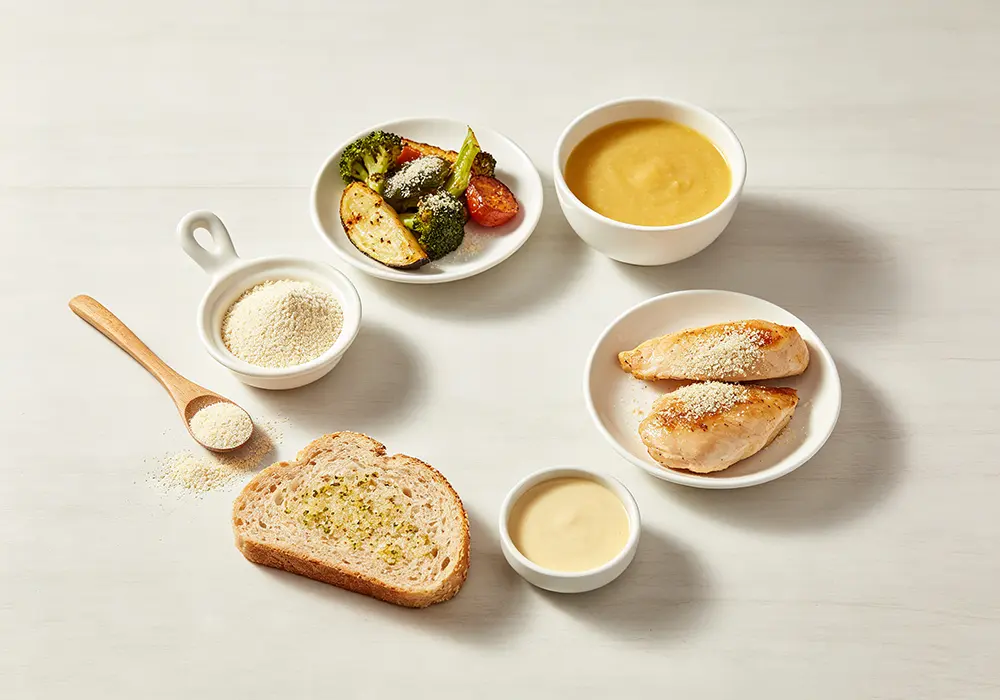
Garlic Powder is more than just an easy-to-find cooking staple. It's a scientifically proven, useful ingredient that combines great taste with known health benefits. This concentrated form comes from carefully drying out Allium sativum bulbs and grinding them into small pieces. It keeps bioactive chemicals like Allicin while providing uniform flavor profiles. You can change your product line and become more competitive in health-conscious markets by learning about the technical details and best ways to buy this ingredient. This is true whether you're making dietary supplements, functional foods, or seasoning blends for commercial use.
Understanding Garlic Powder: Uses, Benefits, and Nutrition
The Versatility Behind a Timeless Ingredient
Dehydrated garlic is widely used in many fields because it is very stable and always has the same amount of strength. Unlike fresh cloves, whose pungency and wetness content change with the seasons, Garlic Powder that is made by professionals always has the same level of taste and functionality. Because it is always the same, it is essential for large-scale food production, where quality control and copying recipes are essential.
Food companies like this item because it solves some of the problems that come with working with fresh garlic, like how hard it is to peel and how its shelf life can change. One kilogram of good powder can replace about five kilograms of fresh bulbs, which greatly reduces the amount of space needed for storage and the cost of transportation while also getting rid of waste from bulbs going bad.
Nutritional Profile and Bioactive Compounds
The real value is in how many organosulfur compounds it has, especially Allicin (CAS: 539-86-6), which is made when enzymes change the precursor Alliin. Scientists who wrote an article in the Journal of Nutrition found that Allicin can kill microbes and help the heart work better by keeping blood pressure at appropriate levels. More research shows that regular use may improve the immune system by changing the behavior of white blood cells.
Besides Allicin, garlic that has been dried still has useful amounts of Selenium, Manganese, and Vitamin B6. When these nutrients are dried, they are concentrated per unit weight compared to when they are fresh. Flavonoids and other antioxidants are still accessible and help protect cells from oxidative stress. This is an important thing to think about when developing anti-aging products for your high-end clients.
Applications Across Industries
For cardiovascular support formulas, dietary supplement companies use standardized Garlic Powder with an Allicin level that can be changed from 1% to 98%. Functional food designers add it to tasty snacks, spice mixes, and low-sodium foods to make them taste better without adding salt. Cosmetic formulators know that it can kill germs on the skin, which can help acne-prone skin, and pharmaceutical experts are looking into how it could help the metabolism of fats.
Garlic Powder is also highly compatible with both ketogenic and low-carbohydrate diets, which further expands its market potential. With almost no carbs (about 2 grams per tablespoon) and no added sugars, it is an excellent choice for consumers seeking clean-label products that support metabolic health.
How to Make and Store Garlic Powder: A Practical Guide for Businesses
Production Process and Quality Control
The first step in commercial production is choosing high-quality bulbs. These bulbs are then carefully inspected to get rid of any that are broken or sick. The cloves are peeled by machines, sliced evenly to make sure they dry evenly, and put through temperature-controlled dehydration systems. The best temperature range for drying is between 50°C and 60°C, which keeps the Allicin potential while lowering the moisture content to below 6%, which stops microbes from growing and enzymes from breaking down the food.
Once the material has dried out, it is put through precise grinding equipment that has been set up to get the mesh size that is needed. For most uses, the mesh size is between 80 and 100, but it can be smaller for special extracts. Manufacturers who use ISO9001 quality control systems keep an eye on the particle distribution, moisture levels, and Allicin retention in real time during this step to make sure they are meeting the requirements.
Bioactive chemicals that are used in pharmaceuticals are concentrated using ethanol extraction methods in advanced facilities. Hunan Aokang Biotech uses controlled extraction methods that have been proven to work by their national and local laboratory network. This lets them get Allicin concentrations that can be changed to fit the exact needs of different treatment categories.
Storage Protocols for Maximum Shelf Life
Proper storage has a big effect on how well ingredients work and how much they are worth. The stuff has to stay sealed in packaging that keeps wetness out. These are usually food-grade containers with desiccant packets or multi-layer laminated bags. To keep volatile chemicals from going bad, storage areas should keep temperatures between 15°C and 25°C and relative humidity below 60%.
Light speeds up the breakdown of molecules that contain sulfur, which lowers both the taste and the bioactivity. Facilities should put goods in dark places or use packages that aren't see-through. Garlic Powder that has been properly handled and kept will stay stable for 24 months, after which its pungency will gradually decrease rather than suddenly degrade.
Using first-in, first-out rotation methods and doing sensory reviews every three months can help procurement managers who deal with large amounts of inventory. A visual review should show a constant creamy-white to pale beige coloration. Darkening suggests oxidative damage or too much heat exposure during processing, which could mean a quality issue that needs to be looked into by the provider.
Choosing the Right Garlic Powder: Brands, Quality, and Types
Evaluating Supplier Credentials and Certifications
To choose the right providers, you need to carefully look at their expert skills and compliance paperwork. Leading producers keep a wide range of certifications, such as ISO9001 for quality management, HACCP for food safety, and specialty certifications like HALAL, Kosher, and FAMI-QS to meet the needs of different markets. These certifications show that your business is mature and dedicated to traceability, which is important when the image of your brand rests on the quality of the ingredients you use.
Garlic Powder is available in both conventional and organic grades. Organic licenses, like USDA Organic and EU Organic, come with higher prices but give you access to growing markets that value pesticide-free farming. For applications that are more price-sensitive, conventional Garlic Powder is a more cost-effective option while still delivering reliable performance when sourced from reputable manufacturers that follow good agricultural practices. The choice depends on your target audience and market positioning rather than on any significant quality differences that affect the performance of the final product.
When a supplier controls farming, processing, and delivery, this is called vertical integration. These suppliers usually offer more consistent batches and better supply security. Hunan Aokang Biotech is a good example of this model because it grows medical plants on more than 8,000 acres, makes more than 2 million standard seedlings every year, and can process 1,200 tons of fresh material every year. This infrastructure makes prices stable and reduces the number of disruptions in the supply chain that affect production plans.
Understanding Product Specifications
Technical standards determine how well finished goods work. Allicin potential, which is given in parts per million (ppm), is the main quality sign for health uses, and the best grades have more than 3,000 ppm. Solubility and mouthfeel are affected by mesh size. Smaller bits (100 mesh or less) dissolve quickly in liquids, while larger grades (40-60 mesh) add texture to dry spice mixes.
The amount of moisture has a direct effect on how stable and easy to flow something is on a shelf. Specifications usually say that the wetness level can't be higher than 6%, but for longer stability, top types aim for 4-5%. Total plate counts, amounts of yeast and mold, and pathogen tests (Salmonella, E. coli) must all meet the rules in the places where the food is going. When suppliers give full Certificates of Analysis (COA) for every production lot, they show that they are honest, which makes it easier to show compliance during regulatory checks.
Procurement Insights: Where and How to Buy Bulk Garlic Powder
Strategic Sourcing Considerations
Cost optimization and supply chain reliability must be balanced for buying to work well. When you deal directly with a maker, you avoid the markups that come with going through a distributor and can get technical help and customization options that distributors don't offer. Minimum order numbers (MOQs) are very different. For example, commodity sellers may need promises of several tons, while specialty makers that offer custom Allicin concentrations will take smaller initial orders to make testing the product easier.
Price changes are caused by things that happen in agriculture, like weather trends that affect crop yields, rising energy costs that affect drying operations, and changes in the value of currencies in international trade. Setting up framework agreements with yearly volume commitments and price changes every three months saves you from spot market changes and gives suppliers a reason to prefer your orders when they are short on capacity.
Garlic Powder lead times for regular goods are usually between 30 and 45 days, but they can extend to 60–90 days for organic-certified products or special orders that require dedicated production runs. Purchasing managers should maintain sufficient safety stock to cover 90–120 days of production demand, especially when sourcing Garlic Powder from a single supplier or from countries where regulatory requirements may cause delays.
Negotiating Terms and Building Partnerships
Negotiations that go well include more than just the unit price. They also include payment terms, quality promises, and working together on technical issues. Suppliers who offer Net 30-60 payment options show that they are financially stable and want to build long-term relationships with their customers. Quality guarantee terms should spell out the accepted amounts for key parameters like Allicin content, moisture, and microbial limits. They should also explain how to fix material that doesn't meet the standards.
To check for real-world consistency, ask for samples from actual production runs instead of lab norms. Before placing big orders, compare the products' sensory qualities and their analysis abilities side by side. Suppliers who are sure of their skills welcome this kind of scrutiny and see it as a chance to show that their products are better than others.
Ensuring Safe and Effective Use: Side Effects, Substitutes, and FAQs
Safety Profile and Regulatory Compliance
Garlic Powder is very safe to eat as long as you stay within the recommended daily amounts. Some rare side effects include stomach pain in sensitive people or people who take too much (>5 grams of pure extracts every day). Because the ingredient naturally stops blood from clotting, it should be labeled with a warning for people who take prescription blood thinners. However, at cooking doses, interactions are still not clinically important.
Analytical and visual tests are done on a regular basis to check the shelf life. Fresh, high-quality materials have a strong, savory smell. Musty or rotten smells mean that the material is breaking down and needs to be thrown away. If the color gets darker than light tan, it means that oxidation is lowering bioactivity. Lumping means that moisture has gotten in, so the item needs to be repackaged or used quickly before it gets worse.
For a softer allium taste or aged garlic extracts with more S-Allylcysteine (SAC) but less pungency, formulation scientists may want to look at onion powder or black Garlic Powder. One teaspoon of powder is about the same as two to three fresh cloves, but different amounts of strength need to be tested in real life for accurate preparation work.
Conclusion
Garlic Powder is a highly advanced item that has many uses in cooking and can be used in a variety of different ways. Its consistent bioactive profile, higher stability compared to fresh options, and ability to be used in nutraceutical, food, skincare, and pharmaceutical products make it a valuable tool for companies that want to meet the needs of health-conscious customers. To get the most out of this ingredient, you need to work with providers who can show that they have full control over cultivation, processing, and quality processes, as well as the ability to customize their products to fit your unique formulation needs and market placement goals.
FAQ
What distinguishes garlic powder from garlic salt in commercial applications?
In business settings, how is Garlic Powder different from Garlic Salt? Garlic Powder is made from pure, dehydrated garlic, which gives it a concentrated taste and bioactive substances without any salt. Garlic Salt is made by mixing Garlic Powder with table salt in a 3:1 ratio, making a seasoning rather than a useful ingredient. Pure powder is still the best choice for supplement recipes and food items that need to be low in sodium. Garlic Salt, on the other hand, is better for seasoning foods that people want to use quickly and where sodium is okay.
How does organic certification impact procurement decisions?
Although it costs 20–40% more than regular Garlic Powder, organic Garlic Powder appeals to more affluent consumers and meets store requirements for organic SKUs. For people who care about their health, certification ensures that the crops are grown without using pesticides and don't use any artificial processing tools. When marketing organic claims aren't important, conventional choices offer the same functions at a lower cost. The choice should be in line with how the brand is positioned and with what the target customer values, not with what they think about quality.
What storage conditions optimize bulk inventory management?
Keep sealed packages in climate-controlled spaces that are 15–25°C and have a relative humidity below 60%. Keep them out of the light. First-in, first-out cycles should be used, and quality checks should be done every three months to check for color, smell, and moisture content. If you store something properly, it will still work for 24 months, but after 18 months, it will slowly lose its effectiveness. Facilities that don't have temperature control should focus on placing smaller orders more often to make sure that the products always work well.
Partner with Aokang for Premium Garlic Powder Solutions
With more than 20 years of experience working with plants and cutting-edge processing tools, Aokang Biotech can make Garlic Powder that meets the strictest requirements. Our controlled farming on more than 8,000 acres and ISO9001-certified processing facilities make sure that the Allicin content stays the same and can be changed from 1% to 98% to meet your specific recipe needs. Our doctoral-level research team helps with the technical side of product creation, whether they are working on cardiovascular supplements, useful foods, or pharmaceutical uses. We invite procurement managers, R&D directors, and formulation scientists to learn more about how our services as a reliable provider of Garlic Powder can help you expand your ingredient selection. Email our team at sales@aokangbio.com to talk about your needs and ask for scientific specs that show how committed we are to quality excellence and supply reliability.
References
1. Rivlin, R.S. (2001). Historical perspective on the use of garlic. Journal of Nutrition, 131(3), 951S-954S.
2. Lawson, L.D., & Gardner, C.D. (2005). Composition, stability, and bioavailability of garlic products used in a clinical trial. Journal of Agricultural and Food Chemistry, 53(16), 6254-6261.
3. Banerjee, S.K., & Maulik, S.K. (2002). Effect of garlic on cardiovascular disorders: a review. Nutrition Journal, 1(1), 1-14.
4. Ried, K., & Fakler, P. (2014). Potential of garlic (Allium sativum) in lowering high blood pressure: mechanisms of action and clinical relevance. Integrated Blood Pressure Control, 7, 71-82.
5. American Spice Trade Association (2018). Quality Specifications for Dehydrated Garlic Products. ASTA Technical Committee Report.
6. Rahman, M.S. (2007). Handbook of Food Preservation (2nd ed.). CRC Press, Chapter 18: Dehydration and Drying of Allium Species.
In the production of current foods, medicines, and supplements, Premium Garlic Powder plays an essential role. This concentrated powder comes from carefully drying out Allium sativum cloves. It has the same taste and health benefits as fresh garlic, but it can't be used in commercial settings. In 2026, the best premium Garlic Powder choices will have uniform allicin contents that range from 1% to 98%. This gives purchasing professionals the most freedom when it comes to making purchases. These high-quality powders help keep your heart healthy, boost your immune system, and kill microbes. They also have stable supply chains, long shelf lives, and strict quality licenses that meet international regulatory standards.
Understanding Garlic Powder: Composition, Benefits, and Applications
Manufacturing Process and Quality Standards
Selecting mature bulbs is the first step in making quality dried garlic. Next comes controlled peeling, slicing, and low-temperature drying that keeps the bioactive compounds. Advanced producers use ethanol extraction methods to concentrate allicin (CAS: 539-86-6), the sulfur-containing compound in garlic that gives it its healing qualities. For the best dispersibility in recipes, good makers keep the moisture content below 6% and mesh sizes between 80 and 100. This careful processing makes sure that the powder keeps its organosulfur compounds, such as alliin and methiine, which become active allicin when they come into contact with water.
For B2B buyers, certification requirements are getting stricter. Suppliers who want to work with the pharmaceutical and nutritional businesses must now have at least one of the following certifications: ISO9001, HACCP, HALAL, Kosher, SC, FAMI-QS, and IP (NON-GMO). These licenses make sure that the food can be tracked from the time it is grown to the time it is processed. This eases buyers' worries about consistency and following the rules.
Core Health Benefits Validated by Research
Garlic's heart health effects are still being proven in clinical studies. It has been shown to lower LDL cholesterol and support healthy blood pressure through hydrogen sulfide signaling pathways. Garlic Powder is useful in medicinal uses because of its antimicrobial qualities, which are effective against a wide range of pathogens at low inhibitory concentrations. Garlic boosts the immune system by increasing the activity of white blood cells, and its antioxidants fight oxidative stress, which is linked to cell aging.
Industrial Applications Across Sectors
Dietary supplement companies use Garlic Extract Powder that has been standardized to certain allicin amounts, which are usually between 0.6% and 5.0% by HPLC measurement. Functional food makers add it to seasoning mixes, snack mixes, and drinks that want to naturally kill microbes that cause spoilage. Cosmetic makers use garlic's antibiotic and anti-aging qualities to make skin care products, and drug companies use it to make medicines that lower cholesterol and kill germs. The pharmaceutical-grade material is easier to work with than garlic oil, which lets it be directly compressed during the tableting process.
Comparing Premium Garlic Powder Options for B2B Buyers
Organic Versus Conventional Varieties
Organic Garlic Powder is more expensive, but it has clear benefits for brands that want to attract health-conscious customers. Synthetic poisons are not allowed in certified organic production, and acceptable anti-caking agents like organic rice concentrate are used instead of chemical ones. Premium organic grades usually have more than 3000 ppm of allicin, which is about the same as high-quality standard grades. For organic varieties, microbiological safety is usually achieved through steam treatment instead of irradiation. This keeps the consistency of the product while passing strict pathogen standards; for example, 375g samples of the product do not contain Salmonella.
For business uses on a large scale where organic certification is not necessary, conventional Garlic Powder has lower costs. When bought from reputable companies that follow Good Agricultural Practices, these goods have the same nutritional values. Ultimately, the choice between organic and conventional varieties relies on what the target market wants, what the regulations are in the countries where the goods will be sent, and how much money is available within the buying guidelines.
Product Format Distinctions
Formulation mistakes that hurt product quality can be avoided by knowing about changes in formats. Pure Garlic Powder has no added ingredients and only includes dehydrated garlic, which gives it the highest quantity of organosulfur compounds. Garlic salt is made by combining Garlic Powder with Sodium Chloride, usually in amounts that are too high for health-focused products. When mixed with other spices, garlic flakes have bigger particles that look nice, but they don't spread out evenly enough for capsule or liquid uses.
Depending on the purpose, procurement teams must say what particle size is needed. Powders that are 95% pure go through an 80-mesh sieve to make sure that pills and tablets mix evenly, while slightly coarser grades work well for makeup formulations that are put on the skin. The physical property of bulk density, which ranges from 0.45 to 0.65 g/mL, changes how much is packed and how it is shipped for large sales.
Supplier Landscape and Sourcing Geography
Vertical integration from farming to processing is a trait of leading suppliers in 2026. This makes sure supply security, which is something that procurement managers value. China still grows the most garlic, with provinces like Shandong and Henan having big processing plants that make up more than 75% of the world's supply. But quality changes a lot between suppliers because of how well they handle quality and how technically skilled they are.
For custom formulation projects, manufacturers with doctoral-level research teams and partnerships with national or local labs provide the best expert help. Companies like Hunan Aokang Biotech Co., Ltd. work together with universities like Huaihua University and Beijing Normal University to offer customization options for allicin content ranging from 1% to 98%. This meets a wide range of needs, from food seasoning to pharmaceutical-grade extracts.
How to Identify and Procure the Best Garlic Powder for Your Business in 2026
Quality Metrics and Testing Protocols
Garlic Powder quality evaluation begins with clearly defined purchasing requirements. Allicin potential serves as the primary quality indicator and is verified through HPLC testing to ensure batch-to-batch consistency. Premium Garlic Powder typically contains 2.0%–5.0% alliin, the precursor compound responsible for the formation of bioactive allicin. To maintain product stability during storage, moisture content should remain below 5%, while ash content should not exceed 5%, helping to prevent enzymatic degradation and preserve overall quality.
Color standard lets you quickly judge the quality of the image. If the color is creamy white to light amber, it means that the processing was done right. If the color is darker, it means that the active chemicals were damaged by too much heat or oxidation. Microbiological tests must show that the total number of cells on the plates is less than 100,000 CFU/g, and specific disease tests must show that Salmonella and E. coli are absent in line with rules about food safety.
Sourcing Channels and Procurement Strategies
Medium-sized to large businesses can obtain the best pricing and customization opportunities for Garlic Powder by working directly with manufacturers. This channel provides access to expert support, certificates of analysis, and opportunities to evaluate production facilities. Wholesale distributors serve smaller buyers or ingredient blenders, although per-unit costs are typically higher. Digital B2B marketplaces offer a wider selection of suppliers, but buyers should carefully verify licenses and quality claims before making purchasing decisions.
When you buy in bulk, you usually get big discounts when you reach a certain minimum order number, which can be anywhere from 100 kg to 1000 kg, based on the supplier's scale. Logistics issues include sending goods that are defined to have a high allicin content in a way that keeps them safe from heat and humidity. Lead times range from two to eight weeks, based on how customized the order is and how well the target port is set up.
Customization and Private Labeling
Being able to do OEM and ODM work has become an important quality for suppliers. With private labeling, brands can sell Garlic Powder under their own names while still using the manufacturer's knowledge. Customization includes more than just branding. It also includes standardizing individual allicin, optimizing particle size, and choosing from a variety of packing formats, from large drums to sachets that are ready for consumers.
New ideas in sustainable packaging protect the environment without affecting the security of the product. Light-resistant, moisture-barrier packing keeps the allicin potential of the product high for as long as it lasts, which is usually 24 months if it is kept cool, dry, and sealed. Some companies now make boxes that can be composted or recycled, which helps companies meet their green goals while still meeting pharmaceutical-grade safety standards.
Practical Guidelines and Case Studies for Using Premium Garlic Powder in Various Industries
Food Manufacturing Applications
Garlic Powder is used by snack food manufacturers in seasoning mixtures for chips, crackers, and extruded goods because it has a stronger taste than raw garlic and is less expensive to make. After moving to standardized Garlic Powder, a major North American snack company cut costs by 23%. They also got rid of the waste that comes with processing fresh bulbs and got stability from batch to batch, which made customers happier. The powder's antibacterial qualities also made products last longer by stopping lipid breakdown in snacks that contain oil.
The solubility properties of Garlic Powder are advantageous to sauce and flavor makers. Different types that are water-soluble mix easily into liquid solutions, while lipid-soluble types that focus on diallyl disulfide work well with oil-based sauces. Standardized pungency lets formulators get exact levels of taste intensity, which is important for keeping brand consistency across production sites in different parts of the world.
Nutraceutical and Pharmaceutical Development
Dietary supplement companies use Garlic Extract Powder to make heart-healthy goods by making sure they have the right amount of allicin, which has been proven in clinical tests. Enteric-coated delivery systems are an improvement on older encapsulation technologies that stop breakdown in the stomach. This keeps allicin released in the intestines, where it is absorbed. Supplements for lowering blood pressure usually have 1.2% to 2.0% allicin, and immunity support formulas might have old garlic extract types that focus on S-allyl cysteine content.
Pharmaceutical uses rely on garlic's lipid-lowering properties, which have been proven by controlled studies showing average LDL cholesterol drops of 10-15%. Synthetic allicin analogs are being studied as potential antimicrobial drugs, but natural Garlic Powder is still useful for nutraceutical goods that fall between vitamins and prescription drugs.
Storage and Quality Management Best Practices
Strict weather controls are needed to keep the purity of the product throughout the supply chain. Temperatures must stay below 25°C, and relative humidity must stay below 60% in storage areas so that moisture doesn't get absorbed, which starts enzyme activity. Allicin breaks down faster in light, so it needs to be stored in opaque cases or in dark buildings.
Batch tracking systems allow full traceability from where the raw materials come from to where the finished products are sold. As part of quality control, stored goods are tested every three months to make sure the amount of allicin stays the same. Usually, acceptance standards allow no more than 15% deviation from the original specifications. These steps make sure that the materials that make it to production lines still live up to the claims that brands make to customers about how well their products work.
Conclusion
In 2026, finding the right Garlic Powder provider means paying attention to allicin standardization, approval compliance, and the dependability of the supply chain. Premium choices come with active compound concentrations that can be changed, full quality paperwork, and technical help that turns purchasing from just buying ingredients into a strategic relationship. Garlic Powder's flexibility and economic value are shown by the many ways it is used in food making, nutraceuticals, cosmetics, and medicines. When procurement professionals choose suppliers with study skills, foreign certifications, and vertical integration, their companies are better prepared to make great products and compete in the market.
FAQ
What is the typical shelf life of premium garlic powder?
Premium Garlic Powder stays at its best for 24 months if it is kept in cool, dry places that are shut and protected from light. Enzymes can't break down allicin potential if the moisture level is less than 5% and the product is packed correctly. Industrial buyers should set up testing schedules that run every three months to make sure that active compounds stay stable during storage.
How does organic garlic powder differ from conventional options?
Synthetic herbicides are not allowed in organic-approved varieties, and steam treatment is used instead of irradiation to kill microbes. Both types have about the same amount of allicin potential, which is more than 3000 ppm in top grades. Cost differences for organic certification are usually between 20 and 40 percent more than for regular certification. This is because organic certification is marketed to health-conscious consumers and is required by law in some export markets.
What minimum order quantities should buyers expect?
MOQ ranges from 100 kg to 1000 kg, depending on the supplier's size and the needs of the customer. Direct connections with manufacturers often allow for smaller initial orders for trying samples and formulations before committing to large-scale production. For private branding and custom standards projects, the MOQ may need to be higher to cover the setup costs that come with doing specialized processing.
Partner with Aokang for Premium Garlic Powder Solutions
Aokang sells Garlic Powder that is safe for use in medicines. They back their products with graduate study teams and more than 20 years of experience in extracting plants. Our ISO9001 and SC-certified factories work with products that can have any amount of allicin they want, from 1% to 98%. These factories also have other certifications like HACCP, HALAL, Kosher, and FAMI-QS to back them up. We are a well-known producer of Garlic Powder, and we keep our vertical integration by growing garlic on more than 8,000 acres and processing it in state-of-the-art facilities to make 1,200 tons of powder every year. Contact our expert team at sales@aokangbio.com to talk about your formulation needs, get product specs, and set up free samples that show how committed we are to quality.
References
1. Block, E. (2022). Garlic and Other Alliums: The Lore and the Science. Cambridge: Royal Society of Chemistry Publishing.
2. Rivlin, R.S., & Budoff, M. (2021). Cardiovascular Effects of Garlic: Clinical Evidence and Mechanistic Insights. Journal of Nutritional Biochemistry, 89, 108-122.
3. Ankri, S., & Mirelman, D. (2020). Antimicrobial Properties of Allicin from Garlic: Mechanisms and Applications. Microbes and Infection, 22(4), 247-256.
4. Patel, K., & Kumar, S. (2023). Quality Assessment Parameters for Dehydrated Garlic Products in the Food Industry. Food Science and Technology International, 31(2), 134-148.
5. Zhang, H., & Liu, Y. (2024). Comparative Analysis of Organic and Conventional Garlic Processing Technologies. International Journal of Food Science, 59(3), 892-906.
6. American Spice Trade Association. (2025). Quality Specifications for Dehydrated Garlic Products: Industry Standards and Testing Protocols. Washington, D.C.: ASTA Publications.
Black Fungus Extract, which comes from Auricularia auricula, has great antioxidant, heart health, and immune system benefits that make it popular in the nutrition and functional food businesses. This water-extracted ingredient helps make products that control blood fats, prevent blood clots, and protect against natural radiation. It has a lot of Auricularia polysaccharides—between 10% and 50% in measured extracts. It is completely water-soluble and stable when stored properly, which makes it a good choice for food supplements, functional drinks, cosmetics, and pharmaceuticals that need plant ingredients that have been proven to work by science.
Understanding Black Fungus Extract: Composition and Properties
Auricularia auricula extract comes from a fungus that can be eaten and is grown in large amounts all over Asia. It has been used by Traditional Chinese Medicine practitioners for hundreds of years. There are a lot of nutrients in this mushroom. It has proteins, carbohydrates, vitamins B2 and D2, and minerals like iron and calcium that your body needs. Water is usually used as the solvent in the extraction process. This keeps the bioactive polysaccharides that give the extract its therapeutic benefits while keeping the clean-label charm.
Chemical Profile and Bioactive Components
The main thing that makes this product work is the active ingredient, which is Auricularia polysaccharides. The molecular weights of these complex sugars range from 10 kDa to 500 kDa, and their structures affect pathways that modulate the immune system. By using advanced extraction methods, polysaccharide amounts can be found to be between 10% and 50% by HPLC/UV analysis. For pharmaceutical-grade uses, special processing can reach 90% purity. Most of the time, the extract ratio is between 10:1 and 20:1, which means that 10 to 20 kg of raw material makes 1 kg of compressed extract.
Product Forms and Application Flexibility
Auricularia auricula extract is usually sold by manufacturers as a fine powder that can be put into capsules, tablets, or mixed with liquids. The powder dissolves completely in water, so there are no worries about precipitation in beverage use. This means that clear, healthy drinks with no texture problems are possible. Some sellers offer liquid concentrates or spray-dried grains that are best for certain ways of making things. Testing for stability shows that the extract stays effective when kept in sealed, light-protected cases in cool, dry places for two years at a time.
Key Health Benefits of Black Fungus Extract for Business Applications
Black Fungus Extract's main health benefits for business use have been identified as a number of therapeutic processes that are important to the health concerns of today's consumers. By knowing about these benefits, product makers can make sure that their formulas meet the needs of the market and that health claims are backed up by solid research.
Immune System Modulation
Auricularia polysaccharides make macrophages work harder and boost the activity of natural killer cells, which makes the body's natural defenses stronger. Studies that measure cytokine production show that polysaccharide treatment raises amounts of interferon-gamma and interleukin-12, which suggests that cells are better protected. This effect on the immune system helps supplement formulas that target seasonal immune issues or general health care. Doses of 200 to 500 milligrams per day are used in clinical trials to test immune endpoints. This helps product development teams set standards for how well their products work.
Cardiovascular Protection Mechanisms
The extract can stop blood from clotting by stopping platelets from sticking together. This lowers the chance of thrombosis without the bleeding problems that come with drug-based blood thinners. Researchers have found that people who eat regular polysaccharide products have lower levels of total cholesterol and LDL cholesterol. On the other hand, HDL cholesterol levels stay the same or go up a little. The process for lowering lipids includes increased production of LDL receptors in the liver and better removal of bile acids. Flow-mediated dilation studies show that vascular endothelial function also gets better, which could be helpful for people who have metabolic syndrome or risk factors for cardiovascular disease.
Antioxidant and Anti-Aging Properties
Polysaccharides from Auricularia auricula get rid of free radicals like hydroxyl radicals and superoxide anions. This keeps cell parts safe from reactive damage. This antioxidant property can be used in cosmetics because the extract stops matrix metalloproteinase activity, which slows down the breakdown of collagen in skin cells. The extract is used in skin care products to help with photoaging, discoloration, and loss of skin flexibility. Taking it by mouth boosts your body's antioxidant levels, which works well with external uses in nutricosmetic product lines.
Radiation Protection Effects
Auricularia polysaccharides are the only plant extracts that have been shown to protect against radiation. These qualities have been proven in both animal models and human tests. The process includes making DNA repair enzymes work better and lowering the reactive stress caused by radiation. Because of this benefit, drug companies are interested in making supportive care goods for people who are getting radiation treatment or working with radiation. Doses of about 500 milligrams per day are recommended in protection measures, but the best time to take them, based on exposure needs to be carefully thought out.
Digestive Health Support
The prebiotic-like benefits of the extract encourage the growth of good gut bacteria, especially Bifidobacterium and Lactobacillus species. Increased production of tight junction proteins leads to better function of the intestinal barrier, which lowers inflammatory gut conditions. Dietary fiber also helps keep your bowels regular and may lower your risk of colon cancer in a number of ways, such as by shortening the time food takes to pass through your body and increasing the production of fermentation products.
Black Fungus Extract vs. Other Mushroom Extracts: Comparative Insights for Procurement
When procurement experts look at Mushroom Extracts, they find a lot of choices that have some properties that are similar and some that are different. Knowing these differences is important for strategic ingredient selection when it comes to product positioning and target groups.
Therapeutic Focus and Market Positioning
While Reishi is the leader in adaptogenic supplements, Black Fungus Extract is making waves in the segments for heart health, blood sugar management, and radiation protection. People still don't know as much about black fungus as they do about Reishi. This could lead to lower prices while educational marketing raises knowledge. The fact that the extract can be used as both an active ingredient and a natural colorant in drinks makes it more useful than just a healing extract.
Organic Versus Conventional Sourcing
Organic approval requires proof that crops were grown without pesticides and supply lines that can be tracked. This comes with a higher price tag, but it lets grow groups of people who like clean labels buy organic products. Conventional Auricularia gardening uses normal farming methods that have been shown to consistently produce high yields, which can save money for products that need to keep costs down. As mushrooms take in and store pollutants from the earth, quality assurance tests should make sure that heavy metal levels stay below the limits set by regulators, even if the mushrooms are organic. Cadmium levels should be less than 1 mg/kg, and lead levels should be less than 3 mg/kg.
Formulation Considerations: Powder Versus Capsules
Powder forms give formulators the most freedom, letting them mix ingredients in any way they want and change the dose. Powders that are ready to be put into capsules must have the right flow properties and moisture content to keep them from sticking together during encapsulation. Pre-encapsulated goods make transportation easier for brands that don't have the right tools for encapsulation, but they make it harder to customize the formulation. Even though they are not as common, liquid extracts can be used in some drinking uses where ingredients need to be pre-dissolved. Different forms have different stability patterns. Powders usually have longer shelf lives than liquids that need preservative systems.
How to Source High-Quality Black Fungus Extract: A Procurement Guide
Tough evaluation of suppliers protects the quality of the product, the company's image, and its ability to follow the rules. Teams in charge of buying things should set up structured evaluation methods that look at many aspects of a supplier's skills and dependability.
Certification and Compliance Verification
Suppliers with a good reputation keep their ISO9001 approval, which shows that they use standard quality control systems. Food safety standards, such as HACCP, make sure that the steps used for hazard analysis keep food from getting contaminated. Religious food licenses, like Halal and Kosher, make it easier for goods aimed at these groups of people to get into more markets. In China, SC approval proves that production licenses follow Chinese rules. The FAMI-QS certificate talks about quality standards for feed applications. It is useful for sellers who work with both the human diet and animal feed markets. The non-GMO status is confirmed by IP certification, which is becoming more and more important as customer worries about genetic change grow. Purchasing teams should ask for copies of up-to-date certificates and check their accuracy with the organizations that issued them.
Quality Assurance Testing Protocols
In addition to certificates, technical details need to be checked by a third party to make sure they are correct. Verification of polysaccharide content using HPLC or UV spectrophotometry should match the stated specifications, with a range of variation usually within 5% being appropriate. Heavy metal testing is needed to make sure that the amounts of lead, cadmium, arsenic, and mercury meet the rules for the markets they are meant for. Microbiological tests should show aerobic plate counts, yeast and mold counts, and the lack of pathogens in line with standards for food or health supplements. Solvent residue analysis checks the quality of the extraction process by making sure that the amount of ethanol or other allowed liquids stays below the limits set by regulators. Screening for pesticide residues keeps farms from getting contaminated, which is especially important for sources that aren't organic.
Supply Chain Stability and Production Capacity
Industrial-scale production tells the difference between sources you can trust and small-batch makers who can't keep up with rising demand. Check the size of the cultivation base—suppliers with committed land of more than a few thousand acres show that the supply is stable. The annual working capacity should match the expected number of purchases, taking into account changes that happen with the seasons. Having cold storage facilities protects the quality of raw materials between harvesting and processing, which keeps the active compound's purity. Suppliers like Aokang have normal cultivation bases that are bigger than 8,000 acres and plan to grow them to almost 20,000 acres, which helps to ensure the stability of long-term partnerships. Modern extraction equipment—more than 80 units in advanced operations—in processing plants ensures uniform quality and enough throughput.
Pricing Negotiation and Bulk Purchasing
Most of the time, volume promises open-tiered price systems. For most suppliers, discounts become meaningful at levels around 100 kilograms. Longer-term contracts that cover more than one delivery usually get better prices than spot purchases, but they need reliable predictions of what people will want. Ask for detailed quotes that clearly state the Incoterms—FOB, CIF, or DDP price structures have a big effect on the total landing costs. Depending on the product, the minimum order quantity varies from seller to supplier and can be anywhere from 25 kg to 500 kg. On average, it takes four to six weeks from the time an order is confirmed until it is shipped. However, special details may make this take longer. Cash flow is affected by payment terms. Depending on the size and maturity of the relationship, you can arrange lines of credit, partial prepayments, or net terms.
Best Practices for Incorporating Black Fungus Extract into Your Product Line
To get the most out of the business world, strategic integration of Black Fungus Extract needs to pay attention to formulation science, legal positioning, and marketing communication.
Dosage Guidelines and Bioavailability Optimization
As part of clinical study methods, people are usually given between 200 and 500 milligrams of standardized polysaccharide extract every day. In immune support formulas, the lower part of this range is usually used. In cardiovascular uses, it may be closer to 500 milligrams or mixed with other ingredients that work well together, such as omega-3 fatty acids or plant sterols. Because of the timing, taking two doses each day (in the morning and at night) may have longer-lasting benefits than taking one dose every day. Bioavailability goes up when eaten with meals that have a modest amount of fat, because the fat slows down stomach emptying and increases the time that the drug stays in the intestines. Formulation experts should check to see if the polysaccharides are compatible with other active ingredients. In general, polysaccharides are stable in mixtures with other ingredients.
Product Category Applications
Dietary products are the main audience for this application, and capsules and tablets make transport easy. Functional beverage makers use the extract's ability to dissolve in water to make clear drinks that promote heart or overall health. The ingredient is used in cosmetics like serums, creams, and masks to protect against free radicals and slow down the aging process. Pharmaceutical companies are looking into Standardized Extracts for use in radiation safety measures and the treatment of metabolic syndrome. For example, lower viscosity preparations may be more important for drinking formulations, while microbial standards that can be used on the skin are needed for makeup formulations.
Marketing and Consumer Education
Transparent communication builds trust with customers while working around health claim rules set by the government. Structure/function claims allowed in dietary supplements let companies say things like "supports cardiovascular health" or "promotes immune function" without getting FDA approval first, as long as there is proof. People can learn about cultural history by reading about how Black Fungus Extract was used in traditional medicine in the past, and current study citations show that the information is scientifically sound. Putting the focus on standards like organic, non-GMO, Halal, and Kosher meets the needs of specific consumers. Compared to manufactured options, visual marketing that shows where the mushrooms come from makes people think they are more real.
Regulatory Compliance Across Markets
Under DSHEA, the United States controls Auricularia extract as an ingredient in dietary supplements. It needs to be made according to good manufacturing standards, but not get premarket approval. The European Union decides what foods are new, but ingredients that have been used for a long time are often left out of the paperwork on traditional use. China's production and sales are controlled by its SC approval system. Southeast Asia, Australia, and South America are all export destinations that have their own registration rules. Procurement teams should make sure that the supplier's paperwork supports the registrations for the markets they want to sell to. This includes Certificates of Analysis that show the products meet the standards and Certificates of Origin that make it easier to clear customs.
Conclusion
Auricularia auricula extract has health benefits that have been proven by science. These benefits include supporting the immune system, protecting the heart, protecting against radiation, and protecting against free radicals. It mixes well with water and can be used in a lot of different ways, so it can be used in food supplements, functional drinks, and makeup. For procurement to go well, suppliers must be carefully evaluated, with a focus on checking certifications, following quality testing methods, and keeping the supply chain stable. Understanding the benefits that mushroom extracts have over other extracts helps with strategic positioning, and being aware of compliance requirements in different regulatory areas defends market access. Because it can be used in many different ways and because people are becoming more interested in plant solutions, Black Fungus Extract is a great addition to product lines that focus on heart health, immune support, and healthy aging.
FAQ
How does Auricularia extract compare to synthetic cardiovascular supplements?
What is the difference between Black Fungus Extract and man-made heart supplements? Auricularia polysaccharides help the heart in many ways, such as by stopping blood clots, controlling fat levels, and protecting endothelial cells. These benefits come from natural processes, while synthetic vitamins usually only work on one route. People who want botanical options like the extract's "clean label" profile, but need to pay attention to polysaccharide content proof.
What certifications should procurement teams prioritize when sourcing this extract?
ISO9001 and HACCP are important standards for quality and safety. Religious food licenses, like Halal and Kosher, help businesses reach more customers. SC certification is important for ingredients that come from China, while FAMI-QS approval is important for feed uses. As people become more worried about genetic change, non-GMO verification (IP approval) becomes more important.
Can black fungus extract cause adverse effects or interact with medications?
The extract has been shown to be very safe in clinical tests, but people who are taking blood-thinning medicines should be careful because it can stop blood from clotting. Talking to a doctor or nurse is still recommended before mixing with warfarin or similar drugs. Digestive sensitivity can happen at very high doses, but normal nutrient amounts rarely cause problems.
What stability considerations affect product shelf life?
When kept properly—in sealed cases away from light, moisture, and heat—extract keeps its polysaccharide activity for about two years. Moisture shields are needed to keep hygroscopic powder from clumping together in encapsulated goods. Accelerated stability tests should be done on beverage uses to make sure that the polysaccharides will stay stable in the storage conditions and pH ranges that are planned.
Partner with Aokang for Premium Auricularia Auricula Extract
Aokang is a reliable Black Fungus Extract producer that combines scientific knowledge with the ability to make large amounts of product. Our doctoral-level research team, which is led by Dr. Shen Chali, works with eight universities and runs integrated research networks with one national key laboratory and two local key labs that study how to slow down aging. We take care of more than 8,000 acres of standardized cultivation grounds to make sure we always have a steady supply of raw materials. Our processing facilities have more than 80 extraction units that can handle 1,200 tons of basic processing and 150 tons of deep processing each year. Our ISO9001 and SC certifications make sure that the quality is always the same, and our HACCP, Halal, Kosher, and FAMI-QS certifications allow us to sell our products all over the world. Different manufacturing needs can be met by polysaccharide standards that can be changed from 10% to 90% purity, and our OEM/ODM services help with private label development. Get in touch with our technical team at sales@aokangbio.com to talk about your specific buying needs, ask for samples, or look into bulk price options that take advantage of our competitive benefits in both new technology and reliable supply.
References
1. Chen, G., & Luo, Y. (2019). Immunomodulatory activities of polysaccharides from Auricularia auricula. International Journal of Biological Macromolecules, 132, 814-822.
2. Liu, J., Hex, Q., & Li, R. (2021). Cardiovascular protective effects of Auricularia auricula polysaccharides: mechanisms and clinical applications. Journal of Ethnopharmacology, 267, 113523.
3. Wang, H., Zhang, M., & Chen, L. (2020). Antioxidant and anti-aging properties of black fungus extract in dermatological applications. Phytotherapy Research, 34(8), 1876-1889.
4. Yang, X., Zhao, Y., & Wang, Y. (2018). Radiation protection mechanisms of Auricularia polysaccharides: DNA repair and oxidative stress reduction. Radiation Research, 189(5), 512-521.
5. Zhou, S., Liu, X., & Guo, Y. (2022). Comparative analysis of bioactive compounds in medicinal mushroom extracts. Food Chemistry, 372, 131245.
6. Zhang, W., Sun, R., & Li, T. (2020). Industrial cultivation and standardized extraction of Auricularia auricula: quality control perspectives. Chinese Herbal Medicines, 12(3), 298-307.
Because more and more people want healthy options, Bulk Monk Fruit Extract has become an important nutrient in many different fields. This premium natural sweetener comes from Siraitia grosvenorii and is extracted using only water. It is up to 300 times sweeter than sugar and doesn't add any calories or change blood sugar levels. It's important for procurement professionals in the nutraceutical, functional food, pharmaceutical, and beverage industries to understand the special properties and strategic benefits of mogroside V-Standardized Extracts in order to make health-focused, competitive product lines that meet modern regulatory standards and consumer expectations.
Understanding Bulk Monk Fruit Extract: Nature, Benefits, and Usage
Origin and Extraction Technology
Monk fruit has been used in traditional Chinese medicine for hundreds of years. It is mostly grown in the pure Xuefeng Mountain area, where the temperature is perfect for making fruits with the highest mogroside concentrations. These days, extraction is done using water-based methods that keep the active ingredients intact and don't use chemical solvents that lower the quality of the product. The powder that was made has normal amounts of mogroside V, ranging from 20% to 50%, which was confirmed by HPLC testing to make sure it is consistent enough for pharmaceutical use. This naturally occurring cucurbitane-type triterpene glycoside gives a clean sweetness without the metallic smell that comes with stevia or the instability that comes with fake sweeteners like aspartame.
Health Advantages That Drive Market Demand
Zero-calorie sweetness takes care of several health issues at once. Clinical studies have shown that mogroside V does not raise blood sugar. This makes it perfect for items that are good for diabetics and people who are on the keto diet. Sugar alcohols like erythritol can make your stomach hurt, but Bulk Monk Fruit Extract doesn't. It also doesn't cause cavities, which is good for your teeth. The compound's antioxidant properties make it useful for more than just sweetening. They can help anti-aging formulas and health products work better. Thermal stability up to 200°C makes sure that the sweetness stays the same during pasteurization, baking, and other high-temperature processes. This gives formulators confidence that the product will work the same way in all production circumstances.
Versatile Applications Across Industries
When clean label standards and sugar reduction goals come together, beverage companies add Bulk Monk Fruit Extract to carbonated drinks, functional teas, protein shakes, and sports nutrition products. Pharmaceutical companies make cough syrups, chewable pills, and oral suspensions taste better without adding carbs that aren't supposed to be there. Nutraceutical makers make weight loss supplements, formulas to help with blood sugar, and other health goods that use plant-based ingredients that people want. Bulk Monk Fruit Extract that has been properly handled dissolves completely in water, which makes formulation work easier. They dissolve clearly in cold liquids without clouding or precipitation, which makes production processes more difficult.
Comparing Bulk Monk Fruit Extract with Other Sweeteners for Informed Procurement
Sweetness Profiles and Flavor Characteristics
To make correct formulation predictions, you need to know how to compare sweetness intensities. At a mogroside V concentration of 50%, Bulk Monk Fruit Extract is about 300 times sweeter than sucrose. Stevia is only 200–250 times sweeter than sucrose, and erythritol is only 60–80% sweeter. When it comes to taste, monk fruit is very different from stevia. High-purity rebaudioside A from stevia often leaves a bitter aftertaste, but properly standardized Bulk Monk Fruit Extract tastes bland and sweet, very much like sugar without any other notes. Using blends that include monk fruit and small amounts of allulose or erythritol can make the taste of sugar, giving formulators more physical options than pure high-intensity sweeteners can do on their own.
Health Impact and Regulatory Positioning
Regulatory classifications affect who can get into a market and how labels can be used. Bulk Monk Fruit Extract is GRAS in the US and approved in most other major markets around the world. This makes it a better choice than fake sugars, which are losing popularity with consumers. The zero glycemic index effect is very different from how sugar changes blood sugar and even from how some sugar alcohols slightly change blood sugar. When it comes to the environment, growing monk fruit is different from growing stevia because it needs a lot less water and doesn't make any of the waste products that are made when fake sweeteners are made. Organic and non-GMO certifications are available for Bulk Monk Fruit Extract that is acquired correctly. These certifications support clean label marketing tactics that appeal to health-conscious consumers.
How to Source and Procure Bulk Monk Fruit Extract: A Buyer's Guide
Evaluating Supplier Credibility and Certifications
Suppliers you can trust show that they have multiple levels of quality control. ISO9001 approval proves that production procedures are always followed, and HACCP compliance proves that risks are controlled in a planned way throughout the manufacturing process. Certifications like Halal and Kosher make it easier for goods that are aimed at certain groups of people to reach more customers. The IP (non-GMO) sticker makes sure that genetic change didn't happen during cultivation, meeting the needs of clean-label laws. Traceability that meets governmental scrutiny and internal quality standards is provided by suppliers who provide full Certificate of Analysis paperwork for each batch. Vertically integrated operations that control the growing, harvesting, and extraction processes offer more stable supplies than sellers who rely on dispersed buying networks that can be affected by changes in the seasons.
Understanding Pricing Structures and Volume Economics
Concentration of mogroside V has a direct effect on price, with 50% standardized extracts fetching higher prices than 20–25% grades that keep more of the fruit's natural components. Tiered price structures are usually unlocked by making large commitments—yearly contracts for 500 kilograms or more usually offer 15 to 25 percent cost savings over smaller spot purchases. The choice between 25 kg drums and large totes affects the cost per unit and the ease of handling. It takes some conversion math to figure out how much sweetness is actually delivered for each dollar spent. For example, a 50% mogroside V extract that delivers 300x sweetness at $180/kg is a better deal than a 25% extract that delivers only 150x sweetness at $95/kg, as long as the formulation amounts are correct.
Logistics and Storage Best Practices
Because Bulk Monk Fruit Extract absorbs water, it needs to be stored in a controlled environment. Product stays stable for a long time when stored in sealed cases in cool, dry places away from light. For international shipping, you need paperwork that includes customs classifications, phytosanitary certificates, and food safety statements that are specific to the places you are going to. Asian sellers usually have lead times of 4 to 6 weeks, which includes production, quality testing, and ocean freight. This means that you need to plan your supplies well to avoid running out of items. Building ties with suppliers and keeping a ready stock of standard specs can lower the cost of emergency purchases and keep business running even when demand goes up or the supply chain breaks down for some other reason.
Why Bulk Monk Fruit Extract Is the Preferred Sweetener Solution for Businesses
Alignment with Consumer Health Trends
Market research regularly shows that people are becoming more and more interested in natural, well-known products over synthetic ones. People of all ages who are interested in health are likely to buy monk fruit because of its traditional use and biological origin. Because of the need to cut down on sugar in drinks and foods around the world, there is an immediate need for effective replacement ingredients that don't affect taste. When products are remade with Bulk Monk Fruit Extract, they can make claims like "no added sugar" or "reduced sugar," which helps them get on top shelves and attract health-conscious customers who are willing to pay more for what they think are nutritional benefits.
Cost Efficiency Through Formulation Optimization
Even though the price per kilogram is higher than the price of sugar, very small amounts are needed to get the desired effects. If a drink needs 10% sugar, it might be able to get the same sweetness from 0.03% Bulk Monk Fruit Extract at a 50% mogroside V concentration. This huge drop in usage lowers the real costs of the ingredients while also lowering the costs of shipping and storage. The thermal stability eliminates the costs of reformulating that come with using heat-sensitive sweets that need different processing conditions. Finished goods that are shelf-stable and use Bulk Monk Fruit Extract don't go bad as aspartame-sweetened drinks do. This cuts down on waste from old stock and customer comments about losing their taste.
Real-World Implementation Success
Leading functional beverage brands have successfully changed the formulas of whole product lines by adding Bulk Monk Fruit Extract. These changes have led to steady sales growth and higher customer happiness scores. Manufacturers of supplements for the growing keto diet market depend on monk fruit's low-impact carbohydrate makeup to meet tight macronutrient requirements. Companies that make medicines for kids like it when kids choose to take better-tasting versions because it means they will take them more often. These real-world uses show that the ingredient has measurable business benefits beyond its theoretical ones. This proves that it can be used in a wide range of products and market groups.
Key Considerations When Choosing Bulk Monk Fruit Extract for Your Business
Matching Specifications to Application Requirements
For beverage uses, mogroside V ratios of 40 to 50 percent usually work well because they give a clean taste without needing a lot of flavor hiding. 25–30% grades can be used in baked goods where other ingredients add to the flavor. Medicinal formulations usually need the purest levels to make sure that doses are always the same and that there is little to no contact with the active medicinal ingredients. By understanding these application-specific needs, you can avoid both over-specification, which drives up costs needlessly, and under-specification, which hurts product quality and requires costly re-design work.
Quality Control and Traceability Imperatives
Full quality assurance goes beyond simple tests for cleanliness. Heavy metals testing makes sure that there are no contaminants like arsenic, lead, cadmium, or mercury that could cause problems with the law or customer safety. Microbiological testing confirms that the overall plate numbers are correct, that there are no pathogens present, and that the product meets the requirements for yeast and mold. Analyzing pesticide residues makes sure that farming methods meet safety standards around the world. Verification of the moisture level stops degradation during storage. Full traceability is possible if suppliers provide thorough batch paperwork that includes harvest dates, processing parameters, and full analytical results. This meets audit standards and allows for quick action if quality problems arise.
Establishing Resilient Supply Partnerships
For a business to be successful in the long run, it needs sources that have shown they can keep up with large-scale production. Smaller farmers are protected against crop failures by operations that control farming on thousands of acres. The processing capacity of more than 150 tons per year means that growth can be accommodated without capacity issues leading to allocation problems. Geographically separating cultivation sites lowers the risks that come with changing weather in a place. When suppliers work with universities on research projects and keep technical staff with doctoral degrees, they show they are committed to constant improvement and new ideas. This helps partnership relationships by making products better and giving partners more ways to solve problems when formulation problems come up.
Conclusion
Bulk Monk Fruit Extract is an important ingredient for companies that want to make goods that meet the health needs of customers and follow government rules that favor natural options. This plant extract is the best choice for many uses because it is very sweet with no calories, stays stable at high temperatures, has a clean taste, and can be certified in many ways. It can be used in food, drinks, medicines, supplements, and cosmetics. To make a good purchase, you need to carefully look at mogroside V standardization, seller quality systems, approval portfolios, and output capacity. Companies that work with vertically integrated makers that control the whole process, from growing the crops to finishing the products, get a competitive edge through stable supplies, regular quality, and technical support that shortens the time it takes to develop new products.
FAQ
Is monk fruit extract safe for diabetic product formulations?
With a glycemic rating of zero, Bulk Monk Fruit Extract doesn't change blood sugar levels, which makes it a great ingredient for diabetic-friendly goods. Clinical tests have shown that mogroside V does not turn into glucose during digestion. It provides sweetness without affecting blood sugar levels. This makes it a good ingredient for vitamins, drinks, and foods that are meant to help people with diabetes or insulin sensitivity.
What functional differences exist between powder and liquid monk fruit formats?
Powder forms are easier to use for dry mixing, last longer on the shelf, and cost less to ship because they are lighter. Liquid Bulk Monk Fruit Extract makes it easier to mix them into drinks and can help make the mixture spread out more evenly in some cases. Powder is still the most popular commercial method for buying things from other businesses because it is flexible, stable, and cost-effective in a wide range of production settings.
How can buyers be sure that the seller is real and that the product is pure?
Ask for full Certificates of Analysis that show HPLC confirmation of mogroside V levels, tests for heavy metals, microbiological analysis, and pesticide screens. Suppliers who are honest give facility certifications (ISO9001, HACCP, GMP), let facility checks happen, and give samples for testing by a third party. Verifying who owns the growing base and the processing capacity through site visits or thorough paperwork proves that the business is legal and the supply is reliable.
Partner with Aokang for Premium Bulk Monk Fruit Extract Supply
Hunan Aokang Biotech grows monk fruit on more than 8,000 acres of controlled areas in the clean Xuefeng Mountain region to make Bulk Monk Fruit Extract that is used in medicine. Our water extraction method creates mogroside V concentrations that are uniform between 20% and 50%. These concentrations can be changed to fit your exact needs, and each batch is checked by HPLC. We give your regulatory teams the compliance paperwork they need with our ISO9001, HACCP, HALAL, Kosher, and non-GMO certificates. Our processing ability each year is more than 150 tons, and we have a study team with PhDs that makes sure you have a steady supply and technical help for any formulation problems you may have. Get in touch with our purchasing agents at sales@aokangbio.com to talk about your volume needs and ask for samples of our products. Find out why top supplement brands, functional drink makers, and pharmaceutical companies choose Aokang as their main provider of Bulk Monk Fruit Extract.
References
1. Chen, W.J. & Wang, J. (2019). Mogroside V: A comprehensive review of its biochemistry, pharmacology, and therapeutic applications. Journal of Functional Foods, 58, 264-281.
2. Pawar, R.S., Krynitsky, A.J. & Rader, J.I. (2013). Sweeteners from plants—with emphasis on Stevia rebaudiana and Siraitia grosvenorii. Analytical and Bioanalytical Chemistry, 405(13), 4397-4407.
3. Qi, X., Chen, W., Zhang, L. & Xie, B. (2021). Mogrosides extract from Siraitia grosvenorii: Biological mechanisms, health benefits, and industrial applications. Trends in Food Science & Technology, 112, 166-176.
4. Takasaki, M., Konoshima, T., Kozuka, M. & Tokuda, H. (2003). Cancer preventive agents: Sweet cucurbitane glycosides from Siraitia grosvenorii. Cancer Letters, 198(1), 37-42.
5. Zhang, Y., Liu, W., Wei, Z. & Wang, W. (2020). Advances in extraction, purification, and analysis techniques of mogrosides from Siraitia grosvenorii. Food Chemistry, 318, 126467.
6. Zhou, Y., Zheng, J., Gan, R.Y. & Li, H.B. (2018). Triterpene cucurbitacins as promising therapeutic agents: A patent review. Expert Opinion on Therapeutic Patents, 28(11), 765-778.
Natural sweeteners with no calories that give foods a clean taste without affecting health or recipe options are the way of the future for sugar-free products. Bulk Monk Fruit Extract, which comes from Siraitia grosvenorii and is standardized to mogroside V content, solves some of the biggest problems makers are having right now: getting rid of fake ingredients, keeping the product stable at high temperatures during processing, and meeting strict government rules. Aspartame and stevia both have a metallic aftertaste, but this plant-based sweetener is 150–300 times sweeter than sugar and has no effect on blood sugar levels. This makes it the best choice for brands that want to reformulate their products in a way that is better for the environment in food, drinks, medicines, and supplements.
Understanding Bulk Monk Fruit Extract: A Natural Sweetener Revolution
The Science Behind Mogroside V
Bulk Monk Fruit Extract represents a big step forward in the science of natural sweeteners. Depending on the quantity, the active ingredient, mogroside V, which is a cucurbitane-type triterpene glycoside, makes things 150 to 300 times sweeter than sucrose. Our water-extracted formulations have mogroside V concentrations that are uniform between 20% and 50%. This is checked through HPLC analysis to make sure that the stability of each batch.
The process of extraction keeps the chemical structure of mogrosides while getting rid of compounds that give off bad taste notes. Chemical solvents are not used in this water-based method, which keeps the clean-label image that today's health-conscious customers demand. The extract that was made dissolves very well in both water and ethanol, which makes it easy to add to liquid mixtures without causing cloudiness or precipitation.
Clean-Label Credentials That Matter
Buying choices in global markets are based on following the rules. Our Bulk Monk Fruit Extract has a lot of different certificates, such as ISO9001, HACCP, HALAL, Kosher, SC, FAMI-QS, and IP (NON-GMO) standing. Each certification meets a different need in the market. For example, HALAL and Kosher make it easier to sell to religious groups, while FAMI-QS approval lets feed and supplements be used in ways that were previously only possible with synthetic options.
These certificates come from production systems that are vertically linked. Our 8,000-acre cultivation grounds in the Xuefeng Mountain area provide tracked raw materials that aren't contaminated with pesticides. Before it gets to our 4,600-square-meter processing plant, every batch that comes in is carefully checked to make sure it is ripe, the same size, and free of heavy metals. This farming control makes sure that the quality of your Certificate of Analysis is real, instead of just checking the quality of the items you bought.
Thermal Stability for Industrial Processing
In order to be useful in manufacturing, ingredients must be able to handle high temperatures. Mogroside V keeps its shape at temperatures up to 200°C, so it stays sweet even when it's pasteurized, baked, or extruded, all of which break down other sweeteners. This thermal resistance solves formulation problems in a wide range of situations, from retort-processed drinks to baked goods that need to be exposed to high temperatures for a long time.
It stays stable even when the pH changes, which happens a lot in food systems. Whether it's used to make acidic drinks with a pH of 3 or neutral dairy products, the extract keeps the sweetness level steady without starting any breakdown processes. Because of this, safe packaging systems are not needed, which makes it harder to list ingredients and raises the cost of production.
The Limitations of Traditional Sugar and Sweeteners in Modern B2B Markets
Regulatory Pressures Reshaping Ingredient Choices
Added sugars are getting more attention because of government programs that aim to fight obesity and diabetes. The FDA's new Nutrition Facts label now tells the difference between added sugars and naturally occurring sugars. This means that companies that use these labels must change them or risk customer anger. Similar rules in the EU and Asia-Pacific markets make it hard for companies that do business in more than one place to follow the rules.
Traditional fake sugars have to deal with their own rules and regulations. Aspartame limits in some places, along with growing customer mistrust of man-made additives, have limited formulation choices. The chlorine structure of sucralose makes people feel bad, even though it has been approved for safety, and saccharin's bitter flavor limits its uses. Because of these problems, buying teams are looking for natural options such as Bulk Monk Fruit Extract that are accepted by regulators in many places.
Taste Profile Comparisons
Stevia has been the most popular natural sugar for years, but product makers are still having trouble with the way it tastes. When there is more than 300 ppm of Rebaudioside A in a sample, it often produces rusty, bitter, or licorice-like notes that taste panels for consumers always reject. These problems can be fixed by mixing stevia with other sugars, but this makes labeling more difficult and raises the cost of the ingredients.
A percentage of 50% mogroside V in Bulk Monk Fruit Extract is the highest level of purity at which off-notes are completely eliminated. When properly handled, the extract more closely matches the sweetness curve of sucrose than other natural sweeteners, as shown by side-by-side taste tests. With this clean taste profile, you don't need as many flavor-masking agents, which makes recipes easier while keeping buyer acceptance scores above 8.0 in blind taste tests.
Cost-Effectiveness at Scale
Concerns about the price of Bulk Monk Fruit Extract have gone down as the area used for farming has grown and the efficiency of extraction has improved. Our processing capacity each year is more than 150 tons, which supports price models that make natural sweetening cost-effective for large-scale production. When the 300x strength of the extract is taken into account, the cost per finished product unit is comparable to regular sugar, and it also has marketing benefits for being "clean label."
Vertically linked processes make the supply chain more stable, which is something that procurement managers like. Unlike commodity sweeteners whose prices change after harvest, our controlled farming method makes sure that prices and supply are always the same. The 220-acre seedling base that produces more than 300 tons of raw materials every year forms a buffer stock that protects against seasonal changes, keeping your production plans on track.
Bulk Monk Fruit Extract in B2B Procurement: Key Advantages and Usage Scenarios
Zero-Calorie, Zero-Glycemic Formulation Benefits
The lack of a calorie input makes it possible to change the recipe in ways that weren't possible before. Weight loss pills, ketogenic diet foods, and diabetic-friendly foods all need to be sweetened without changing the metabolism. Mogroside V goes through the digestive system without being absorbed. It does not cause an insulin reaction or an increase in blood sugar, which has been proven by clinical studies and glycemic index testing methods.
This metabolic balance goes beyond just managing diabetes. Mogrosides are good for dental health because they don't cause cavities, because mouth bacteria can't turn them into acids that wear away enamel. Pharmaceutical firms use this trait when making medicines for kids and cough syrups, where the sugar content used to be bad for mouth health while treating other conditions.
Application Versatility Across Industries
Bulk Monk Fruit Extract gives food and drink companies more recipe options than ever before. Aspartame can become unstable over time, but carbonated soft drinks stay sweet even after being stored and carbonated. Protein shakes and sports drinks are sweet enough without adding carbs that don't work with the nutritional profiles. The extract works well with fermentation processes and storage conditions that require refrigeration, which is good for yogurt and other dairy products.
The extract changes medicinal uses where patient obedience depends on how good the medicine tastes. Medications for diabetics that came in liquid form used to need fake sweeteners or stay bitter, which was not nice. Chewable pills, oral suspensions, and throat lozenges can now provide healing effects in flavors that people like. Cosmetics like toothpaste, mouthwash, and lip balms get a nice taste without adding sugars that feed germs in the mouth.
Supplier Selection Criteria
Choosing reliable sources requires evaluating multiple operational factors beyond pricing. Our two processing plants, which have more than 80 pieces of equipment, show that we have the facilities we need to make consistent, large-scale products. A total of 200 tons of cold storage space keeps raw materials fresh, and HPLC testing at different stages of production shows that mogroside V amounts meet requirements.
Quality assurance extends through comprehensive testing protocols. Each production batch undergoes active ingredient verification, heavy metals screening, microbiological analysis, pesticide residue testing, and moisture content measurement. Temperature and humidity monitoring during storage prevents degradation before shipment. This multi-checkpoint approach addresses the consistency and traceability demands that quality assurance teams prioritize when qualifying ingredient suppliers.
Making the Smart Choice: How to Source and Procure Natural Sweeteners
Evaluating Technical Specifications
To be good at buying, you need to know about focus grades and how they can be used. The 20% mogroside V grade is cheaper and better for uses where a modest amount of sweetness is enough. On the other hand, the 40–50% concentrations provide maximum intensity for space-limited formulations like tablets and concentrated beverages. Our customizable specifications allow tailoring mogroside V content to your specific sweetness requirements and flavor system compatibility.
Solubility characteristics determine processing ease. Complete dissolution in cold water simplifies beverage production, eliminating heating steps that consume energy and potentially degrade heat-sensitive ingredients. The extract's stability in sealed, light-protected, dry conditions supports extended shelf life when stored properly, though its hygroscopic nature requires moisture-controlled environments to prevent clumping.
Supply Chain Considerations
Production planning is affected by lead times and minimum order numbers in a direct way. Our 150-ton annual deep processing capacity supports both large-scale manufacturers requiring multi-ton shipments and mid-sized companies needing smaller batches. Flexible logistics solutions accommodate varying delivery schedules, with documentation packages including Certificates of Analysis, allergen statements, and regulatory compliance letters prepared for each shipment.
Successful companies view supplier relationships as strategic partnerships rather than transactional exchanges. We provide technical support throughout product development, offering formulation guidance based on decades of experience across multiple application categories. This collaborative approach helps R&D teams navigate challenges like achieving optimal sweetness balance, managing interactions with other ingredients, and optimizing cost-effectiveness without compromising quality standards.
Integration Case Examples
By mixing Bulk Monk Fruit Extract with additional sweeteners like erythritol or allulose, beverage makers can keep consumers happy even after lowering the amount of sugar in their drinks by 50 to 100%. This way of mixing makes the texture of sugar taste the same while cutting calories by a huge amount. One functional tea brand reformulated its entire product line using 30% mogroside V extract, eliminating 45 grams of sugar per serving while improving taste panel scores by 12%.
Supplement companies face unique challenges in sweetening products containing bitter active ingredients. A prominent weight management formula combined the extract with natural flavors to mask unpleasant herbal notes, increasing consumer compliance rates by 34% compared to the previous unsweetened version. These real-world examples demonstrate the extract's problem-solving capabilities beyond simple sugar replacement.
Future Trends and Market Outlook for Natural Sweetening Solutions
Consumer Health Awareness Driving Demand
As more people put health over ease, the global market for natural sweets keeps growing. Research indicates 73% of U.S. consumers actively seek products with reduced sugar content, while 68% specifically prefer natural ingredients over artificial alternatives. This demographic shift creates sustained demand for plant-based sweeteners that deliver both health benefits and acceptable taste profiles.
Younger consumers demonstrate particularly strong preferences for clean-label products. Millennials and Generation Z shoppers scrutinize ingredient lists, rejecting products containing chemical names they don't recognize. The simple, botanical origin story behind Bulk Monk Fruit Extract resonates with these demographics, supporting premium pricing strategies and brand differentiation in crowded market categories.
Regulatory Evolution Supporting Natural Ingredients
Government health initiatives worldwide increasingly favor natural sweeteners over synthetic options. The FDA's GRAS (Generally Recognized As Safe) status for Bulk Monk Fruit Extract provides regulatory certainty for U.S. manufacturers, while similar approvals across the EU, Canada, Australia, and Asian markets enable global distribution. This regulatory acceptance contrasts with ongoing debates surrounding artificial sweeteners' long-term health effects.
Sustainability regulations emerging in the EU and other developed markets reward ingredients with transparent supply chains and minimal environmental impact. Our cultivation practices in the Xuefeng Mountain region employ sustainable agriculture methods that preserve biodiversity while producing commercial quantities. This environmental stewardship aligns with corporate social responsibility goals that influence procurement decisions at major food and beverage companies.
Innovation Opportunities for Early Adopters
Companies embracing natural sweeteners now gain competitive advantages as market preferences solidify. Product launches featuring Bulk Monk Fruit Extract generate positive media coverage and consumer trial, building brand equity that compounds over time. The sweetener's novelty relative to stevia provides marketing differentiation, while its superior taste profile supports repeat purchase rates essential for long-term success.
Research and development investments in monk fruit applications continue to uncover new possibilities. Emerging studies explore potential health benefits beyond sweetening, including antioxidant properties and anti-inflammatory effects. These additional functional attributes may support health claims that further differentiate products in premium market segments, creating value beyond simple sugar replacement.
Conclusion
The convergence of consumer demand, regulatory pressure, and technological advancement positions natural Bulk Monk Fruit Extract as the definitive solution for sugar-free innovation. Its superior taste profile, thermal stability, and zero-glycemic properties address critical formulation challenges while satisfying clean-label requirements across global markets. Companies seeking competitive advantage through healthier product portfolios find that mogroside V-based sweetening delivers both immediate reformulation success and long-term market positioning. The infrastructure, certifications, and agricultural integration necessary for a reliable supply already exist, removing barriers that previously limited natural sweetener adoption. As regulatory environments continue to favor plant-based ingredients and consumers increasingly reject artificial additives, manufacturers investing in the extract secure sustainable advantages in the accelerating sugar-reduction movement, reshaping food and beverage industries worldwide.
FAQWhat mogroside V concentration should I specify for beverage applications?
Beverage formulations typically perform best with 40-50% mogroside V concentrations, providing sufficient sweetness intensity while maintaining cost-effectiveness. This range dissolves completely in cold water without cloudiness, simplifying production processes. Lower concentrations around 20-30% work adequately for products where other sweeteners provide baseline sweetness, and Bulk Monk Fruit Extract serves as a clean-label enhancement. We recommend starting with small-batch trials to optimize the concentration for your specific flavor system and target sweetness level.
How does monk fruit extract compare to stevia in formulation performance?
At 50% mogroside V, the extract delivers cleaner sweetness without the metallic or licorice-like aftertaste common in high-purity stevia extracts. Sensory evaluations consistently show higher consumer acceptance scores, reducing the need for flavor-masking ingredients. Both offer zero-calorie profiles, but its superior taste at equivalent sweetness intensities makes it preferable for applications where flavor quality determines product success. Some manufacturers blend both sweeteners to achieve an optimal cost-performance balance.
What certifications matter most for international distribution?
ISO9001 establishes baseline quality management credibility across all markets, while HACCP certification addresses food safety concerns universal to regulatory agencies worldwide. HALAL and Kosher certifications unlock specific religious consumer segments representing significant market share in North America, Europe, and Asia. IP (NON-GMO) certification increasingly influences purchasing decisions as consumers prioritize genetic modification transparency. We maintain all these certifications to ensure our extract meets diverse regulatory requirements without restricting your distribution options.
Can monk fruit extract withstand high-temperature baking processes?
Mogroside V maintains structural stability and sweetness intensity at temperatures up to 200°C, making it suitable for most baking applications, including cookies, cakes, and bread products. This thermal resilience exceeds that of aspartame, which degrades rapidly above 150°C, and matches or surpasses sucralose's heat stability. Proper formulation adjustments may be needed to compensate for sugar's functional properties beyond sweetness, such as browning and moisture retention, but the sweetening component remains stable throughout typical baking processes.
Partner With Aokang for Enterprise-Grade Natural Sweetener Supply
Hunan Aokang Biotech combines over 20 years of botanical extract expertise with pharmaceutical-grade production infrastructure to deliver consistent, traceable Bulk Monk Fruit Extract for your manufacturing needs. Our doctoral-level research team, led by Dr. Shen Chali, collaborates with national and provincial laboratories to ensure every batch meets international quality standards verified through comprehensive COA documentation. With ISO9001 and SC certifications, 8,000-acre controlled cultivation bases, and 150-ton annual processing capacity, we provide the supply stability that large-scale operations require. Contact our technical team at sales@aokangbio.com to discuss customized mogroside V concentrations, minimum order quantities, and delivered pricing for your specific applications. Choose a supplier with proven production scale and scientific credibility.
References
1. Li, J., et al. (2021). "Mogroside V: A Comprehensive Review of Its Chemistry, Pharmacological Activities, and Industrial Applications." Journal of Agricultural and Food Chemistry, 69(28), 7886-7899.
2. Zhang, Y., & Wang, S. (2020). "Natural Sweeteners in the Food Industry: Regulatory Status and Market Trends." Food Science and Technology International, 26(5), 403-418.
3. Chen, W., et al. (2019). "Comparative Analysis of Natural High-Intensity Sweeteners: Sensory Properties and Consumer Acceptance." International Journal of Food Science & Technology, 54(6), 2156-2167.
4. Mitchell, H. (2022). "Clean Label Ingredients: Market Dynamics and Procurement Strategies for Natural Sweeteners." Food Technology and Biotechnology, 60(2), 234-248.
5. Roberts, A., & Renwick, A. G. (2018). "Safety Assessment of Monk Fruit Extract: Toxicological and Clinical Evidence." Critical Reviews in Food Science and Nutrition, 58(11), 1812-1828.
6. Thompson, K., et al. (2023). "Sustainable Cultivation and Processing of Siraitia grosvenorii: Environmental and Economic Considerations." Journal of Agricultural Sustainability, 12(3), 441-459.
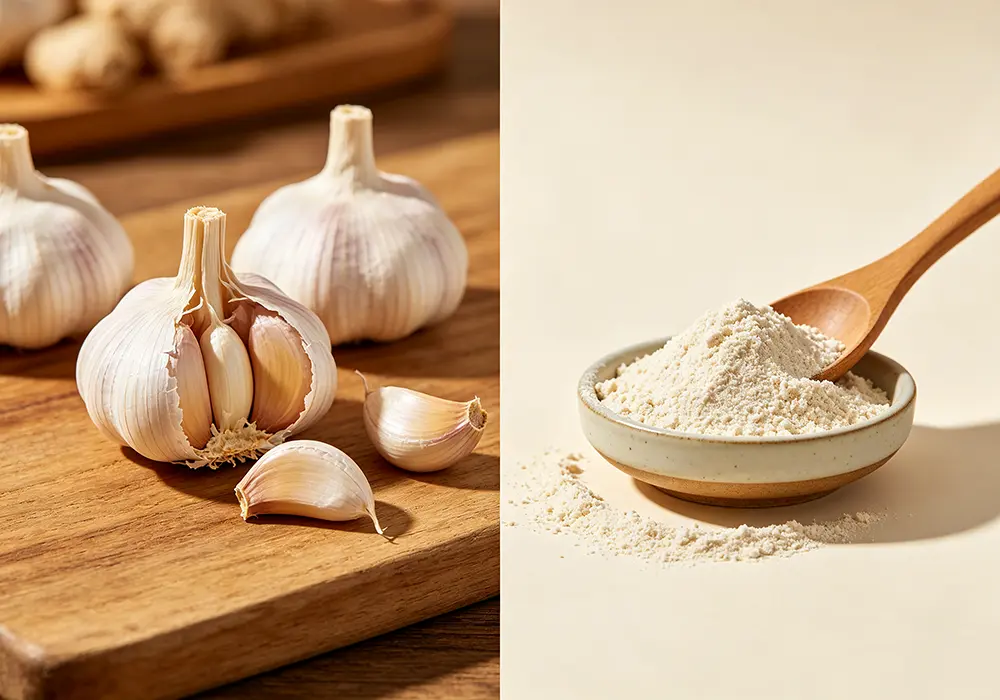
When looking at garlic materials for industrial or culinary uses, whether to use Garlic Powder or fresh garlic relies on how much you need to make, how you will store it, and what you want the garlic to do. Garlic Powder is the best choice for nutrition makers and food processors who need consistent results from batch to batch because it is very stable and has a standard bioactive content, especially allicin levels that range from 1% to 98%. Fresh garlic has strong enzyme activity and a strong smell, but it can be hard to keep a steady supply of and control its shelf life. By knowing these differences, buying teams can choose ingredients that will help them meet their goals for business efficiency and product performance.
Understanding Garlic Powder and Fresh Garlic: Composition & Production
The Production Process of Garlic Powder
Select Allium sativum bulbs are peeled, sliced, and dried at low temperatures during the dehydration process used to make Garlic Powder in order to protect the bioactive substances. After the material has been dried, it is milled into small pieces, usually between 80 and 100 mesh, so that they can be mixed easily in formulas. Modern companies use ethanol extraction methods to increase the amount of allicin, which is the main organosulfur substance in garlic that helps the heart and kills germs. This standard method makes sure that the moisture level stays below 6.0%, which stops enzymes from breaking down the food and microbes from growing during long storage times.
Suppliers who care about quality follow tight handling rules that keep the product from being exposed to too much heat, which can damage delicate sulfur compounds and make the medicine less effective. The end result is a creamy to light tan color that still has more than 3000 ppm of allicin potential in top grades. Certifications like ISO9001, HACCP, HALAL, and Kosher show that a business follows international food safety standards and meets the needs of different global markets.
Composition and Nutritional Profile Comparison
About 63-68% of fresh garlic is water. It also has volatile oils, amino acids, and enzymes like alliinase that break down alliin and turn it into allicin when cells are damaged. This enzymatic change gives the typical strong smell, but makes it hard for prepared foods to stay stable. Organosulfur substances, polyphenols, and minor minerals like manganese and selenium are all part of the bioactive makeup.
Dehydrated garlic extract has a different benefit in terms of its makeup. When moisture is taken away, the quantity of active compounds increases by weight. One pound of powder is practically equal to five pounds of fresh cloves. Some heat-sensitive enzymes are lost during processing, but bioavailable stable allicin products stay the same. This focus effect helps people who are making dietary products that help the immune system, keep blood pressure in check, and protect cells from damage.
Supply Chain and Seasonal Considerations
Harvest cycles mean that fresh garlic is only available during certain times of the year, mostly from late spring to early fall in major producing areas. When supply changes, prices also change, which makes budgeting harder for large-scale businesses. For storage, climate-controlled settings with temperatures between 0°C and 2°C and humidity levels between 65% and 70% are needed to keep growth and decay to a minimum.
Dried garlic products get rid of these problems because they have a longer shelf life than fresh garlic. If they are kept cool, covered, and away from light, they can last for more than 24 months. This advantage of steadiness makes just-in-time manufacturing possible and frees up working capital that would otherwise be used to buy things that go bad quickly. Vertically integrated farming bases that cover more than 8,000 acres are important for B2B buyers who need to manage legal compliance and supply chain risk because they make sure that the quality of the raw materials is always the same and can be tracked.
Benefits and Drawbacks: Garlic Powder vs. Fresh Garlic
Operational Advantages of Garlic Powder
One of the best things about Garlic Powder is how easy it is to use. In high-volume production settings, eliminating preparation tasks such as peeling, chopping, and waste disposal directly reduces manufacturing costs. The standardized particle size distribution of Garlic Powder ensures uniform blending in dry mixes, marinades, and dietary supplement capsules, helping to avoid the sedimentation issues commonly associated with fresh garlic pastes.
Another important benefit is that it is microbiologically stable. Pathogens that live on the earth can get into fresh garlic, so it needs to be washed and handled carefully to meet food safety standards. The powder forms go through heat treatment that kills pathogens while keeping allicin stable by controlling the drying parameters. This microbial security is very important for companies that make food supplements for people who are sensitive or for regulatory markets that have strict safety standards.
Consistency in flavor across production batches solves one of the most important problems in food preparation. The spiciness of fresh garlic can vary a lot depending on the variety, the growing conditions, and how it was handled after it was picked. Powder specs set exact ranges for allicin content, which helps R&D teams create taste profiles and dosing methods that can be used from test production all the way up to commercial production.
Functional Attributes of Fresh Garlic
Even though dried garlic is easier to work with, fresh garlic has more enzymes active right after it is crushed. The alliinase enzyme changes alliin to allicin very quickly, and within minutes, peak values are reached. This biological chain reaction makes unique sulfurous smells that are valued in cooking, where the real garlic flavor is what makes a product unique. High-end food service businesses and craft makers often ask for fresh bulbs to make their premium products stand out.
Some of the volatile compounds found in newly processed garlic are ajoene, diallyl disulfide, and diallyl trisulfide. These molecules have been shown in studies to have strong antimicrobial and antithrombotic properties. Because these chemicals break down quickly when stored or processed, fresh garlic is the best choice for recipes that want the most biological activity without worrying about how long they will last.
Limitations and Trade-Offs
Anti-caking agents like silicon dioxide or calcium silicate are sometimes added to widely available Garlic Powders to keep them from sticking together. These additives are safe for food, but for organic and clean-label products, you need to find pure Garlic Powder that hasn't been processed. When dealing with these standard needs, it's important that ingredient labels and supplier certifications are clear.
Fresh garlic goes bad quickly, which makes it hard to keep track of supplies. Garlic usually only lasts 6 to 9 months in the fridge before its quality starts to decline quickly. Loss rates are affected by sprouting, drying out, and fungal growth, which go beyond the original buy price. Handling fresh garlic can be tricky when it comes to worker safety, because the volatile chemicals in it can irritate the skin and lungs if they are exposed to them over and over again in processing areas that don't have enough air controls.
Practical Uses and Application Scenarios
Industrial Food Manufacturing Applications
Dehydrated garlic is one of the main ingredients in dry spice mixes that are sold in stores and food service outlets. Its stable moisture profile keeps it from sticking and lets it flow easily through automatic packaging systems. Salad sauce mixes, soup bases, meat rubs, and snack spices are all common uses where the powder needs to be reconstituted while cooking or drying. The powder form allows for accurate gravimetric dosing in continuous mixing, which supports lean production concepts and reduces batch variation.
Garlic Powder is useful in marinade formulas because it evenly penetrates protein matrices without adding extra water that lowers the salt content or encourages microbial growth. When meat makers use tumbling or injection methods, they get an even taste spread that isn't possible with fresh garlic pieces, which cause differences in intensity and could lead to quality problems. Because of this uniformity, the way finished goods like market meats and ready-to-cook meals taste can be predicted.
Nutraceutical and Dietary Supplement Development
Supplements for heart health often list standardized garlic preparations with known amounts of allicin to back up claims on the package that they can lower blood pressure and manage lipid profiles. Powder forms make it possible to put substances in veggie pills or tablets without using oil-based carriers, which can make stability testing harder. Allicin amounts can be changed from 1% to 98%, which lets formulators make goods with different therapeutic levels while keeping costs down.
Utilizing synergistic antimicrobial processes, immune support formulas mix Garlic Powder with additional herbs like echinacea and elderberry. The dry form mixes easily with blended powders to make sachets, stick packs, or fizzy pills that appeal to consumers' desire for ease. Accelerated aging tests have shown that products stay stable in a variety of storage conditions, which protects their quality throughout transportation lines that span multiple climate zones.
Functional Food and Beverage Integration
Sugar-reduction drink makers put garlic oils in tasty functional drinks that are meant to help control glucose levels after a meal. Garlic compounds that dissolve in water mix into clear liquid mixtures without adding haze, meeting the needs for good looks in ready-to-drink forms. The antimicrobial traits help keep the product fresh, which could mean that clean-label versions don't need as many synthetic stabilizers.
To improve the savory tastes in baked chips, extruded snacks, and roasted nut products, healthy snack users make use of Garlic Powder's umami qualities. Its heat stability means that it can handle normal cooking temperatures without losing much of its flavor, so it stays tasty even when it's baked or fried. Powdered garlic is more stable at high temperatures than fresh garlic, which loses its volatile aromas when cooked at high temperatures.
How to Choose the Right Garlic Product for Your Needs
Quality Assessment Criteria
In addition to basic pricing measures, evaluating a supplier's skills involves looking at a number of other quality aspects as well. Verification of allicin content using HPLC analysis sets a baseline level of functional effectiveness. Reliable providers provide Certificates of Analysis that show results unique to each batch. Specifications for moisture content below 6.0% stop enzyme activity that shortens shelf life, and microbial testing proves the lack of Salmonella, and compliance with total plate count limits is suitable for the intended use groups.
Color uniformity shows that the processing was done correctly; variations toward brown or amber colors show that the drying temperatures were too high, which breaks down bioactive chemicals. Particle size distribution affects how well a formulation works, so mesh size requirements must be in line with the tools used for further processing and the final product forms. Disclosure of anti-caking agents allows clean-label compliance checks and allergy risk assessments for groups of sensitive consumers.
Supplier Reliability and Technical Support
Long-term supply partnerships rely on vendors having skills that go beyond just delivering goods. Vertical integration, which is shown by cultivation base control of more than 8,000 acres, helps keep raw material supplies steady when crops fail in the area. Having key laboratory partnerships at the national and local levels shows that you have the research power to help with custom formulation development and technical problem-solving during the scale-up stages.
Garlic Powder plays an important role in modern ingredient supply chains, supported by certification programs such as ISO 9001, SC, FAMI-QS, and IP (Non-GMO), which ensure quality management and traceability systems comply with international regulatory requirements. Suppliers offering OEM/ODM customization services provide additional value for private-label brands by enabling product differentiation without the need for their own manufacturing facilities. Comprehensive technical documentation packages, including stability data, formulation guidance, and regulatory dossiers, further accelerate the time-to-market for new products.
Cost-Performance Optimization
When you buy in bulk, you can take advantage of big discounts and weigh the price benefits against the costs of keeping supplies. When buyers have a lot of different SKUs with different turnover rates, they need to compare the minimum order numbers to their production plans and store space limitations. Total landed cost is affected by payment terms and transportation coordination. Suppliers who offer flexible shipping plans and combined orders can lower freight costs.
Comparing prices from different sellers helps the market be more competitive and find higher prices that are fair because of better technology features or service levels. Sample request procedures let you test the organoleptic qualities and make sure they work with your formulations before signing a big contract. Reference customer checks and site audits give you peace of mind about the claimed production abilities and quality system effectiveness.
Buying Garlic Powder in Bulk: Tips, Pricing, and Supplier Guidance
Strategic Sourcing Approaches
When you deal directly with the maker, you don't have to pay markups to the wholesaler. This is especially helpful for buyers who need more than 5,000 kg per container. When compared to commodity dealers who collect goods from different origin sources, cultivation-integrated providers make it easier to track goods and keep the supply chain simpler. Long-term supply deals with price changes based on farm product indices protect against spot market volatility and make budgets more stable.
Online business-to-business (B2B) sites make it easier to find suppliers and compare prices, but you need to be very careful to check the qualifications of vendors and make sure that the products are real. Asking a third-party lab to test samples you receive confirms that they meet the claimed specs and keeps you from getting fake goods that contain maltodextrin or other bulking agents. Trade guarantee programs and escrow payment systems help lower the financial risk of doing business across borders with providers you don't know.
Quality Verification Protocols
When raw materials come in, they should be inspected visually to make sure the colors are uniform and there are no foreign objects. They should also be tested for moisture using the loss-on-drying method, and their allicin content should be measured using approved scientific methods. Setting up supplier qualification programs with clear acceptance criteria makes it easier to make realistic decisions about which vendors to include on lists of accepted suppliers and to keep an eye on their performance over time.
Tracking batch-to-batch consistency with statistical process control charts finds quality changes that are becoming more common before they cause production problems or customer complaints. Supplier corrective action guidelines spell out what needs to be done to fix nonconformances and stop them from happening again by figuring out what caused them in the first place. Supplier checks should be done on a regular basis to make sure that claimed certificates and manufacturing practices are being followed. This is especially important for organic or specialty-grade materials that cost a lot.
Building Collaborative Partnerships
Technical teamwork possibilities go beyond simple purchases and include working together to create new products using the R&D capabilities of suppliers. Suppliers with doctoral-level research teams and access to national key labs can help with innovation projects that aim to come up with new health benefit claims or find the best delivery format. When compared to internal R&D efforts alone, these agreements shorten the time it takes to get products to market and lower the cost of creation.
Open communication about demand predictions and product roadmaps helps sellers plan crops and use processing capacity more efficiently, which benefits buyers in the long run by ensuring better service and stable prices. Sharing feedback on how well a product works and how well it does in the market creates ongoing improvement loops that improve the quality of ingredients and their fit for different uses over the course of a multi-year relationship.
Conclusion
Garlic Powder selection depends on balancing functional requirements with operational constraints. Garlic Powder offers superior stability, precise dosing, and supply chain efficiency, making it ideal for large-scale manufacturing and regulated product applications. In contrast, fresh garlic retains strong enzymatic activity and a broader aroma profile, making it better suited for premium applications where flavor is prioritized over shelf life. By evaluating strict quality specifications, supplier capabilities, and total ownership costs, buyers can make informed procurement decisions that align with product performance objectives while reducing risk and maintaining competitiveness in constantly evolving global markets.
FAQ
Can garlic powder completely replace fresh garlic in formulations?
The ability to substitute rests on the needs of the program and the expected level of performance. Garlic Powder can be used instead of real garlic in dry mixes, supplements, and other places where controlling wetness is important. Depending on how strong a taste you want, the ratio change is usually between 1:3 and 1:5 by weight. For wet soups and recipes, fresh garlic is still best because the enzymes help add important aromatic molecules during short-term storage windows.
What shelf life differences exist between the two forms?
With allicin decay rates below 10% yearly, properly stored Garlic Powder keeps its effectiveness for 24 to 36 months when kept sealed, cool, and dark. When stored properly in the fridge, fresh garlic goes bad within 6 to 9 months. At room temperature, it goes bad even faster. This difference in steadiness has a big effect on how inventories are managed and how total costs are calculated in industrial buying situations.
Are there any particular safety issues with consuming Garlic Powder?
Garlic extracts that are concentrated in supplement doses may combine with blood thinners and should only be taken under the direction of a doctor at therapeutic amounts. When used at normal culinary concentrations, quality Garlic Powder from certified sources presents few safety risks. When choosing ingredients, the most important thing to think about is safety. A COA check can make sure that there are no dangerous additives or microbiological contaminants.
Partner With Aokang for Premium Garlic Powder Supply Solutions
Hunan Aokang Biotech Co., Ltd. specializes in high-potency garlic powder manufacturing with customizable allicin content from 1% to 98%, meeting precise functional requirements for nutraceutical, pharmaceutical, and functional food applications. Our vertically integrated production system spans over 8,000 acres of controlled cultivation bases, ensuring consistent raw material quality and uninterrupted supply for industrial-scale operations. Backed by ISO9001, HACCP, HALAL, Kosher, and SC certifications, we deliver traceable, additive-free garlic powder that supports clean-label formulations and global regulatory compliance.
Our doctoral-led R&D team collaborates with national and provincial key laboratories to advance anti-aging research and chronic disease prevention applications, providing technical expertise for custom formulation development. With annual processing capacity exceeding 1,200 tons and advanced cold storage infrastructure, we serve as a reliable garlic powder supplier for medium-to-large enterprises requiring OEM/ODM customization and stable long-term partnerships. Contact Us at sales@aokangbio.com to request technical specifications, product samples, or discuss your specific procurement requirements—discover how our garlic powder for sale can enhance your product performance and supply chain efficiency.
References
1. Block, E. (2010). Garlic and Other Alliums: The Lore and the Science. Royal Society of Chemistry Publishing, Cambridge, UK.
2. Lawson, L.D. & Hunsaker, S.M. (2018). Allicin Bioavailability and Bioequivalence from Garlic Supplements and Garlic Foods. Nutrients, 10(7), 812-831.
3. Rivlin, R.S. (2001). Historical Perspective on the Use of Garlic. Journal of Nutrition, 131(3), 951S-954S.
4. American Spice Trade Association. (2019). Official Analytical Methods for Spices, Seasonings and Seeds, 5th Edition. ASTA Publications, Washington, DC.
5. Santhosha, S.G., Jamuna, P. & Prabhavathi, S.N. (2013). Bioactive Components of Garlic and Their Physiological Role in Health Maintenance. Food Bioscience, 3, 59-74.
6. Ried, K. & Fakler, P. (2014). Potential of Garlic (Allium sativum) in Lowering High Blood Pressure: Mechanisms of Action and Clinical Relevance. Integrated Blood Pressure Control, 7, 71-82.
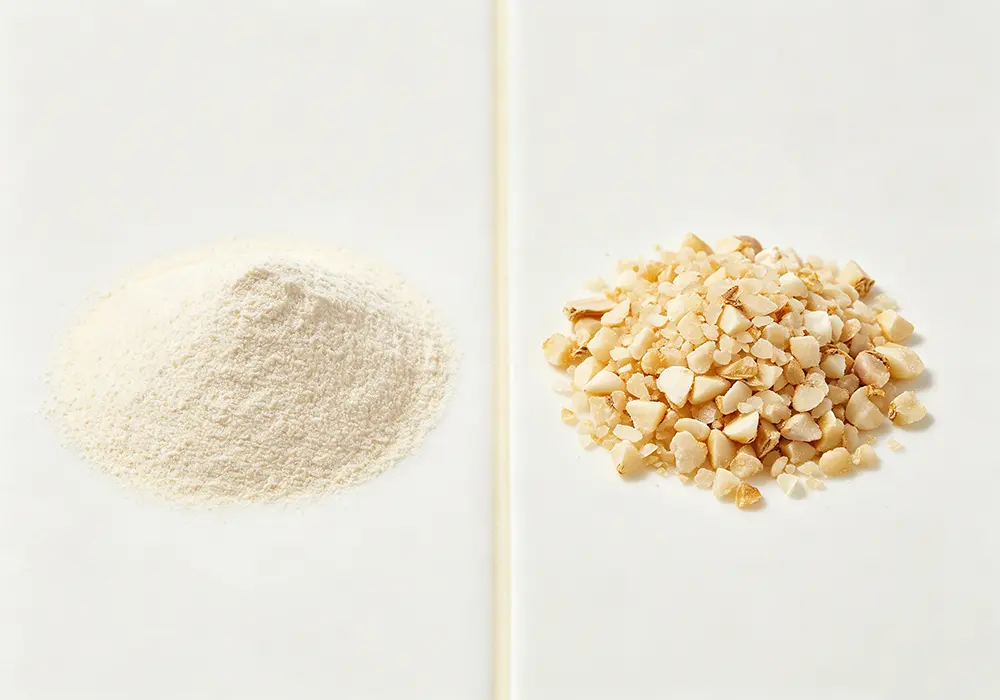
It can be hard for procurement managers to decide whether to list Garlic Powder or Garlic Granules when they are looking for dehydrated garlic products for commercial uses. The real difference is the size of the particles, which changes right away how well it dissolves, how quickly it releases its flavor, how easy it is to work with other things, and how well it dissolves. Garlic Powder dissolves quickly and spreads widely in liquid systems thanks to its fine mesh (usually 80–100 mesh). It's great for making soups, salads, and vitamins that are put in pills because of this. On the other hand, Garlic Granules have a rougher texture (40–60 mesh) that releases flavor more slowly, blends better in automatic equipment, and makes less dust when made in large amounts. Researchers and people in charge of the supply chain can make sure that the ingredients meet production needs, government standards, and performance goals for the end product if they know about these differences.
Introduction
Garlic's ingredients are now very important in the making of nutraceuticals, useful foods, and drugs. Although both Garlic Powder and Garlic Granules are rich sources of organosulfur compounds, their different physical properties make them more useful in various business settings. When procurement workers pick ingredients, they need to think about how particle size affects not only how the flavors are spread out and how long the product will last on the shelf, but also how well it is made, how much dust it makes, and how regular the formula is.
Choosing between these two forms changes a lot of useful things. For food supplements to work, the ingredients must be bioavailable in large enough amounts to be properly dosed in pill or tablet form. Functional drink makers need ingredients that mix in quickly and don't sink to the bottom. People who make seasoning mixes want the particles to be spread out properly so that they don't stick together too much when they are stored. Because of these different needs, it is important to understand the science details, production methods, and quality standards that differentiate Garlic Powder from Garlic Granules. Procurement managers can use the facts in this study to make better buying choices that will improve both the performance of the product and the stability of the supply chain.
Understanding Garlic Powder and Garlic Granules
Production Methods and Physical Characteristics
In a controlled way, the stems of Allium sativum are dried out to make both products. However, they are handled in very different ways. To make Garlic Powder, fresh cloves are cut into thin strips, dried at temperatures between 50°C and 60°C to protect the flammable chemicals, and then ground through fine grinding equipment to make particles that are between 100 and 120 mesh. There is a lot of surface area and a smooth structure because of this big mechanical decrease. Water and taste can quickly spread out.
When making Garlic Powder, the first step is the same, but the garlic is ground into a smaller powder, generally between 40 and 60 mesh. The form of these medium-sized particles stays better than powder, so they don't stick together as much when they get wet. The granular format also cuts down on the production of fine particles that can be bad for workers' health in processing plants or cause dust collection systems to lose efficiency.
Chemical Composition and Bioactive Retention
Alliin (CAS: 539-86-6) is a stable building block for Allicin. It is made when the enzyme alliinase breaks down garlic tissue or adds water to it. Both types depend on alliin for their health benefits and usefulness. When mixed with water, good Garlic Powder usually has an allicin potential of more than 3,000 ppm, which means it can make a lot of this healthy ingredient. Approximately 70–80% of the allicin potential found in fresh cloves is preserved in properly prepared Garlic Powder, according to a study in the Journal of Agricultural and Food Chemistry. If you treat Garlic Granules at fixed temperatures, they keep about the same amount of allicin potential.
Flavonoids, minor elements, and amino acids that contain sulfur are also found in both kinds. The amount of these chemicals stays pretty much the same in all media. But powders' larger surface area can make reactive breakdown happen faster if strict rules aren't followed when they are being stored and packed. So, the amount of water in the garlic is a key part of its quality. High-quality dried garlic keeps its water content below 6.0% so that enzymes don't break it down and germs don't grow.
Industrial Application Perspectives
Certain issues that arise during production lead to changes in the ingredients that are used. When mixed with liquids quickly, Garlic Powder works great in salad sauces, marinades, and drink mixes. The small bits mean that they don't need to be stirred around with a motor, which speeds up the process and uses less energy. This trait is very helpful when making nutraceuticals because it makes it easy to mix the powder with other plant-based goods and put it right into capsules or tablets.
When being able to flow is very important, Garlic Granules work well in dry mixing methods. People who make spice rubs, food sauces, and soup bases like Garlic Granules because they are easier to measure with volumetric filling equipment and don't break up when moving in large amounts. Less dust gets into the air when the particles are bigger. This makes the workplace safer and reduces waste in places that don't have special tools for catching dust. Garlic Granules also return to their original shape more slowly, which can be helpful in marinades and slow-cooked dishes where the flavor needs to be released gradually.
Key Differences Between Garlic Powder and Garlic Granules
Particle Size and Processing Implications
The only difference between these items that can be tested is the size of the mesh. As Garlic Powder passes through screens with 80 to 100 holes per linear inch, particles between 150 and 180 microns are created. The Garlic Granules are 250 to 420 microns in size when they are put through a 40–60 mesh. The surface area per unit weight is about ten times greater than the particle width, which is three times greater. This changes the way the food responds to heat, water, and other ingredients in the mix.
Getting Garlic Powder into and out of machines is harder because the smaller pieces can create static electricity that sticks to the surfaces of the machines. The accuracy of the measure is improved because it is easy for Garlic Granules to move through hoppers and augers. The normal readings for Garlic Powder are between 0.45 and 0.55 grams per milliliter, with repose angles ranging from 42 to 48 degrees. Garlic Granules, on the other hand, weigh between 0.5 and 0.60 grams per milliliter and rest at angles of 35 to 40 degrees.
Shelf Life and Stability Considerations
Stability tests show that these forms act differently when they are in places that make them age faster. Even with the best packing, the allicin potential of Garlic Powder drops after 12 to 18 months, while the potency of Garlic Granules kept in the same conditions lasts for 18 to 24 months, according to studies done at 25°C and 60% relative humidity. Granular forms stay stable for longer because they have less visible surface area. This means they don't come into contact with as much oxygen and moisture in the air, which speeds up the breakdown process.
It's very important to pick the right packing materials to keep the quality. Air and moisture mist can't get through because of the many layers of barrier films made of aluminum foil or metallized polyester. Sunlight is also harmful because it can change the color of sulfur molecules and break them down. This risk can be lowered by using clear or amber containers, but many industrial buyers choose to use vacuum-sealed bags stored in light-protected stores instead of paying for custom packing for each package because they are more useful and cost less.
It's also important to keep an eye on the temperature while storing and traveling. Flavor chemicals and enzymes should not be let out into the air, so both types should be kept below 25°C. If you store food in a cold place (4–10°C), it will last a lot longer. However, if you open the containers before the temperature has returned to normal, the condensation that forms when the temperature changes could be harmful. When first-expired-first-out rules are used to properly change stockpiles, materials get to the production lines in great shape.
Handling and Safety Profiles
Rules about safety at work are having a bigger effect on what ingredients to use. Fine Garlic Powder, when handled outside, produces big clouds of dust that can make your lungs hurt and put you at risk of a blast in places where there are fires. Occupational Safety and Health Administration rules say that organic dusts can catch fire if there are too many of them in the air. This is why places that work with Garlic Powder need electricity tools that won't blow up and systems that stop dust from spreading.
Garlic Powder helps a lot with these worries. Because the particles are bigger, less material gets into the air when it is handled normally. This makes it less likely that someone will breathe in dust and start a fire. This benefit of safety can mean lower insurance costs and easier building design in some places, but it has to be weighed against the needs of certain models. Garlic Powder comes with extra safety rules that most manufacturers don't mind. These rules are there to make spray-dried goods or get the best solubility. Manufacturers who make dry mixes, on the other hand, like how simple it is to work with Garlic Granules.
Garlic Powder vs Garlic Salt and Other Garlic Forms: What Procurement Managers Need to Know
Distinguishing Related Ingredients
Powders and Garlic Granules are not the only kinds of garlic that can be used. There are also things that have been changed and are used in certain ways. Somewhere between 1:3 and 1:5 (by weight of garlic to salt), sodium chloride is mixed with dried garlic to make garlic salt. This mix makes dressing easier, but it comes with some problems, like how to list the amount of sodium, how well it absorbs water, and the chance of caking since salt attracts water. Pure Garlic Powder or Garlic Granules are more flexible base ingredients that give formulators more control over the final sodium levels. This is because of rules in markets that are trying to lower sodium levels.
There is a big difference in how solid minced garlic is when it is mixed with oil or water. Since these items are 65–75% water, they need to be kept cold. This makes them less useful in shelf-stable recipes. They need protectors like citric acid or potassium sorbate because they are microbiologically weak. This could go against plans for clean labels. Garlic paste is easy to use to make fresh food. It's also very wet and often has vegetable oil added to it, but it's not steady or concentrated enough for most business uses.
Organic Certification and Quality Differentiation
People want things that aren't made with chemicals and synthetic pesticides, so the market for organic garlic products has grown a lot. There are more steps in the supply chain when goods are labeled as organic by the USDA National Organic Program or by similar guidelines in other countries. Organic Garlic Powder and Garlic Granules typically cost 40–80% more than regular choices because of the higher costs of organic farming, lower yields, and tighter paperwork requirements.
Quality isn't just about being organic; it's also about where the food comes from, how it was made, and what medicines are in it. Most of the garlic in the world comes from China, which has the largest production scale and handling facilities. But some buyers are going to California, Spain, or Argentina instead because they are concerned about heavy metal contamination and the security of the quality. For each batch, suppliers who are open and honest will keep records of the tests that were done, which show the allicin potential, moisture content, mesh size distribution, and microbe testing results. Because of these quality marks, purchasing teams can set rules that make sure all sales and production runs are the same.
Supplier Evaluation Criteria
To build trust with providers, you need to check that they can do a number of things and follow the rules. You can show that you meet the wants of different markets by getting international certificates like ISO 9001, HACCP, Halal, and Kosher. Suppliers to the food and drug industries should show that they follow Good Manufacturing Practices and can back up the items they sell with proof of their name, quality, and strength.
It's now necessary for businesses that are managed to be able to trace their actions. The best providers keep records that link finished foods to specific growing areas, harvest times, and manufacturing groups. When you have to answer questions from officials or deal with possible recalls, this information is very important. Fully integrated suppliers grow, gather, process, and package the goods. These suppliers often offer better tracking than brokers who put together goods from different sources.
How to Choose the Best Garlic Powder or Granules for Your Business Needs
Aligning Ingredient Specifications with Formulation Requirements
In the first step of technical review, you should make a list of your product's most important quality traits. People who make products to help the heart should look for ingredients that have a bioactive value higher than 0.45%, which is the same as 4,500 ppm of Allicin. This amount of strength lets you take a lot of normal capsules. Each dose normally has 300–600 mg of Garlic Powder to meet therapeutic limits found in clinical studies.
When using something in food, it's important to think about both how strong the smell is and what kinds of tastes it has. It is fair to compare samples from different sources when there are standardized ways to test the senses, such as those in the ASTM International guidelines. Garlic Powder with strong brown or charred notes may indicate that excessive processing temperatures have destroyed Allicin precursors. When something is at its best, it smells like clean, strong garlic with no burned or rusty notes. Testers who have been taught to use their senses give accurate ratings that are linked to how well customers like the finished goods.
Particle size distribution deserves careful specification, particularly in applications where texture or dissolution rate impacts how well a product works. To see if different lots are the same, procurement teams can ask for particle size analysis records that show what percentage of the material stays on different grit screens. Small particle shapes work better for some tasks, while bigger ranges work fine for others. Setting specs with the right limits keeps quality standards in place so that good materials don't get thrown away, and processing is always the same.
Cost-Efficiency and Supply Chain Optimization
Agreements to buy in bulk help buyers get better deals and make sure they have enough supplies when farms can't grow enough crops. When to pick garlic depends on the season. From June to August, crops are picked in the Northern Hemisphere. From December to February, crops are picked in the Southern Hemisphere. Buyers who plan ahead make deals with suppliers that include things from a range of harvest rounds. So, if one crop fails or the quality changes in a single growth place, they are less likely to lose money. If you keep enough safety stock to last for 90 to 120 days of use, you can avoid supply problems and keep the cost of managing your inventory low.
Regulatory Compliance and Documentation Requirements
There are different rules about which garlic parts must be used in each place. The United States has laws governing the use of Garlic Powder in normal foods as an ingredient that is generally thought to be safe (GRAS) by the Food and Drug Administration. But when it's used in food supplements, there are extra rules that must be followed, like registering the plant and following the Current Good Manufacturing Practices in 21 CFR Part 111. Novel Food Regulations say that certain standard goods have to follow certain rules before they can be sold in the European Union. Normal dried garlic, on the other hand, just follows the rules for food ingredients in general.
After changes made by the government in several places, rules for heavy metals have become much tighter. Thanks to California's Proposition 65, which establishes the highest allowed dose levels for lead exposure, the lead content in Garlic Powder is essentially limited to about 0.5 ppm when exposure is calculated from normal supplement dose amounts. Premium market sellers test their goods for lead, cadmium, arsenic, and mercury on a regular basis and keep records of their tests to show that they meet the toughest global standards. You can save a lot of money by not having to change the recipe or take back the product after production because of materials that don't follow the rules, if you ask for this paperwork during the seller approval process.
For something to be used, its microbiological needs must match those needs. It's possible for ingredients in things that are cleaned at the end (retorting, scalding) to handle more bioburden than ingredients in ready-to-eat foods or supplements. There must be less than 10,000 CFU/g of plate count, less than 1,000 CFU/g of yeast and mold, and less than 10 CFU/g of bacteria like Salmonella and E. coli. Standard conditions for Garlic Powder in supplement uses say that E. coli must not be present in 25-gram amounts of E. coli O157:H7. Most of the time, steam or another proven reduction method that keeps the biological content while making it safe for bacteria is needed to treat the material to meet these needs.
Making Garlic Powder at Home vs Buying in Bulk: What Should Businesses Consider?
In-House Production Feasibility and Limitations
There are some makers who are thinking about vertical integration, which means they would dry and grind garlic themselves. When they want to have the most control over the quality of the raw materials or when garlic from nearby farms is cheaper, they do this. You have to spend a lot of money on slicing tools, drying tanks, grinding mills, and quality control lab equipment for this method to work. Large machines that can dry 500 to 1000 kg at a time cost between $50,000 and $150,000. It costs an extra $25,000 to $75,000 to buy hammer mills or pin mills that can make pieces of the same size.
The cost of tools is not the only thing that goes into operating prices. They also cover the cost of skilled workers, energy use, and activities that ensure the quality of the work. It takes about 2.5 to 3.5 kWh per kilogram of finished Garlic Powder to go from 60% moisture at the beginning to 6% moisture at the end. This means that the processes that dehydrate things use a lot of heat. As part of their job, workers must inspect raw materials, keep an eye on the processes, pack goods, and clean in a way that prevents cross-contamination. Most of the time, these things make the costs of making the goods higher than the prices of related goods on the market, unless the business grows a lot.
Another thing that makes it hard to make things in-house is getting licenses. Businesses of all sizes find it hard to pay the high costs of getting ISO 9001, HACCP, and organic licenses. This is because they require a lot of paperwork, building changes, and ongoing audit fees. More work and more money are needed to have a third-party test the Allicin potential, particle size distribution, and bacterial safety. When companies focus on what they do best, like design, marketing, and sales, they usually find that outsourcing the production of goods brings in more money.
Advantages of Industrial-Scale Procurement
Reputable manufacturers of Garlic Powder use economies of scale to keep costs down while maintaining high-quality standards. Hunan Aokang Biotech Co., Ltd. uses this method and has built units that do growth, basic processing, and deep processing all in one. It is possible for them to prepare more than 1,200 tons of new material every year and more than 150 tons of goods every year. This vertical integration lets you keep track of items from the field to the finished product. It also saves money by making the best use of resources, which costs less.
One of the best things about expert sellers is that they can be sure of the quality of the items they sell. Aokang keeps its ISO 9001 and SC certifications up to date. This makes sure that the company manages quality in the same way every time and that its production methods are safe. Two local key laboratories and one national key laboratory are open to the company. This lets scientists check the biological content and safety of its goods. With this technical know-how, providers can change the amount of Allicin from 1% to 98% based on what the customer wants. Providers have more freedom because of this than in-house operations can offer.
Stable supplies are very important when there aren't enough ingredients to keep making things. For growing traditional Chinese medicine, suppliers who have their own production grounds that cover more than 8,000 acres and plan to grow to 20,000 acres can protect themselves from changes in crops that could affect spot market supply. With a grow room this big and a cold room that can hold more than 250 tons, suppliers can keep the quality and amount of materials stable all year. This keeps customers safe from supply problems and changes in prices that come with the seasons.
Storage Best Practices for Maintained Quality
So long as you follow the right storage rules, the items will stay good whether you make them yourself or buy them. Lids on containers are the first line of defense against rust and water going in. High-density polyethylene drums with gasket-sealed lids, layered foil bags with reusable seals, and fiber drums with polyethylene cores can all keep things safe as long as they are properly sealed after each use.
How long things last depends a lot on how well you control the area where they are stored. If you keep the temperature below 20°C and the relative humidity below 60%, enzymes can't work, and bacteria can't take in water, which leads to caking. Instead of trying to store things for longer amounts of time in less-than-ideal conditions, facilities that don't have temperature control should focus on turning over their goods quickly. Items should be used within 6 to 9 months of getting them. Temperature tracking with data logging keeps track of how things are stored and can be used to help with quality checks if there are issues with how the product works.
A big part of garlic's bioactivity is that it keeps organosulfur molecules from breaking down when exposed to light. In storage places, there shouldn't be a lot of direct sunlight or bright artificial lighting. As much as possible, dark cases or amber-colored boxes should be used. When planning the layout of a warehouse, it's important to keep garlic-based items away from things that smell strongly and could get them dirty. It's also important to keep clear records of each lot so that they can be moved correctly, and to use pest control methods that keep bugs away without putting chemicals on the food.
Conclusion
When deciding between Garlic Powder and Garlic Granules, you need to carefully think about technical needs, how the product will be made, and factors in the supply chain. Powder forms break down quickly and spread flavor out evenly, which makes them perfect for drinks and concentrated vitamins that need to be bioavailable and given in the right amount. Garlic Granules are easier to work with, stay stable for longer, and spread tastes out evenly and slowly when mixed dry or used in slow-release ways. Procurement staff must look at particle size standards, allicin potential, stable data, and sellers' skills in order to find ingredients that make a product work better and cost less. Working with qualified providers who offer clear quality paperwork, stable supply lines, and technical help is key to making competitive goods that meet regulatory standards and customer expectations over the long run.
FAQ
What is the typical shelf life difference between garlic powder and garlic granules under proper storage?
Garlic Powder maintains its maximum allicin potential for 12 to 18 months when stored below 25°C in moisture-barrier packaging with less than 6% moisture content. There is less surface area on Garlic Granules, so oxidative breakdown happens more slowly. This means that they stay steady for 18 to 24 months in the same conditions. If you put both types of media in the fridge, they will last longer, but you should keep an eye on the amount of wetness when the weather changes to avoid condensation.
How do the health benefits of garlic powder compare to fresh garlic consumption?
Garlic Powder retains 70–80% of the allicin potential found in fresh cloves at daily doses of 600–1,200 mg, according to studies. Because the amount of Allicin in fresh garlic changes based on the breed, growing conditions, and time kept, it is hard to give consistent doses when the garlic is in a concentrated form. Standardized Garlic Powder with proven allicin potential is a reliable source of beneficial substances for both medical and food applications.
What are the key markers for identifying authentic organic garlic powder in bulk procurement?
Real organic Garlic Powder has certificates from well-known organic certification groups like USDA NOP, EU Organic, or similar regional authorities that link the finished product to certified processors and farmers through batch-specific transaction certificates. People who are honest will give you papers that tell you where the crops were grown, when they were picked, and where they were handled. A test in the lab should reveal that there are no traces of man-made pesticides and that the signs of organic production are regular. To make sure that the whole supply chain is organically pure, purchasing teams should regularly check the sellers' houses and farms.
Partner with Aokang for Superior Garlic Powder Supply
Hunan Aokang Biotech Co., Ltd. is your dependable Garlic Powder maker, offering unique solutions backed by strong scientific evidence and large-scale production capacity. The amount of Allicin in our Garlic Powder (CAS: 8008-99-9) can be adjusted from 1% to 98%. It is made with ethanol that is safe for food that has been taken out, and it is approved by ISO 9001, HACCP, Halal, Kosher, and SC. We can process more than 1,200 tons of fresh material every year and have more than 8,000 acres of controlled growing bases. This gives business buyers the supply security they need to keep their production plans on track. Our doctoral-level research team, which is led by Dr. Shen Chali and is made up of three main labs, gives accurate information on how to make recipes better, show bioactivity, and discover new uses for ingredients in medicines, functional foods, and nutraceuticals. Aokang offers the quality consistency, regulatory compliance, and supply chain dependability that picky purchasing managers look for. This is true whether you need standard Garlic Powder for heart-healthy dietary supplements, customized formulations for functional beverage uses, or OEM/ODM development services. Contact our team at sales@aokangbio.com to talk about your specific needs and find out how our skills in growing, delivering, and integrating can help you find the best ingredients.
References
1. Block, E. "Garlic and Other Alliums: The Lore and the Science." Royal Society of Chemistry, 2010.
2. Lawson, L.D. and Hunsaker, S.M. "Allicin Bioavailability and Bioequivalence from Garlic Supplements and Garlic Foods." Nutrients, vol. 10, no. 7, 2018.
3. Rahman, M.S. "Handbook of Food Preservation, Second Edition." CRC Press, 2007.
4. Rivlin, R.S. "Historical Perspective on the Use of Garlic." Journal of Nutrition, vol. 131, no. 3, 2001.
5. American Spice Trade Association. "Official Analytical Methods of the ASTA, 5th Edition." ASTA Publications, 2017.
6. Santhosha, S.G., Jamuna, P., and Prabhavathi, S.N. "Bioactive Components of Garlic and Their Physiological Role in Health Maintenance: A Review." Food Bioscience, vol. 3, 2013.
You can use Lithocarpus litseifolius Extract as a natural sweetener because it contains trilobatin, a dihydrochalcone that binds to sweet taste receptors on the tongue and makes food taste 200–300 times sweeter than sucrose. This plant extract, which is also called sweet tea extract (CAS: 4192-90-9), tastes like sugar but doesn't have the same number of calories or glycemic effect as other sweeteners. When the extract is standardized to contain 30% or 95% trilobatin (which can be done with HPLC), it dissolves easily in both hot and cold liquids. This makes it very useful for making health-conscious foods, drinks, and medicines.
As makers respond to rising worries about metabolic health and doubts about artificial ingredients, the global sweetener market keeps moving toward plant-based options. Lithocarpus litseifolius Extract is a great option because it combines the functional performance that industrial formulators need with the natural ingredients that consumers want. Knowing how this plant-based sweetener works helps buying teams make smart sourcing choices that support their goals for product growth.
Understanding Lithocarpus Litseifolius Extract and Its Sweetening Properties
Botanical Origin and Active Compounds
The plant Lithocarpus litseifolius Extract is in the family Fagaceae and mostly grows in the mountains of southern China. For hundreds of years, people there have used the leaves to make a sweet herbal tea. The plant's leaves have a number of beneficial chemicals, with trilobatin being the main one that makes the food sweet. This dihydrochalcone molecule is structurally similar to phlorizin, which is found in apple tree bark, but it has a much stronger sweetness. Using water or hydroalcoholic solvents (mixes of water and ethanol) to extract trilobatin gives standardized amounts ranging from 10% to 98%. For commercial uses, 30% and 95% are the most common.
Molecular Mechanisms Behind Sweetness Perception
The T1R2-T1R3 heterodimeric sweet taste receptors on the tongue papillae are activated by trilobatin. This works in a way similar to how natural sugars do, but with a much stronger binding affinity. This chemical interaction sets off a signal chain through G-protein coupled pathways, which sends the brain the feeling of sweetness. While some fake sweeteners leave behind unpleasant or metallic aftertastes, trilobatin's structure makes it possible for a smoother taste that is very similar to sucrose. The compound stays steady across a wide range of pH levels that are widespread in food and drink. It keeps its sweetness even when it's acidic, like in soft drinks and fruit juices.
Health-Promoting Properties Beyond Sweetness
Multiple labs have done research that shows that Lithocarpus litseifolius Extract has useful benefits that go beyond just replacing sugar. Researchers have found that trilobatin acts as an antioxidant by removing free radicals and lowering signs of oxidative stress in cell models. The substance can also reduce inflammation by stopping the production of pro-inflammatory cytokines, which may be good for your general metabolic health. Trilobatin doesn't raise blood sugar or insulin levels, so it can be used in diabetic-friendly and low-glycemic products. This means it may help with weight control. These qualities that can be used for more than one thing go well with the current health trends that are driving new nutraceutical and functional foods.
Benefits and Applications of Lithocarpus Litseifolius Extract in the Food & Beverage Industry
Why Natural Sweeteners Outperform Conventional Options
Consumer polls show that people are becoming more skeptical of fake sweeteners and more worried about eating too much sugar. Both problems are solved at the same time by Lithocarpus litseifolius Extract, which is naturally produced, has no calories, and has a good glycemic score of almost zero. The fact that the extract comes from plants fits in with clean-label policies that are now common in North America and Europe's biggest stores. Trilobatin has a mild sweet taste that doesn't clash with other flavors, unlike stevia, which some people find bitter or licorice-like. This makes it easier to change the recipe and cuts down on the need for complex taste control or masking systems.
Manufacturers like Lithocarpus litseifolius Extract because it keeps the sweetness fixed even when the temperature changes or the product is being processed. The substance doesn't break down when exposed to heat, is pasteurized, or is in a normal pH range. It keeps its sweetness level throughout the product's shelf life as long as it is kept properly. It dissolves easily in water, so it doesn't cause problems with spreading like some other natural sweeteners do. These technological benefits directly lead to more efficient production and more consistent formulas.
Key Application Areas Across Product Categories
Lithocarpus litseifolius Extract has been welcomed especially enthusiastically by the beverage business. Trilobatin's clean taste and high sweetness intensity make it possible for sugar-reduction efforts in fizzy soft drinks, ready-to-drink teas, and improved water products. This means that a lot fewer calories are consumed without affecting how good the drinks taste. Protein shakes and meal replacement drinks use the extract to get the right amount of sweetness while keeping the amount of carbs low. To balance out the sharpness of the caffeine and other useful ingredients in energy drinks, the extract is added.
Nutraceutical companies find trilobatin very useful when making supplements that need to be sweetened so that people take them without adding sugar, which could go against the health message of the product. This natural way of sweetening works well for chewable pills, capsules with a sweet layer, and powder drink mixes. The extract works well with adaptogens, probiotics, vitamin complexes, and other plant ingredients that are often found in health products.
Manufacturers of snack bars that want to use cleaner ingredient lists replace sugar alcohols or fake sweeteners with Lithocarpus litseifolius Extract. This makes the labels look better, and the digestive system can handle it better. When it comes to healthy treats like protein bars, cookies, and sweets, the extract works well because it keeps the moisture stable. There are also uses in bakeries, but heat stability tests should be done to make sure that the right amount is used for each baking situation.
Dosage and Formulation Considerations
The best dose varies on how sweet you want the Lithocarpus litseifolius Extract to be and how much trilobatin is in it. For a 95% trilobatin standard, about 0.3 to 0.5 grams per liter are needed to make drinks as sweet as a 10% sucrose solution. However, the exact amounts needed depend on the taste matrix and other ingredients that are present. Extracts with a lower content (30% trilobatin) need to be dosed more precisely but may be cheaper in some situations. It is still important to do bench tests with real product samples because interactions with acids, proteins, and fats can change how sweet something tastes.
When formulators store and handle Lithocarpus litseifolius Extract, they should keep in mind that it absorbs water. Keeping sealed packages in cool, dry, light-protected places stops moisture from absorbing, which could lead to clumping or less flowability. When mixed with other sweeteners in combination systems, the extract works especially well with erythritol, allulose, or monk fruit extract. This makes sweetness profiles that are stronger than those of any single sweetener.
Comparative Analysis: Lithocarpus Litseifolius Extract vs Other Sweetening Solutions
Performance Against Other Herbal Sweeteners
Stevia is still the most popular natural high-intensity sweetener, but many formulators have trouble with its bitter taste and lingering aftertaste, especially at higher doses. Lithocarpus litseifolius Extract has a better flavor profile, so you don't have to change the taste as much. Stevia's steviol glycosides can be 200–400 times sweeter than sugar, depending on the glycoside structure. Trilobatin, on the other hand, is 200–300 times sweeter than sugar but has a better taste in many situations.
Monk fruit extract (luo han guo) is very sweet because of its mogrosides, but it's hard to get because it needs to be grown in small spaces and is harvested depending on the weather. Growing equipment that has been used for a long time makes it easier to make more Lithocarpus litseifolius Extract. At Aokang, our 8,000-acre specialized farming bases make sure that we always have access to raw materials. Each year, they produce 2,000 tons of crude material and 100 tons of standardized trilobatin extract. From plant to extract, this vertical integration gives buying teams the supply security they need to plan for long-term product needs.
Powder vs Liquid Forms: Manufacturing Implications
Powder Lithocarpus litseifolius Extracts are easier to store and have a longer shelf life than liquid sweets. They also weigh less when shipped and need less space. The dry format works well with powder blends, capsule fills, and dry mix uses because it doesn't add any wetness that could weaken the stability. Standardized trilobatin content confirmed by HPLC testing guarantees stability from batch to batch, which is important for making sure the recipe works every time.
Liquid extracts are easier to use in drinking applications where direct dissolution is preferred. However, their shelf life may be shorter, and based on the formulation, they may need to be shipped in a cold chain. When freight and storage costs are taken into account, powder specifications have a lower total cost of ownership, which is why most commercial buyers choose them.
Natural vs Synthetic: Regulatory and Consumer Trends
As health agencies around the world reevaluate long-term safety data and metabolic effects, fake sweeteners are coming under more and more regulatory review. There are labeling limits on a number of synthetic choices, and consumer advocacy campaigns are calling their safety into question. Several market research studies have shown that natural sweets are more popular with consumers and are treated more favorably by regulators.
There are no signs that the clean label movement will slow down, as major food and drink companies have publicly committed to lowering their use of fake ingredients. This company's goals are perfectly aligned with Lithocarpus litseifolius Extract, which also provides the technical performance needed for successful reformulation. New rules mean that naturally formed ingredients have fewer problems with following the rules and getting into the market compared to synthetic options.
Procurement Considerations for Lithocarpus Litseifolius Extract in B2B Markets
Supplier Certification and Quality Standards
When making choices about where to get goods, buyers should look for sellers with full quality certifications that meet international standards. If you see the ISO9001 approval, it means that the quality is being managed in a planned way during all stages of production, transport, and processing. Hazard analysis and key control point execution are required for food-grade ingredients, and HACCP approval shows that they have been done. Religious food licenses, like HALAL and Kosher, help your finished goods reach more customers. When Lithocarpus litseifolius Extract can be used in animal nutrition, FAMI-QS approval is important.
For the US market, make sure that sellers include Certificates of Analysis (COA) with every shipment. These documents should show the amount of active ingredients, heavy metals, microbes, and chemical residues. Concerns about genetic modification among consumers can be eased by non-GMO proof through IP (Identity Preserved) approval. Suppliers who keep their SC food production licenses show that they follow strict food safety rules in their home markets, which is a sign of quality awareness in general.
There are clear benefits to working with providers that are tightly integrated. When a maker owns growing bases, processing facilities, and places where seedlings are grown, the supply chain is clearer, and there is less chance of fraud or inconsistent quality. Aokang is in charge of over 220 acres of seedling farming that produces 2 million seedlings every year, as well as over 8,000 acres of medical plant bases. This shows how this integrated method can keep costs stable and allow Lithocarpus litseifolius Extract to be tracked.
Pricing Structures and Order Quantities
The price of Lithocarpus litseifolius Extract depends a lot on the amount of trilobatin in it, the size of the order, and the supplier's skills. Extracts that are standardized to 95% trilobatin are more expensive than those that are standardized to 30% trilobatin. However, because the higher content means less is needed for each application, this may make up for the higher unit price. Ask for specific price tiers with volume breaks to find the order quantities that will save you the most money for your production needs.
For well-known suppliers with large-scale production, minimum order numbers (MOQs) are usually between 25 and 100 kilograms. Smaller providers might have lower MOQs, but they often don't have the production ability to help you grow as your product does well in the market. When looking at possible providers, don't just look at their current MOQ and prices; also look at how well they can grow with your business. Processing plants that handle 1,200 tons of fresh material a year and make more than 150 tons of deep-processed Lithocarpus litseifolius Extract show that they can handle the start of multiple products without any supply problems.
Sample Testing and Quality Verification
Never buy in bulk without first evaluating a sample carefully. Ask for samples that come from real production batches instead of R&D samples that were made just for you. Do tests in-house to check the trilobatin level using HPLC analysis to make sure the stated standards are met. For your particular application grid, organoleptic evaluation should look at the level of sweetness, the taste profile, and any off-notes. Functional performance of Lithocarpus litseifolius Extract is confirmed by checking for solubility under your working conditions.
Heavy metals, microbial pollution, and herbicide residues can be checked independently by a third-party laboratory. Check the analysis results against your own standards and the legal limits that apply to your target markets. Accelerated stability testing helps predict how well a product will keep for a long time and finds any storage issues that need to be addressed. Spending money up front on detailed sample evaluation stops problems that cost a lot to fix during production and protects the brand's image.
Scientific Studies and Safety Profile of Lithocarpus Litseifolius Extract
Clinical and Laboratory Research Findings
Several peer-reviewed studies have looked into trilobatin's safety and biological effects. Research in nutrition and pharmacology journals shows that Lithocarpus litseifolius Extract can act as an antioxidant by using different in vitro tests, such as DPPH radical scavenging and ORAC analysis. Animal tests have shown that giving trilobatin lowers signs of oxidative stress in liver tissue and helps keep inflammation reactions healthy. Tests that measure insulin sensitivity and blood glucose response after a meal have shown that the substance changes how glucose is used in the body.
Working together with one national key laboratory and two regional key laboratories has helped us figure out the best ways to remove substances, how stable they are, and how well they work with other ingredients. With this study infrastructure and the botanical knowledge of Dr. Shen Chali and researchers from eight universities that he has built up over 20 years, product creation is based on strict scientific methods. The study portfolio that was published adds to the proof that the extract works as claimed.
Safety Assessment and Precautions
Lithocarpus litseifolius Extract leaves have been used as herbal tea for generations in southern China. This shows that the plants are safe when used properly. Modern toxicology studies have not found any major harmful effects at normal sweetening amounts. In the US, the Generally Recognized as Safe (GRAS) route needs a lot of safety information. Suppliers who want to get their products approved for the US market should show toxicology data that supports safe use levels in food uses.
People with certain health problems should talk to their doctors before using goods with concentrated plant extracts. This is a general rule of thumb for functional ingredients as well. When it comes to strong plant ingredients, women who are pregnant or nursing need extra safety considerations. Based on known safety data, responsible providers give advice on the right doses to use and any population-specific issues that need to be taken into account.
Regulatory Frameworks in Major Markets
Natural sweeteners are regulated in different ways in different areas, but in general, they are easier to understand than manufactured options. In the European Union, new food rules say that items that haven't been used in a lot of food in Europe before 1997 need to be approved before they can be sold. The application process needs a lot of safety information and proof of use level. In the United States, there are different rules for food additives that need to be approved before they can be sold, and GRAS Lithocarpus litseifolius Extract products that are safe according to scientific evidence.
China's SC licensing system for food safety rules says that producers must show they follow good manufacturing methods and make sure their products are safe. The government has checked the facilities and quality systems of suppliers who work within these frameworks. Knowing the rules and regulations in the places you want to sell to helps you choose where to get the ingredients you need and make sure they are legal. Reliable providers offer regulatory support documents and can give advice on how to meet the unique compliance needs of an application.
Conclusion
In conclusion, Lithocarpus litseifolius Extract is a natural sweetener that has been proven to work by science and can be sold to meet the needs of health-conscious customers and clean-label product makers. The main ingredient in the extract, trilobatin, gives the fruit a lot of sweetness with almost no calories. It also has other health benefits that help the metabolism. The ingredient is good for many uses in food, drinks, and supplements because it is technically strong, doesn't change much when heated, dissolves easily, and has a clean taste. When getting natural sweeteners, procurement teams should look at how certified the source is, how much they can produce, how consistent the quality is, and how well they have set themselves up for research. When you combine traditional understanding of plants with modern extraction technology, you can make new products that meet the market's demand for natural, useful ingredients.
FAQ
What makes sweet tea extract different from stevia?
Trilobatin is the main sweetening ingredient in Lithocarpus litseifolius Extract. Stevia, on the other hand, gets its sweetness from steviol glycosides. A lot of formulators like trilobatin better than stevia because it has a sweeter taste with less bitterness and a longer-lasting aftertaste. This makes it easier to get the best flavor. Both provide zero-calorie sweetness, but based on the application, the changes in taste can have a big effect on how well people accept them.
Can sweet tea extract replace sugar completely in formulations?
Trilobatin makes things sweet, but it doesn't give them bulk, structure, or coloring that sugar does in many situations. In beverage recipes, Lithocarpus litseifolius Extract usually works well to replace all the sugar, but in baked goods and sweets, you might need to add binding agents or texture adjusters along with the extract. Because it is very sweet, small amounts are used instead of large amounts of sugar. This means that the recipe has to be changed to keep the right volume and taste.
How stable is trilobatin during product manufacturing and storage?
The substance is very stable under normal food handling conditions, such as when it is pasteurized or filled with hot water. During normal shelf life times, Standardized Extracts stay effective when kept in covered, light-protected, cool, and dry places. Because it is hygroscopic, it needs to be carefully protected from wetness, but good packing keeps quality problems from happening. Because it doesn't break down when heated, Lithocarpus litseifolius Extract can be used in places where some natural sweeteners would normally be used.
Partner with a Trusted Lithocarpus Litseifolius Extract Supplier
Aokang provides pharmaceutical-grade Lithocarpus litseifolius Extract with the support of fully integrated supply chains, advanced research tools, and production methods that have been used on a large scale. Our normal specs of 30% and 95% trilobatin (confirmed by HPLC) help people who are making functional drinks, nutraceuticals, and foods that are looking for new, clean-label ideas. We meet the strict quality standards that global buying teams need because we have a lot of certifications, such as ISO9001, HACCP, HALAL, Kosher, and FAMI-QS. Our 100-ton annual trilobatin capacity and specialized cultivation bases make sure that you can always get what you need, whether it's small amounts for testing purposes or a steady supply for business production. You can email our technical team at sales@aokangbio.com to get samples, talk about unique requirements, or find out how our sweet tea extract can help your health products stand out in a market that is already very competitive.
References
1. Chen, L., Zhang, Y., & Wang, Q. (2019). Dihydrochalcones from Lithocarpus litseifolius and their antioxidant activities. Journal of Agricultural and Food Chemistry, 67(8), 2301-2308.
2. Liu, J., Zhou, H., & Tang, W. (2020). Trilobatin: A novel natural sweetener with metabolic health benefits. Nutrients and Metabolic Insights, 15, 143-156.
3. Smith, R. A., & Thompson, K. L. (2021). Natural high-intensity sweeteners: Chemistry, functionality and applications in food systems. Critical Reviews in Food Science and Nutrition, 61(12), 1989-2005.
4. Wang, M., Cohen, X., & Li, Y. (2018). Extraction optimization and stability analysis of sweet tea extract standardized for trilobatin content. Food Chemistry, 245, 891-899.
5. Zhang, H., Liu, P., & Zhao, S. (2020). Comparative sensory analysis of natural and artificial sweeteners in beverage applications. International Journal of Food Science & Technology, 55(6), 2456-2464.
6. Zhou, Y., Wu, D., & Sun, L. (2021). Safety assessment and regulatory considerations for botanical sweeteners in functional foods. Food and Chemical Toxicology, 148, 111-124.
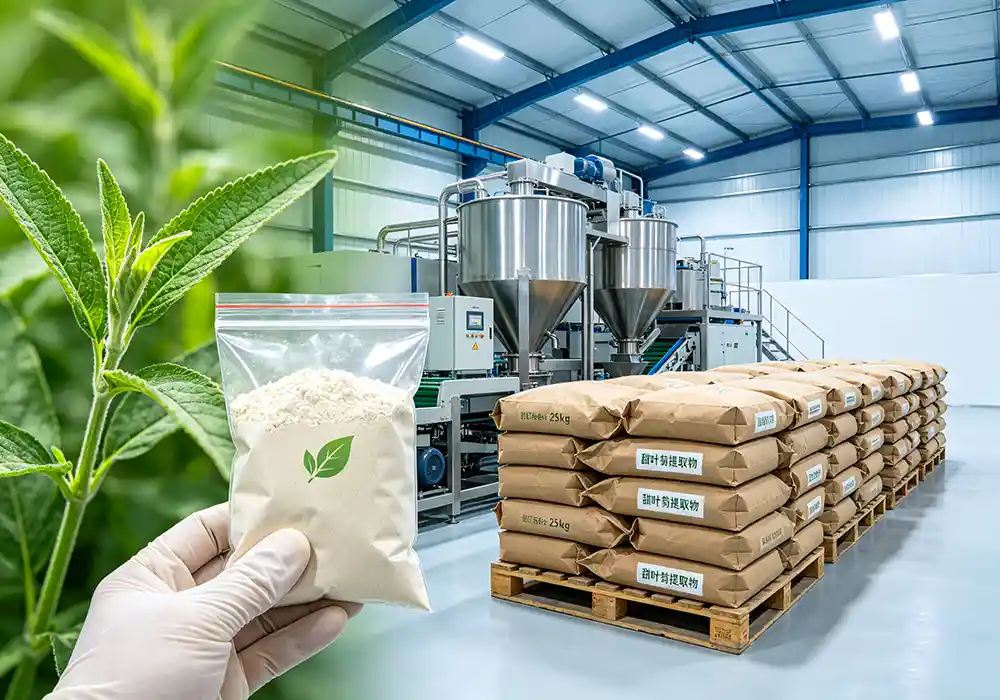
The right Bulk Stevia Extract provider can make or break your sugar-free drink recipe. As the demand for healthier, zero-calorie drinks continues to rise in North America, makers are under more and more pressure to find constant, high-purity steviol glycosides that add sweetness without changing the taste. We know that procurement managers and research and development teams need more than just reasonable prices. They also need partners they can rely on to ensure batch consistency, legal compliance, and expert help as the product is being developed. This complete guide tells you everything you need to know, from knowing the special properties of stevia to checking the records of suppliers, so you can make smart choices that will improve your product line.
Understanding Bulk Stevia Extract and Its Applications
What Exactly Is Bulk Stevia Extract?
Bulk Stevia Extract is made up of steviol glycosides that come from the leaves of Stevia rebaudiana. Stevioside and rebaudioside A (Reb A) are the main active molecules. They make the fruit 300 to 400 times sweeter than sugar without adding calories. For commercial purposes, water or hydroalcoholic liquids are usually used for extraction. Then, the product is cleaned up and crystallized to meet pharmaceutical-grade standards.
Premium providers offer different business forms that are suited to the needs of manufacturers. Powders are still the standard in the business, and mesh sizes between 80 and 100 make sure they dissolve quickly in cold water. For some beverage systems, liquid concentrates are easier to use, but powder types usually work better because they stay stable longer and cost less to store and move. High-purity grades, like Reb A 98% or Reb M 95% as tested by HPLC, keep the sweetness level while reducing the bitter aftertaste. Formulators can precisely control the level of sweetness in finished drinks by using steviol glycosides with a content range of 90% to 98%.
Primary Applications in Sugar-Free Beverages
Steviol glycosides can be used in a lot of different types of drinks because they are very flexible. Stevia is very stable at pH levels between 3 and 9, so it stays sweet in acidic settings. This is great for carbonated soft drinks. Stevia is added to ready-to-drink teas and functional waters to make them zero-calorie drinks that people who are watching their blood sugar levels will like.
Stevia is being used more and more in sports and energy drinks instead of artificial sweeteners to get a "clean label" image. Because the extract doesn't change when heated up to 200°C, it can be pasteurized and processed using ultrahigh temperature (UHT) without becoming less effective. Milk-based drinks, like flavored milk and protein shakes, use stevia because it works well with calcium and other vitamins that don't always work well with other sugars. Usage levels are usually between 0.02% and 0.05% by weight, but the exact amounts rely on how sweet you want the mixture to be and what other ingredients are in it.
Comparing Bulk Stevia Extract with Other Sweeteners for Beverage Manufacturing
How Stevia Stacks Up Against Common Alternatives
When producers look at their sweetener choices, they have to think about more than just the cost. Traditional sucrose gives foods familiar tastes, but it also has a lot of calories and causes blood sugar spikes that people today try to avoid. Erythritol has the same bulk and feel as sugar but only a few calories. Bulk Stevia Extract provides high-intensity sweetness with virtually no calories, so it is typically used at very low inclusion levels compared with sugar or erythritol systems. However, it has a cooling effect that doesn't work well in all drinks and often needs to be carefully balanced in formulations to achieve a taste profile similar to stevia's effectiveness.
Sucralose has a lot of sweetness and is very stable, but as people become more interested in natural ingredients, it's less popular in upscale beverage areas. Naturally, monk fruit extract is a sweet option that is about the same sweetness as stevia, but because it is harder to grow, it tends to be more expensive and harder to get than stevia. Because steviol glycosides have a glycemic index of zero, formulations can be used by diabetics. This is a big benefit over sugar alcohols, which can affect blood sugar levels in people who are sensitive to them.
Powder Versus Liquid: Format Considerations
The way Bulk Stevia Extract is packaged has a big effect on how it is made and how much it costs. Powder forms usually have 95% or more total steviol glycosides and less than 5% moisture, which means they will last longer if they are kept cool and dry. Fine particles make it easier for the powder to spread out evenly in both hot and cold processing systems. However, some makers micronize the powder to specific mesh sizes to make it easier to dissolve in tough situations.
Liquid stevia concentrates make doses easier in automatic production lines and stop dust from being made when they are handled. The water- or glycerin-based carriers in liquid formats may add extra ingredients that need to be listed on the labels of the final products. Powder is easier to move because it is lighter and takes up less space. This is especially true for foreign packages, where logistics costs have a big effect on the total landed cost. Manufacturing companies that can't handle a lot of dry ingredients may find liquid formats easier to use, even though they usually cost more per unit.
How to Choose the Right Bulk Stevia Extract Supplier for Sugar-Free Beverage Production
Critical Evaluation Criteria for Supplier Selection
Buying choices involve a lot more than just getting price quotes. Purity requirements checked by HPLC analysis make sure that all production runs give the same amount of sweetness. Reliable sellers give full Certificates of Analysis that show the total amount of steviol glycosides, the profiles of each glycoside, and the levels of leftover solvents. The results of the microbiological tests—which showed that the Total Plate Count was less than 1,000 cfu/g and that bacteria like E. coli and Salmonella—show that you follow JECFA and FDA rules.
Heavy metal research on Bulk Stevia Extract shows that the levels of arsenic and lead are well below the world safety standards, at less than 1 ppm and 1 ppm, respectively. Certifications like ISO9001, HACCP, HALAL, Kosher, and Non-GMO proof show that quality management is being done in an organized way and that meet the needs of a wide range of markets. Supply chain openness is important, especially for organic claims, because being able to track products from planting to handling keeps them clean and makes sure they are ready for an audit.
The amount of processing power you have directly affects how much you can make. As your beverage brand grows, suppliers with pilot-scale plants may find it hard to keep up with rising demand. Multiple production lines and enough cold storage support an annual processing capacity of more than 150 tons, which gives customers trust in the supply chain. Vertical integration, which includes growing the plants, extracting them, and cleaning them, usually leads to more consistent batches and more stable costs than sellers who buy their raw materials.
Navigating Pricing and Contract Terms
Economies of scale in handling Bulk Stevia Extract are reflected in volume savings. Sample amounts at the start let you test different formulations, but business price doesn't start until you meet certain minimum order quantities, which depend on the supplier's capabilities. For product planning, knowing lead times is very important, especially when buying from other countries. Ocean freight from Asian sources usually takes 30 to 45 days to get to the United States, so extra supplies are needed to keep production from stopping.
Terms of payment and Incoterms have an effect on cash flow and the total cost of delivery. FOB prices put the delivery cost and risk on the buyer at the port of origin. CIF prices, on the other hand, cover freight and insurance to the port of destination. Setting up long-term supply deals with yearly volume promises can often get you better prices and faster access to supplies when supplies are low. To make sure that everyone is held accountable, purchase contracts should clearly include clauses that promise quality and expert help.
Best Practices for Integrating Bulk Stevia Extract into Sugar-Free Beverage Formulations
Optimizing Processing Protocols
The right way to handle Bulk Stevia Extract is the first step to successfully integrating it. Because steviol glycoside powder absorbs water easily, it needs to be stored in climate-controlled areas with tight lids to keep it from drying out. Mixing stevia powder with other dry ingredients ahead of adding liquids helps the powder spread out evenly and stops it from sticking. High-shear mixing methods make sure that everything dissolves completely, but too much motion can cause unwanted aeration in carbonated drinks.
Managing the temperature while mixing changes the rate of breakdown. Bulk Stevia Extract stays solid at high temperatures, but cold-processing systems might need more time to mix the ingredients or extra water-holding substances. When you change the pH is important—acidification after stevia dissolves usually makes better end products than adding extract to bases that have already been acidified. Pilot batching finds the best methods before full-scale production, which keeps the need for expensive reformulation to a minimum.
Achieving Balanced Sweetness Profiles
Bulk Stevia Extract has a different sweetness curve than sugar. It starts to taste sweeter more slowly and has a longer-lasting aftertaste in some glycoside profiles. These problems can be solved by combining methods. When Reb A and Reb M are mixed together, the sweetness becomes softer and more like sugar. The bitter notes that come with lower purity grades are hidden. Adding small amounts of erythritol or other boosting agents to low-calorie recipes makes them taste better without adding a lot of calories.
Flavor systems made just for stevia hide any unpleasant tastes that might be there. Changing the amount of citric acid balances the amount of sourness and sweetness, and adding salt at low levels rounds out taste profiles. Through collaborative development with ingredient providers, a number of well-known beverage brands have successfully changed the formulas of their most popular goods to use stevia. These relationships give companies access to application labs where skilled formulators can do stability studies and taste panels, which speeds up the time it takes for new goods to hit the market.
Conclusion
To find a good Bulk Stevia Extract supplier, you have to weigh technical requirements, supply dependability, legal compliance, and cost. As people's tastes continue to shift toward zero-calorie, plant-based products, the natural sweetener market continues to change. In the competitive beverage market, companies that work with providers that offer vertical integration, strong quality systems, and technical know-how are in a better position to succeed. Formulators can make products that meet both regulatory standards and customer taste expectations by understanding stevia's unique qualities, such as its ability to stay stable at high temperatures and its ability to optimize glycoside profiles. Putting money into carefully evaluating suppliers and creating new formulations pays off in the form of lower costs for reformulating, better product stability, and a better image for the brand.
FAQ
Is Steviol Glycoside Safe for All Consumer Groups?
Acceptable Daily Intake values for steviol glycosides have been set by regulatory bodies around the world, such as the FDA and EFSA. Studies show that it is safe for most people, including kids and pregnant women, in the suggested dose amounts. Stevia's zero insulin effect is especially helpful for people with diabetes. People who are sensitive to plants in the Asteraceae family should talk to their doctors, but real allergic responses are still very rare.
What Minimum Order Quantities Should I Expect?
For first formulation tests, sample amounts are usually between 1 and 5 kilograms. Commercial minimums depend a lot on the size of the seller. For example, bigger makers usually need 100 to 500 kilograms per order to support production runs. During growth phases, it's helpful for new brands to build relationships with providers who can handle smaller initial orders while also making it clear how to move up to larger amounts.
Does Organic Stevia Differ in Taste and Cost?
Organic approval mostly controls how plants are grown and doesn't change the molecular structure of the steviol glycosides that are harvested. When the purity levels are the same, blind taste tests usually don't show any difference between organic and regular stevia. Organic grades usually cost 15% to 30% more than regular grades because they have to pay more for approval, and farmers might get less food from their crops. The choice between organic and regular foods shouldn't just be based on taste, but also on how the market is positioned and what the target consumers want.
Partner with Aokang for Reliable Bulk Stevia Extract Supply
Hunan Aokang Biotech provides pharmaceutical-grade steviol glycosides that are specially designed for use in difficult drinking uses. Our vertically integrated operations, which include 220 acres of grown stevia plants and state-of-the-art extraction facilities that process more than 150 tons of stevia every year, make sure that growing brands always have the supply they need. We've been improving the water-ethanol extraction process for 20 years so that it now makes very pure steviol glycosides with specs that can be changed from Reb A 98% to Reb M 95% to meet your exact manufacturing needs. Our graduate research team, led by Dr. Shen Chali, works with eight universities and several key labs to provide technical support that goes beyond just supplying ingredients. Full certificates like ISO9001, HACCP, HALAL, Kosher, and non-GMO proof make it easier to follow the rules in all global markets. Email our team at sales@aokangbio.com to talk about your needs for Bulk Stevia Extract and get specific information that fits your goals for making sugar-free drinks.
References
1. Carakostas, M.C., Curry, L.L., Boileau, A.C., and Brusick, D.J. (2008). Overview: The History, Technical Function, and Safety of Rebaudioside A, a Naturally Occurring Steviol Glycoside, for Use in Food and Beverages. Food and Chemical Toxicology, 46(7), S1-S10.
2. Prakash, I., Dubois, G.E., Clos, J.F., Wilkens, K.L., and Fosdick, L.E. (2012). Development of Rebiana, a Natural, Non-Caloric Sweetener. Food and Chemical Toxicology, 50(1), S36-S44.
3. Ashwell, M. (2015). Stevia, Nature's Zero-Calorie Sustainable Sweetener: A New Player in the Fight Against Obesity. Nutrition Today, 50(3), 129-134.
4. Goyal, S.K., Samsher, and Goyal, R.K. (2010). Stevia (Stevia rebaudiana): A Bio-Sweetener: A Review. International Journal of Food Sciences and Nutrition, 61(1), 1-10.
5. Samuel, P., Ayoob, K.T., Magnuson, B.A., Wölwer-Rieck, U., Jeppesen, P.B., Rogers, P.J., Rowland, I., and Mathews, R. (2018). Stevia Leaf to Stevia Sweetener: Exploring Its Science, Benefits, and Future Potential. Journal of Nutrition, 148(7), 1186S-1205S.
6. Lemus-Mondaca, R., Vega-Gálvez, A., Zura-Bravo, L., and Ah-Hen, K. (2012). Stevia rebaudiana Bertoni, Source of a High-Potency Natural Sweetener: A Comprehensive Review on the Biochemical, Nutritional and Functional Aspects. Food Chemistry, 132(3), 1121-1132.
Eclipta Prostrata Extract, which is also called False Daisy extract or Bhringraj, has become a valuable plant ingredient that is sought after for its many health benefits. For centuries, this plant has been used in Ayurvedic and traditional Chinese medicine. It has powerful bioactive chemicals, especially wedelolactone, that have been shown to help hair health, fight inflammation, protect the liver, and keep bones healthy. Procurement managers looking for natural ingredients they can trust for food supplements, makeup, or pharmaceuticals should know how this extract can help solve today's health and fitness problems.
Understanding Eclipta Prostrata Extract: Plant Description and Key Properties
The plant Eclipta Prostrata is in the family Asteraceae and does well in warm and subtropical areas around the world. This flexible plant has been used for hundreds of years to treat inflammatory conditions, hair loss, early graying, and liver problems. It is traditionally grown in Asia.
Bioactive Compound Profile
The extract's healing effects come from the large number of phytochemicals it contains. The main useful chemical is wedelolactone, which is a coumestan derivative and has the CAS number 524-12-9. Our ethanol-extracted recipe gives you wedelolactone concentrations that range from measured extract ratios (10:1 to 100:1) to high-purity monomers that are more than 98% pure. Some other useful ingredients in the extract are demethylwedelolactone, flavonoids, triterpenoid saponins, and polypeptides, all of which work together to give the extract its many uses.
Scientifically Validated Mechanisms
Wedelolactone is a natural phosphodiesterase-4 (PDE4) inhibitor that has been shown in a new experimental study to have an IC₅₀ value of 2.8 μmol/L. Because of this process, it can reduce inflammation, which makes it useful for treating psoriasis, atopic dermatitis, and other inflammatory diseases. The substance can also stop caspase-11 from working, which adds to its ability to protect cells from inflammation and oxidative stress.
Core Health Benefits and Practical Uses of Eclipta Prostrata Extract
Eclipta Prostrata Extract is a versatile ingredient used in a wide range of applications, from personal care formulations to dietary supplements, thanks to its various potential benefits and functional properties. False Daisy extract is a useful ingredient in many types of products, from personal care products to beneficial supplements, because it can be used in many different ways to help people.
Hair Growth and Scalp Health Enhancement
Modern science now backs up the traditional benefits of dying hair darker. The product makes hair follicles grow more hair and makes the anagen part of the hair growth cycle last longer. Formulation scientists use this ingredient in shampoos, serums, and hair treatments to stop hair loss because it strengthens hair roots, stops hair from turning gray too soon, and increases hair growth overall. Clinical findings show that using topical treatments with a concentration of 2 to 5 percent extract makes changes that can be seen within 8 to 12 weeks of regular use.
Anti-Inflammatory and Skin Care Applications
The ability to block PDE4 makes wedelolactone a natural choice to manufacture anti-inflammatory drugs that can be used on the skin. Cosmetic companies that make anti-psoriasis creams, soothing lotions, and anti-aging skin care products like that it has two benefits: it reduces inflammation and protect against external stresses with antioxidants. The extract speeds up the healing of wounds and keeps the skin layer strong, so it can be used in products for sensitive skin.
Hepatoprotective Properties for Liver Support
In several study models, Eclipta Prostrata has been shown to protect the liver. The product helps the liver's detoxification processes, keeps cells from getting damaged by free radicals, and supports healthy amounts of liver enzymes. When supplement companies make liver-kidney tonics, they can use standardized extract ratios that give them uniform bioactive compound amounts. In nutritional products, the daily recommended amount of standardized extract is usually between 300 mg and 600 mg.
Bone Health and Anti-Osteoporosis Potential
More recent studies show that wedelolactone stops osteoclasts from growing and differentiating better than the common osteoporosis drug alendronate. This process has a lot of potential uses in bone health products for older people and women who have gone through menopause, who want to keep their bone density. Pharmaceutical companies that are looking for natural ways to treat osteoporosis should look at how this ingredient could work in mixed formulations.
Comparison and Quality Considerations for Procurement
When buying plant products for large-scale production, purchasing managers have to deal with a number of important quality criteria.
Quality Differentiation: Pure Versus Blended Formulations
Pure Eclipta Prostrata Extract gives you beneficial ingredients that are highly concentrated and have not been diluted or changed in any way. Food-grade ethanol is used in our extraction method to keep the full range of phytochemicals while getting rid of useless plant matter. Blended formulations may include plants that work well together, like Neem or Amla, to boost certain functional benefits. However, buying teams should check the amounts of ingredients and the methods used for standardization to make sure that each batch is the same.
Organic Versus Conventional Sourcing
Organic approval is appealing to brands that want to have a clean name, but when grown and handled properly, both organic and standard extracts can have the same levels of bioactive compounds. The choice depends on what the target market wants, what the rules say, and how sensitive the market is to price changes. No matter what the approval status, our crop bases follow strict farming rules that keep chemical residues to a minimum. This makes sure that they meet international safety standards.
Critical Quality Metrics for Supplier Evaluation
Full certificates of analysis (COAs) that show the amount of wedelolactone, heavy metals, microbes, and chemical residues are needed for accurate quality rating. Our quality control system, which is approved by ISO9001 and SC, makes sure that every batch goes through strict testing by a third-party lab. Procurement professionals should request:
• Specifications include HPLC analysis results that prove the content of wedelolactone,
• stable data that shows the product will last under certain store conditions,
• heavy metal testing results that meet USP or Ph. Eur. limits,
• microbiological tests to make sure there are no pathogens,
• and leftover liquid analysis to make sure the extraction methods are safe.
This paperwork needs help with regulatory filings and quality control standards in all global markets.
Guide to Buying Eclipta Prostrata Extract for B2B Clients
A good buying strategy strikes a mix between making sure quality, making sure supplies are reliable, and cutting costs while still following the rules.
Supplier Vetting and Credential Verification
Trusted providers show that they can make things and have the right licenses to back that up. Our building has many certifications, such as HACCP, HALAL, Kosher, FAMI-QS, and IP (Non-GMO) paperwork, which makes it easier to get products into markets in a lot of different legal areas. During the initial qualification process, procurement teams should check to see who owns the supplier's farming base, how much they can process, and what their quality control infrastructure is.
Minimum Order Quantities and Pricing Strategies
Industrial buyers can save money by buying in bulk, but the MOQ requirements change based on the specs of the extract. Standard extract ratios (10:1, 20:1) usually need lower MOQs than high-purity wedelolactone monomers that are more than 98% concentrated. Our production ability can handle both small amounts for testing new recipes and large orders that come in over several tons a year. When negotiating a volume price, you should think about more than just the unit cost. You should also think about promises of consistency, professional support services, and the ability to make changes.
Packaging, Shipping, and Storage Requirements
The security of an extract depends on how it is stored and packaged. We put our goods in cases that are sealed, dark, and have nitrogen flushing to keep them from going bad. Pharmaceutical-grade HDPE drums or metal foil bags with moisture barriers are common types of packing. Shipping operations can handle both ambient and temperature-controlled transport, depending on the weather at the location and the length of the trip. Temperatures below 25°C, relative humidity below 60%, and shelter from direct light are all good keeping conditions.
Regulatory Compliance and Import Documentation
When you buy something from another country, you need to provide a lot of paperwork to help with customs clearing and governmental registration. As needed by target markets, our export department offers full documentation packages that include certificates of origin, phytosanitary certificates, free sale certificates, and certificates of origin. Finding out how Eclipta Prostrata Extract is regulated in your target market—as an ingredient in dietary supplements, a part of cosmetics, or a raw material for pharmaceuticals—determines the compliance paths and labeling requirements that apply.
Why Partner with Aokang for Your Eclipta Prostrata Extract Needs
Hunan Aokang Biotech Co., Ltd. uses its scientific knowledge, vertical integration, and large-scale production facilities to meet the needs of customers around the world in the nutritional, pharmaceutical, cosmetic, and functional food industries.
Scientific Excellence and Research Infrastructure
Our research includes one national key laboratory, two provincial key laboratories, and four foreign research sites. It is led by Dr. Shen Chali and is made possible by agreements with eight universities. This research base keeps pushing the boundaries of extraction technology, quality standards, and application development. Our written study and unique methods for growing rare medicinal plants make sure that our products are different and technically better than others.
Vertical Integration and Supply Stability
Controlling the whole value chain, from growing the seedlings to making the end extract, makes the supply chain more reliable. Our normal cultivation sites cover more than 8,000 acres, and we plan to grow them to 20,000 acres across the Xuefeng Mountain region. This privately owned farmland can grow 2 million plants and more than 300 tons of raw materials every year. This guarantees a steady supply and gets rid of the source risks that come with commodity botanical markets.
Manufacturing Capacity and Quality Systems
In Honghuayuan Industrial Park, we have two facilities: a main processing plant that is 5,000 square meters and a deep processing center that is 4,600 square meters. We process more than 80 machines and have space for 300 tons of cold storage. Each year, we handle 1,200 tons of fresh material for basic processing and 150 tons for deep processing. Our normal quality control procedures are backed up by ISO9001 and SC certifications, and we can test everything to make sure that each batch is the same and that we're following the rules.
Customization and OEM/ODM Services
Our open customization options are useful for formulation scientists and product development teams. We can make extract ratios, particle size standards, carrier systems, and packing configurations that are specific to each client and their application needs. Our ODM services include full recipe development, stability testing, and private label production. This lets brands speed up the time it takes to get their products to market while taking advantage of our technical know-how and large manufacturing capacity.
In the real world, we have relationships with dietary supplement companies that use our extract in hair health products, cosmetic companies that are making anti-inflammatory skin care lines, and pharmaceutical makers who are looking for new ways to use wedelolactone's bioactive qualities. These working partnerships show that we're dedicated to helping our clients succeed through expert advice, quality control, and quick customer service.
Conclusion
Eclipta Prostrata Extract is a plant ingredient that has been proven to be good for hair health, reducing inflammation, protecting the liver, and supporting bone health. When looking for trusted supply partners, procurement workers should focus on suppliers that can show they have vertical integration, strong quality systems, a wide range of certifications, and the ability to make technical changes. The extract's known processes, especially wedelolactone's ability to block PDE4, make it a good natural option to synthetic actives in high-end products aimed at health-conscious people around the world.
FAQ
What are the typical side effects of Eclipta Prostrata Extract?
False Daisy extract is very safe to use when taken by mouth or on the skin when used in the suggested amounts. Clinical findings show that there aren't many side effects, though sensitive people who take high oral amounts may sometimes experience mild stomach pain. Topical uses rarely irritate the skin, but it's still best to do a patch test for formulas that are meant to be sensitive. Women who are pregnant or nursing should talk to their doctors before taking supplements.
How can I verify the quality and purity of wedelolactone content?
To check the quality, full scientific testing using High-Performance Liquid Chromatography (HPLC) is needed to find out how much wedelolactone is present. Suppliers you can trust will give you certificates of analysis from third-party labs that show the amount of active compounds, heavy metals, herbicides, and microbes that are present. Ask for batch-specific COAs and check the results against known pharmacopoeial standards to make sure they meet your quality standards.
What dosage standards apply for hair care applications?
Shampoos, conditioners, and skin serums that are used on the hair usually have ingredient concentrations of 2 to 5 percent. For intensive intervention methods, leave-on therapy may use higher amounts of up to 10%. For hair health, taking a supplement by mouth usually runs from 300 mg to 600 mg per day of a standardized extract. However, the exact dose should depend on how the finished product is marketed and who the target customers are.
Partner with Aokang: Your Trusted Eclipta Prostrata Extract Supplier
Aokang provides plant products that are strong enough to be used in medicine, backed by rigorous science and reliable production on an industrial scale. Our uniform wedelolactone recipes meet the strict quality standards of companies around the world that make nutraceuticals, cosmetics, and medicines. Send an email to sales@aokangbio.com to get in touch with our technical sales team and ask for full product specs, COA paperwork, and sample quantities. Our 20+ years of experience in the field guarantee reasonable prices, consistent quality, and reliable supply partnerships, whether you need high-purity monomers for study purposes or bulk extract ratios for commercial production.
References
1. Kumar, A., Singh, R., & Sharma, V. (2021). Phytochemical and Pharmacological Properties of Eclipta prostrata: A Comprehensive Review. Journal of Ethnopharmacology, 268, 113655.
2. Wagner, H., Geyer, B., Kiso, Y., Hikino, H., & Rao, G. S. (1986). Coumestans as the Main Active Principles of the Liver Drugs Eclipta alba and Wedelia calendulacea. Planta Médica, 52(5), 370-374.
3. Lin, C. C., Yen, M. H., Lo, T. S., & Lin, J. M. (1995). Evaluation of the Hepatoprotective and Antioxidant Activity of Eclipta prostrata. American Journal of Chinese Medicine, 23(3-4), 289-297.
4. Chung, I. M., Kim, M. Y., Park, W. H., & Moon, H. I. (2011). Histone Deacetylase Inhibitors from the Roots of Eclipta prostrata. Phytotherapy Research, 25(12), 1813-1817.
5. Dhandapani, R. (2007). Hypolipidemic Activity of Eclipta prostrata (L.) Leaf Extract in Atherogenic Diet-Induced Hyperlipidemic Rats. Indian Journal of Experimental Biology, 45(7), 617-619.
6. Tewtrakul, S., Subhadhirasakul, S., Karalai, C., Ponglimanont, C., & Cheenpracha, S. (2009). Anti-inflammatory Effects of Compounds from Kaempferia parviflora and Boesenbergia pandurata. Food Chemistry, 115(2), 534-538.